
Cadez: Serbian and Kosovo companies have exceptional cooperation; we are advocating for economic part to support political part
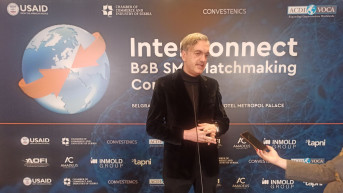
Marko Cadez, President of the Serbian Chamber of Commerce, stated for Kosovo Online that the relationship between Serbian and Kosovo companies was exceptional, and he announced that he would meet with the President of the Chamber of Commerce of Kosovo in May in Berlin, where they would discuss with international partners how economies could reach agreements, overcome barriers, and improve cooperation.
However, Cadez emphasizes that the current political situation in Kosovo greatly affects the relationship between Kosovo and Serbian businesses.
"The political situation always affects the relationship between economies, especially when we officially want to move some barriers that still exist, and progress is slow. In trade, new businesses, and investments, cooperation between Kosovo and local companies is exceptional," Cadez said.
He noted that more and more companies from Kosovo were placing their products in Serbia and the entire region.
The President of the Serbian Chamber of Commerce rated the progress of the Kosovo market positively and expressed hope that such a trend would continue.
Regarding cooperation between the two chambers of commerce, Cadez says that their relationship is at a high level, emphasizing that they are working to have "the economic part support the political part."
"Our cooperation with the Chamber of Commerce of Kosovo is excellent, and in May, the President of the Chamber of Commerce of Kosovo and I will have a joint visit to Berlin, where we will talk with international partners about how we can do more and help, as representatives of the business sector, to reach agreements that, hopefully, will also come at the political level, so that the economic part can support the political part," Cadez said.
Cadez also commented on regional initiatives such as the Open Balkan, which contribute to economic cooperation and a faster flow of goods, people, and capital, and pointed out that the Kosovo economy and business were open to joining that initiative, but unfortunately, politics were not.
"As things develop and that political part somehow normalizes, it seems to me that logic will simply prevail, which is that it is truly better for companies to pay less, for their operations to be cheaper, and for them to be able to deliver goods faster. These are things that interest our companies, and politics are politics," Cadez concluded.



0 comments