
About 90 regional initiatives are currently active: What is the advantage of the Open Balkans?
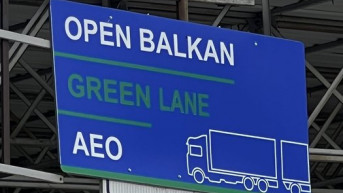
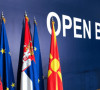
The Open Balkans initiative, which was launched in 2019 by the leaders of Serbia, North Macedonia and Albania, today, according to the interlocutors, Kosovo is an online "entry ticket" for the EU and an alternative to the conflicts of the past. As they say, from other regional initiatives, of which there are around 90 according to some estimates, it stands out, among other things, because it is originally from the Western Balkans and that its establishment was not "conducted" from outside.
In recent decades, since the normalization of relations and overcoming political disagreements between the countries of the Western Balkans has been a priority for both the region and the West, dozens of initiatives have been launched that would ensure economic cooperation and provide a higher standard of living for citizens.
While many of these initiatives today exist only "on paper" or have small scopes, the Open Balkans already has visible results in connecting the region, as well as increasing support from the international community.
So, for example, the US ambassador to Serbia, Christopher Hill, assessed that the Open Balkans is "the most exciting initiative and the most promising one", and added that the leaders of the three countries really "want to do something in the region", and invited Pristina and Podgorica to join this project.
"I consider this a very interesting development in the Balkans. It is the idea of countries to meet and discuss various topics, to try to solve the issues themselves. I especially like that the Open Balkans was created precisely in the Balkans," Hill said.
Analysts and economists from Belgrade, Skopje and Tirana talk online about the advantages of the Open Balkans over other regional initiatives for Kosovo.
Vice President of the Center for Foreign Policy Suzana Grubjesic tells for Kosovo Online that regional cooperation is a pillar of the European integration process and reminds that economic cooperation is a special requirement under the Stabilization and Association Agreement, which was signed with all six partners from the Western Balkans.
"There are many regional initiatives, according to some data as many as 90, which encouraged cooperation and facilitated communication, but still did not help much in bringing the region closer to the EU, and had limited economic potential. The late integration of the region into the EU led to us remaining stuck in the in-between space and in the meantime, in a transition with no end in sight," said Grubjesic.
She says that it is a "mini Schengen", i.e. the Open Balkans was launched at the moment when in 2019 North Macedonia and Albania again remained without the opening of accession negotiations, she states, stressing that the Open Balkans is originally a regional initiative, unlike all the others that are launched in European capitals.
"The initiative gained momentum after strong American support because it shows that not everything has to be "made in the EU", but can be autochthonous "made in the Western Balkans". All other regional initiatives ignore this aspect of local ownership, they are all designed in Brussels, Berlin or some other European city and all are guided by the maxim - ideas and projects are ours, and yours is only to implement them," Grubjesic pointed out.
She assessed that the Open Balkans is an "alternative to the conflicts" of the past and expressed her regret that only three countries from the region supported this initiative.
While political reasons and mistrust prevent Montenegro and Bosnia and Herzegovina from participating in the initiative, Kosovo's membership is a separate issue, even though the 2020 Washington Agreement committed to join the Open Balkans, says the vice-president of the Center for Foreign Policy.
"The initiative is not opposed but complementary to the Berlin process and is not an alternative to European integration, but it is an alternative to conflicts from the past," said Grubjesic.
Serbia's overall relations with North Macedonia and Albania have never been better, Grubjesic assesses, adding that the call for other countries in the region is open.
He points out that there are countless good examples from practice of how barriers are removed and how the four European freedoms of movement of people, goods, services and capital are enabled.
"The invitation to others to join remains open, there is no imposition. If prejudices and fear of Serbia's dominance are freed, there are great chances that first Montenegro, and then B&H and Kosovo will join in the foreseeable future and finally a common regional market will be formed. That would be a ticket to the large EU single market," concludes Grubjesic.
Economist Ljubodrag Savic told for Kosovo Online that the Open Balkans was unique because it was one of the first cases where economic cooperation based on European values had been concretely initiated and accepted by several countries from the Balkans.
In other regional initiatives such as CEFTA, he adds, some other European countries such as Poland, the Czech Republic and Hungary are also included.

"The Open Balkans is an initiative that originated directly from several Balkan countries, which is one of the first cases of such an initiative starting from several countries, and previous ones, such as CEFTA, were made for a larger group and included the other countries Poland, Czech Republic, Hungary as a way to practice in the process towards full membership in the EU," said Savic.
The economist reminds that Serbia was a member of CEFTA, but that Pristina's unreasonable moves led to this initiative being invalidated and not functioning, although it was not completely abolished.
According to him, the Open Balkans is a kind of replacement for CEFTA and was formed solely with the aim of raising regional cooperation to a higher level and improving living standards.
"In a certain sense, the Open Balkans is an alternative for CEFTA, but the problem is that some, I mean primarily the Pristina authorities, but also the Montenegrin authorities, do not understand that it is not the realization of the idea of Greater Serbia, but that it is actually an economic idea that should provide all participants with equal treatment, which eliminates all customs, technical, sanitary and various other barriers that exist for goods, trucks, and I would say, for people as well," explains Savic.
In the Balkans, he assesses, there are political divisions that, unfortunately, threaten the normal functioning of people, and the Open Balkans initiative seeks to implement what the idea of the EU is based on - to be able to circulate freely from one country to another.
He notes that the countries of the region were one country and that they know how economic exchange and cooperation can work, but that despite all the benefits, some countries react negatively to the Open Balkans.
Ivo Rangjelovic, a political scientist from Skopje, who graduated in political science and economics from the University of Boston, and obtained a master's degree in comparative politics and democracy in London, Ivo Rangjelovic, believes that the Open Balkans is a remedy for the growing differences between the countries in the region and provides an opportunity to achieve economic cooperation that is not realized by previous initiatives.

"At a time when liberalism is increasingly facing stigmatization, initiatives such as the Open Balkans are asserting themselves as a cure for the wounds of increasing polarization. This project offers promotion in the field of regional cooperation in areas that have already been established through numerous initiatives, but through which they have not achieved concrete results. Therefore, the public's approach should appreciate this project not as a historical goal, but as a potential for tangible benefits," said Rangjelovic.
The beauty of the Open Balkans, in addition to its self-initiative character, says the political scientist, also carries its own essence - the suppression of life's barriers through collective solutions.
According to him, this project seeks to overcome physical borders and provide favorable conditions in the economy to the citizens of the participating countries, thus providing support for social and political understanding among the peoples of the region.
In this direction, Rangjelovic said, it was important to highlight the potential of inclusiveness, which was the focus of criticism from the professional community.
"I would allow myself to say that the unobtrusive approach of the members and the reserve of others is the biggest advantage of this project. Inclusivity often defies effectiveness, especially when it comes to countries in the Balkans. That is why this initiative should be promoted through essential projects and results, which would serve as a gravitational force towards the countries that are currently not part of the project. We are all tired of conditional initiatives, which the reform processes knew trampled our dignity, didn't they," said Rangjelovic.
The fact, he added, is that the Open Balkans initiative does not have a clear structure and limited areas in which it operates, it must not disqualify the value matrix, which corresponds to the European one.
For this reason, he noted, the Open Balkans has the support of the international community, this time including that of the Russian Federation.
In terms of comparative analysis with other regional initiatives, the Open Balkans is "anything but competition with other initiatives", especially not the integration of the region into the European Union, according to our interlocutor.
"In that critical cacophony, the Open Balkans is defined as a replacement or counterpart to the Berlin Process, for which I believe there is an extremely complementary relationship. The difference is in the clearly established role of European partners versus the self-initiative character of the Open Balkans. This means that the countries of the region are once again tempted a litmus test after which it will be seen whether they are capable of dealing with social challenges on their own, instead of being directed under the baton of an international factor," concludes Rangjelovic.
He points out that as long as this initiative is judged by its shortcomings instead of its results, which, he estimates, take time, the region will be a slave to modern liberalism.
"The smoke that suffocates the average citizen of the Balkans several centuries ago is a wrong approach to the appreciation of civilization dynamics and challenges," Rangjelovic said.
Economist from Tirana Erion Muca said that the Open Balkans is an initiative that aims to increase and deepen regional cooperation in many directions, both economically and politically.
"All this is for the benefit of citizens, from easing customs barriers, facilitating procedures for issuing residence permits to seasonal or permanent workers, easier border crossing to mutual recognition of pensions," Muca told for Kosovo Online.
He believes that the Open Balkans, unlike other regional initiatives, is an inclusive and comprehensive initiative.
"Previous initiatives were limited in only one direction, for example to ease customs barriers or mutual recognition of pensions, while the Open Balkans summarizes all this in one package. It is a system that will have the necessary security and longevity," he pointed out.
He expressed his belief that the Open Balkans will enable citizens to "solve everything in one package".
The Open Balkans, Muca said, rests on the spirit of economic and political cooperation in order to create the right conditions for the Western Balkans to join the European Union.
When it comes to the results achieved within the initiative, the economist says that there are results, but that it is still too early for concrete benefits.
"We already see on the horizon, the first results of the Open Balkans, but it is still early for concrete benefits. Projects of such a scale, which involve several countries, need time for ongoing negotiations and advice on concrete steps to be taken. Infrastructure, logistics, human resources," says Muca.
0 comments