
Cakolli: The issue of Serbian elections in Kosovo should be resolved through dialogue
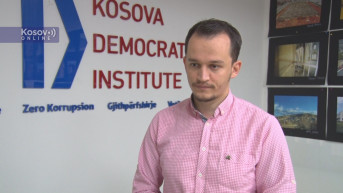
Eugen Cakolli from the Kosovo Democratic Institute expects that the Government of Kosovo, based on the established practice, will reject the request for voting in the extraordinary parliamentary elections in Serbia scheduled for December 17 to be enabled in Kosovo.
Cakolli points out that the request for elections to be organized in Kosovo was not sent directly to Kosovo's institutions but through the OSCE mission.
"It is not known for elections of one country to be organized on the territory of another unless there is an agreement, an understanding of mutual jurisdiction, and competence in that country, which would mean voting outside the country, something Serbia already applies. Therefore, I think it is in the interest of both sides not to insist on holding Serbian elections, especially in these circumstances. Especially not without a potential agreement between the parties or a discussion between the parties on how they want to resolve this issue. It is in the interest of Serbian citizens in Kosovo to participate in Serbian elections, and this can be easily ensured through an agreement between the two parties that would envisage holding elections for both on their territories. This would implicitly mean that both parties recognize the jurisdiction of the other," Cakolli says.
He adds that Kosovo and Serbia should "seize the moment in the dialogue, initiate negotiations, and reach an agreement on the organization of both Serbian and Kosovo elections."
"I expect that when it comes to the elections scheduled for December 17, there will be no voting in Kosovo at all. Serbs from Kosovo will go to Serbia and vote at polling stations, which has been a practice established for several years. I doubt that there will be the political will of the Serbian authorities to organize voting in Kosovo based on the 'voting outside the country' principle. Considering that the Serbian liaison office in Kosovo does not meet the criteria to be a polling station. The number of citizens who could vote is very large, and it would imply that hundreds of thousands of Serbian citizens come to Pristina to vote, which would not be a practical solution. Therefore, I think it is in the interest of both sides to start discussions on this issue and find a solution for the upcoming elections, regardless of when they will be held," Cakolli says.
When asked if he expects pressure from the international community, especially from Quint countries, on the Kosovo authorities to enable Serbs to vote in Kosovo, Cakolli says he expects that, as in previous cases when "Serbian elections were organized, there will be calls from the international factor to both sides to find a solution."
"I don't think it will come in the form of pressure, as was the case before, due to the current situation regarding the dialogue. The mere announcement of elections in Serbia sent a signal to all parties that there was no willingness to implement previously reached agreements. Therefore, I believe that even the position of the international community will be 'softer' and that they will not insist on holding elections, as was the case with the referendum and elections organized in Serbia in recent years," Cakolli says.
0 comments