
Celic: Enormous concern among professors and students about what will happen after March 15

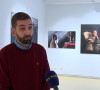
Dusko Celic, assistant professor at the Faculty of Law of the University of Pristina with temporary headquarters in Kosovska Mitrovica, says that there is “enormous concern” among both professors and students about what will happen after March 15 and the practical implementation of the Law on Foreigners in Kosovo.
The solution is a complete suspension of the law for Serbian institutions in Kosovo, Celic told RTS, adding that this is possible only through greater pressure from the international community on the authorities in Pristina.
“I returned from Kosovo and Metohija two days ago. I traveled by bus and did not receive any pamphlet – instructions for the implementation of that Law on Foreigners. This was not distributed to passengers, and it is obvious that this story about a ‘preparatory phase’ is highly questionable, probably a media narrative. People are not being informed of their rights even in that way,” Celic said.
Asked about the mood among professors and students at the University of Pristina with temporary headquarters in Kosovska Mitrovica, he explained that there is “enormous concern” about what will happen after March 15.
That is why he also expects a clear reaction from the academic community.
“It is really hard to predict that everything will pass with academic silence and in the dark. I expect a reaction from the University administration and all faculties, as well as from the entire academic community, in the form of an appeal to stop the suffocation of these institutions,” Celic believes.
As a solution, he also sees sending an appeal that would be forwarded to international addresses.
“The University of Pristina with temporary headquarters in Kosovska Mitrovica is a member of the European University Association and has a completely legal status, and imagine this, it is not legally recognized and ‘visible’ in Pristina,” the assistant professor at the Faculty of Law notes.
Celic believes it is wrong to expect that this problem could be resolved through the formation of the Community of Serb Municipalities, and especially not under the “European statute of the CSM” presented by the former EU Special Representative for the Belgrade–Pristina dialogue, Miroslav Lajcak.
“That model envisages that education and healthcare would practically become part of some Kosovo education network in private ownership and that Serbia could finance them. But again, they would function within the legal system of the so-called Kosovo, which would again mean a relatively rapid shutdown or cessation of these institutions in the form in which they currently exist,” Celic claims.
Celic sees the only solution in suspending the disputed regulations, but warns that the question is whether Pristina is ready for such a concession to the Serbian community.
“It is difficult to talk about whether Pristina is even ready to do anything other than postpone until March 15. Even if it were eventually ready, it would probably again ask for something in return, something that is politically a priority for them. I assume that the solution could be for the foreign factor, which is very influential in Pristina, to exert pressure and simply, when it comes to the university, education, healthcare, to suspend the provisions of the so-called Law on Foreigners,” Celic believes.
He recalls that this is a law adopted by the authorities in Pristina back in 2013.
The fact that 13 years later they decided to implement the regulation, for Celic, says only one thing.
“It tells us that Pristina has obviously assessed that now is the political moment to implement that so-called law, which was designed with a targeted aim to suffocate the remaining two autonomous institutes of the Serbian people and the Serbian state in Kosovo and Metohija: education and the entire healthcare system,” Celic states.
He says this is best seen in the “conditions for residence” in Kosovo.
“It is impossible for a student from central Serbia, and there are about one third of them at the University, to obtain a residence permit. It is impossible for a professor to obtain a residence permit because one of the conditions is that the institution where they work be accredited in the so-called Kosovo system. Our institutions, the University of Pristina, schools, healthcare institutions, are part of the system of the Republic of Serbia,” Celic explains.
Quiet shutdown of the University
He believes that any potential accreditation of the University in the Kosovo system would mean its shutdown.
“The implementation of such a decision is aimed precisely at that, a quiet shutdown of the remaining Serbian institutions. Let me remind you, Pristina has attempted this through the abolition of payment operations, the post office, and the occasional closure of administrative crossings. These institutions survived all of that, but I fear that they will not be able to survive the so-called Law on Foreigners,” he emphasizes.
No optimism regarding Pristina’s intentions on missing persons
Celic, who is also deputy president of the Coordination of Serbian Associations of Families of Missing, Murdered, and Killed Persons from the territory of the former Yugoslavia, is not optimistic that Pristina will respect what was agreed three days ago in Brussels with the mediation of EU Special Envoy Peter Sorensen.
“Pristina believes this is a one-way street and that all the demands it has should be fulfilled by Belgrade, while on the other hand, families have repeatedly pointed to locations where the remains of missing Serbs might be found, and nothing has happened in Kosovo and Metohija. A few years ago, one of those locations even mysteriously burned down, in Zilivode near Obilic,” Celic says.
The same applies, he continues, when it comes to archival material.
“Several thousand documents from archives were sent to Pristina, and on the other hand they claim that there is no archive of the so-called KLA,” Celic specifies.
Hence the doubt that there will be progress even after the formation of the Joint Commission in Brussels.
“I am sorry to say that I do not expect progress. There may have been talk here of formal progress in terms of forming a joint commission on missing persons. We do not even know how they will make decisions, whether on the basis of consensus or in some other way, what the role of the international community is, whether it has voting rights. We will see in the spring whether there will be any progress. For now, both as a member of these associations and as an observer, I cannot say that I am optimistic. It would be a surprise for me if things moved forward, even though this is a civilizational, not a political issue. Nevertheless, high-level politics are refracted through it in terms of the status issue of Kosovo and Metohija,” Celic concluded.

0 comments