
Tomic: The Law on Foreigners is a mechanism for exerting pressure on Serbs
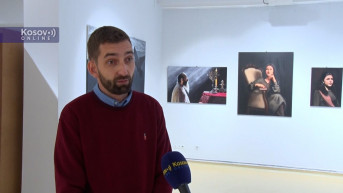
Political scientist from Gracanica, Ivan Tomic, said that the Law on Foreigners, which is set to start being implemented tomorrow, has nothing to do with establishing order, but is instead a system of control and a mechanism to exert pressure on Serbs.
Tomic told Kosovo Online that the Law on Foreigners is based on the incorrect assumption that all Serbs coming from central Serbia, as well as Serbs living in Kosovo without Kosovo documents, are considered foreigners. He added that it sends a clear message to all Serbs – those living in Kosovo are not at home and their lives can be controlled at will.
“This means that every teacher or professor who comes here to educate children, every doctor who comes to treat people, or a student who comes to study must go through a complicated bureaucratic procedure in order to exercise their right to come and live here. I think this is wrong, and this law has absolutely nothing to do with establishing any kind of order. It is solely a system of control, additional pressure, a mechanism to exert pressure on Serbs. It also sends a very important message to all Serbs living here, as well as to Serbs in Serbia, that Kosovo is an independent state, that we are not at home here, and that Albin Kurti can do whatever he wants with us and our lives,” Tomic emphasized.
In another sense, Tomic added, the Law on Foreigners will create a complicated bureaucratic procedure.
“Waiting in lines, people will be harassed, and they may always be missing a single document needed to complete something. The mechanisms that will be applied are still unknown – whether people will be punished, warned first, or detained. So it remains unclear how and in what way this law will be applied,” he said.
According to him, the biggest problem will be for employees in healthcare and education, because the Kosovo system will not recognize their work documents.
“I don’t see how they will be able to exercise their right to register their residence here. When they say they work in a Serbian hospital or school, these papers will not be recognized, and they may simply be told no, we do not recognize this, you must find another way,” Tomic said.
He also predicts many problems in the law’s implementation, which, he says, will depend entirely on Pristina’s discretion and the political moment.
“Depending on the political moment, that will determine how they treat people. If necessary, they may arrest someone or punish someone, but all of this will serve their internal political agenda,” Tomic said.
Regarding the Law on Vehicle Registration Plates, Tomic believes it will also create many problems for anyone driving vehicles under authorization.
“Not everyone has five, six, or seven thousand euros to buy a new vehicle. Many people’s lives here depend on this. Many drive their children to speech therapists or special education teachers in Strpce, Kosovska Mitrovica, and elsewhere using vehicles with Serbian license plates. I don’t know how they are supposed to function,” Tomic said, adding that the worst part is that there is still no information about whether these laws will be applied, in what way, and what Serbs can expect from January 15.

0 comments