
Costa: Regional cooperation, reconciliation and good-neighborly relations key to EU accession
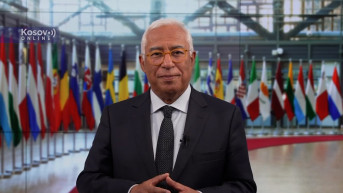
European Council President Antonio Costa stressed this evening following the EU-Western Balkans Summit that regional cooperation, reconciliation and good-neighborly relations were key prerequisites for accession to the Union.
Speaking at a press conference, Costa said that he expected progress in resolving bilateral issues.
“The European path is not only about reforms. Regional cooperation, reconciliation and good-neighborly relations are key prerequisites for accession. I expect progress in resolving bilateral issues. The challenges of the past must be overcome. It is time to look forward, not backward. Only then can our Western Balkan partners make real progress,” Costa said.
He recalled that the EU was founded on reconciliation and peace and that enlargement had been instrumental in achieving that goal.
Costa pointed out that this was already the second EU-Western Balkans Summit this year, adding that the frequency of the meetings reflected the Union’s intensive engagement with the region.
According to him, the challenging geopolitical situation only underscored the need for stronger ties between the EU and the Western Balkans, while today’s summit once again reaffirmed the region’s European perspective.
“My message to all our Western Balkan partners is that they should seize the moment and implement the reforms that will lead them into the EU. Enlargement is a real opportunity that should be seized,” Costa stressed.
He said that the discussions had also focused on how to take gradual integration to the next level.
“The progress of Montenegro and Albania proves that accession is not an illusion but a real opportunity for those who engage. This year, we began drafting the Accession Treaty for Montenegro, a step we have not taken in more than ten years,” Costa explained, adding that the Western Balkan partners could count on the EU, which remained a reliable partner.
Asked about Serbia’s absence from the summit, and noting that this was the second time Serbia had not attended, albeit for a different reason, Costa said that he had spoken with Serbia’s Acting President Aleksandar Cupic, who had told him that he was unable to attend because of important parliamentary obligations.
“Of course, we understand that. There will be more opportunities for us to speak with the Serbian authorities,” Costa added.

0 comments