
Giofre: Serbia is not conditioned and does not have to choose between Kosovo and the EU
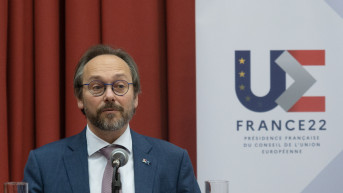
The European Diary, which aims to dispel prejudices and bring EU values closer to young people, was presented today to students at the Zemun High School in the presence of ministers Tanja Miscevic and Branko Ruzic and the head of the EU Delegation, Emanuel Giofre, RTV reports.
Giofre said that it was in the interest of the EU that Serbia became its member, and that it was best for Serbia to finish the European integration process as soon as possible.
"Serbia is not conditioned and does not have to choose between the EU and Kosovo," Ambassador Giofre and Minister Miscevic said in response to questions from students who wanted to know whether the process of EU integration was slowed down because Serbia did not impose sanctions on Russia, whether it depended on Kosovo, could the conflict in the province escalate into a war, what was happening now after we opened 22 out of 35 chapters, could poor countries also enter the EU, what was the EU doing to strengthen the new members so that their citizens would not go to more developed and richer countries.
Giofre emphasized that the EU was a political blessing for citizens in terms of freedom and prosperity.
When asked by the moderator what was the most realistic scenario, a radical option, termination of negotiations or would the process be slowed down due to Serbia's refusal to impose sanctions on Russia, Giofre said that sanctions, alignment with the EU's foreign policy and the geopolitical situation were very important issues for all Europeans because not only the war taking place in the heart of Europe, but the war against common values, the war that has an impact on the energy situation, on the economy.
"War is something that occupies the minds of all decision-makers, it is also related to the importance of compliance," said Giofre and emphasized that we must be a community, to do much more.
That is why, he added, Serbia was expected to do much more in the direction of solidarity with the continent.
"We also need to speed up the enlargement process. We need more reforms and alignment with the EU's foreign policy, which will also speed up your accession process," said Giofre.
When asked by the students if there was a deadline for opening and closing chapters, bearing in mind that we have opened 22 out of 35 chapters, Giofre explained that the process had its own rhythm and depended on reforms, standards, rule of law.
Giofre emphasized that all reforms, standards, rules, rule of law, fight against corruption, organized crime had a positive effect on the country, that they changed and modernized it.
Miscevic reminded that the negotiations had started in 2013, that recently there had been a change in methodology, so Serbia had opened a large number of chapters within the cluster in December 2021.
"There is no precise deadline; the process depends on many things, who could have thought in 2013 about the war in Ukraine, which changed Europe. If you ask me, I do not worry about the date and time. It is much more important to me that the reforms brought improvement, how much it is better than just the time of joining the EU", the minister said.
She added that it was much more important to her when we were going to close the chapters.
"It is the next step, but to me the protection of intellectual property, which is now at the European level, is more important, as well as the process of public procurement, all these reforms are much more important than the right moment of joining the EU," said Miscevic, who was a student of the Zemun High School.
Minister of Education Branko Ruzic stated that there were many topics that connected education and life with the EU. He emphasized that from many aspects it was in our interest to become members of the EU as soon as possible.
"The standards qualify us to be equal and stronger than many EU members," Ruzic said.
The European Diary is a publication that aims to inform young people about the EU, the opportunities it provides, how it was created, environmental issues, the common market, currencies, human rights, many issues that may be of interest for young people such as education abroad

0 comments