
Gogic: The fundamental goal of Kosovo is recognition from Serbia and non-recognizers within the EU
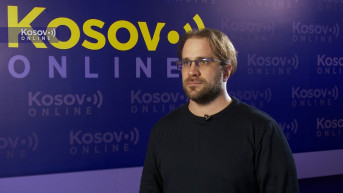
The goal that Kosovo has been aiming for years and will continue to strive for in 2025 is to gain recognition from Serbia, says political scientist Ognjen Gogic for Kosovo Online.
Since Kosovo is aware that it cannot obtain explicit recognition from Serbia, Gogic explains, Albin Kurti speaks about the need to sign the Brussels and Ohrid agreements from 2023, offering an interpretation to the international community that Serbia has finally recognized Kosovo, at least de facto.
An alternative to this goal, he adds, is membership in international organizations: the Council of Europe, NATO, UNESCO, and Interpol.
"Kosovo has one fundamental foreign policy goal, and that is to gain new recognitions. For Kosovo, it is crucial to receive recognition from non-recognizing states within the European Union and NATO. Primarily these states, and then all others. It wants to become a full member of the international community, and that can only happen when it also becomes part of the United Nations, and in that sense, the more immediate goal Kosovo aims for is recognition from Serbia. That is the fundamental goal to which Kosovo's Prime Minister Albin Kurti constantly points and about which he speaks very openly, that he wants a mutual recognition agreement, because he is aware that without Serbia's recognition, other states that do not recognize Kosovo won't either," Gogic points out.
He emphasizes that in the end, it still turned out that in the case of Kosovo, it was about an illegal secession, a unilateral act not recognized by the whole world, and that it will not be resolved in favor of Kosovo as long as the parent state does not recognize this act of secession.
"In Pristina, there is an awareness that EU and NATO countries will never change their position as long as Serbia does not change its stance on Kosovo, and that Russia and China will not lift the veto issue in the United Nations as long as Serbia does not recognize Kosovo as an independent state. An alternative would be for non-recognizers like Spain or Greece to change their stance, despite Serbia not recognizing Kosovo, but it has already shown that this does not work in practice. There was hope in Pristina that the Brussels and Ohrid agreements from 2023 would be enough for some EU non-recognizers to change their stance, but that did not happen. This confirmed to Kosovo that Serbian recognition is the fundamental goal it should aim for," Gogic believes.
As Pristina's plan B, he sees membership in international organizations, primarily in the Council of Europe, which was not achieved during 2024.
"Kosovo will probably try to reactivate this through its allies during 2025, although they have quite exhausted their credit with allies. The goal is also NATO, but there is also the problem of non-recognizers, as Kosovo's admission requires consensus. The Council of Europe does not require consensus, a two-thirds majority is sufficient, but it is not there either. There are always goals that have been featured all these years, such as joining UNESCO and Interpol, but nothing has changed in favor of Kosovo and there is no greater will than there was before for Kosovo to be admitted," our interlocutor assesses.
When discussing Kosovo's EU membership application, Gogic says that the EU is unlikely to put this issue on the agenda during 2025, in order to avoid divisions within the EU because granting candidate status requires consensus from all member states, and five of them do not recognize Kosovo.
Asked whether Pristina expects its allies to pressure Belgrade to take steps towards recognizing Kosovo, Gogic says that the crises that have erupted in Kosovo in recent years have largely been motivated by the logic of activating Kosovo's allies to force Serbia to recognize Kosovo and thus resolve the crises.
"That's the basic logic behind the crises. Whenever something happens, Kurti always says: 'let Serbia recognize Kosovo and everything is resolved.' And this has somewhat borne fruit. The Franco-German, or rather Brussels-Ohrid agreement, aimed to calm the crises through a de facto recognition between Serbia and Kosovo. The calculation in Pristina is that by signing this agreement, Spain, Greece, Slovakia, Romania, and Cyprus would get a signal that Serbia is giving up on Kosovo, that it de facto recognizes Kosovo, and then these countries would have no reason to deny recognition to Kosovo," Gogic emphasizes.

0 comments