
Gogic: The issue of missing persons is often used as a “trump card” in the dialogue
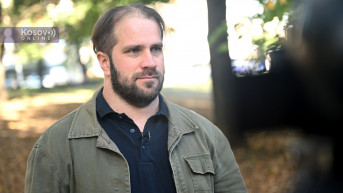
Political scientist Ognjen Gogic said that the issue of missing persons is often used as a “trump card” in the dialogue, and that European Commission President Ursula von der Leyen cited the agreement on this issue during her visit to Pristina as a step by Kosovo toward improving relations with the Serbian community, in order to show that not everything in the dialogue has collapsed.
Gogic told Kosovo Online that during her visit to Kosovo, von der Leyen also pointed to the need for the government in Pristina to preserve the multi-ethnic character of society, which, he added, means that it is under threat.
“During her address in Pristina, von der Leyen called on Kosovo to preserve the multi-ethnic character of its society and said that the Kosovo government needs to rebuild trust with the Serbian community. This is a diplomatic way of saying that these two things have been called into question. In other words, what has been called into question is whether Kosovo still has a multi-ethnic character, meaning that relations with the Serbian community have been undermined, which is why the government is being called on to restore that trust,” Gogic said.
As he noted, these are statements made between the lines, but it is clear what they are alluding to – that there are problems.
“Von der Leyen also said that there had been positive developments, and she cited cooperation on the issue of missing persons as an example. This is a topic that keeps appearing in the dialogue as a kind of trump card, actually, when one wants to say that not everything has failed, that not everything has collapsed, the negotiators get together and discuss the issue of missing persons, and then one year a declaration is agreed, the next year a commission. There has been some work on the ground, locations suspected of containing mass graves are being identified, some have been confirmed, so one can assume that this actually resulted from the dialogue and the agreement,” the political scientist said.
As he added, von der Leyen wanted to say that this example shows that not everything has failed.
“She could likewise have cited the example of the Law on Foreigners. Through the mediation of the European Union, an agreement was reached on certain facilitations for the Serbian community. It has not been implemented to the extent and in the manner agreed in March, however, no harmful consequences of the implementation of that law have been seen on the ground. In other words, the law did not result in any reduction of the rights of Serbs in Kosovo regarding residence, life or work,” Gogic said.
As he noted, the European Union, through its mediating role, created a formula that enabled Kosovo, on the one hand, to begin implementing the law, while on the other hand ensuring that its implementation would not negatively affect the position of the Serbian community.
“So, for example, she could have cited that example, which says more about the position of the Serbian community and shows that positive steps can actually be taken. Her statement should be interpreted in that way. She wants to point out that when there is a will, it is possible to reach an agreement and achieve something positive, but this does not suggest that the European Union is glossing over the situation. The general communication that exists, periodic statements, statements coming from the European Union delegation in Kosovo or from European Commission spokespersons in Brussels, as well as Kosovo’s progress reports, do not create an image of a reality that has been embellished. It could not be said that the European Union wants to cover up the real problems that exist in Kosovo, but on the other hand, it could not be said that it is effectively contributing to solving them,” he said.
Gogic added that the statement about missing persons does not directly concern the position of the Serbian community today.
“It concerns the discovery of the remains of missing persons and determining their fate. That statement was probably made in the context of the discovery of remains in Zubin Potok, meaning that they wanted to say that there are examples that in some way also concern Pristina. She chose precisely that example because it can be interpreted positively by the public in Kosovo. Had she mentioned the example of the Law on Foreigners, someone could have used it against the current authorities and said: ‘There, Kurti has made concessions to the Serbs,’” Gogic said.


0 comments