
Gudzic: Ethnically motivated attacks on Serbs are the result of inflammatory rhetoric from Priština
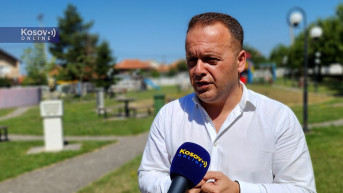
Analyst from Gracanica, Aleksandar Gudzic, emphasized that the increasingly frequent ethnically motivated attacks on Serbs in Kosovo are the result of the inflammatory rhetoric conducted by the Kosovo government in recent years, as well as the narrative over the past 25 years that "Serbs are to blame for everything."
As he pointed out, life and politics in Kosovo can be divided into two parts.
"We can divide the political scene and life in Kosovo into two parts. One is theory, the other is practice. In theory, Kosovo has excellent democratic laws, but they are not applied in practice," said Gudzic.
He emphasized that the Serbian Orthodox Church (SPC) and Serbian property are often targeted by Albanian extremists.
"Attacks on Serbs have mostly not been resolved to this day. Kosovo is perhaps the only area in the world where private property is not sacred. Only in Kosovo is it possible for someone to usurp someone else's property and not face consequences. There are countless examples where Kosovo Albanians have falsified documents and appropriated Serbian property. Even today, there are many Serbs who are fighting in Kosovo and international institutions to prove ownership of their property," Gudzic added.
He noted that the figure of 68 ethnically motivated attacks on Serbs since the beginning of the year is not surprising, given the inflammatory rhetoric from Priština and the Kosovo government's Prime Minister Albin Kurti. However, he added, such a narrative could be heard in Kosovo even before Kurti came to power, in the past 25 years.
The history textbook for elementary school children, Gudzic pointed out, is a true example of the prevailing sentiment among Kosovo Albanians regarding Serbs.
"As for the attacks on Serbs, they are a byproduct and result of the extreme rhetoric led by Albin Kurti in recent years, as well as a narrative that has been built in Kosovo over the past 25 years, blaming Serbs exclusively for everything that happened in the 1990s. The best example of this narrative and how it leads to ruin is the fact that their history textbook begins with a picture of Adem Jashari, and the first lesson is the Racak massacre and everything that happened in the 1990s. Everything is portrayed in black and white, with Serbs being blamed for everything. Of course, this does not correspond to the truth, because, as with love, it takes two or more parties for war, and in this case, it is a triangle of the international community, Kosovo Serbs, and Kosovo Albanians. This is why ethnically motivated attacks on Serbs continue," said Gudzic.
He emphasized that there are cases where Serbs do not want to report ethnic attacks for two reasons. The first is fear, and the second is because they are aware that the case will not be resolved.
"Some Serbs decide to report, and I know of some cases where they did not decide to report violence. Probably out of fear, or because they do not want to further deepen these misunderstandings, they probably think that if they withdraw, all of this will stop," concluded Gudzic.

0 comments