
Gudzic: Kosovo's institutions show no genuine will to improve the lives of Serbs
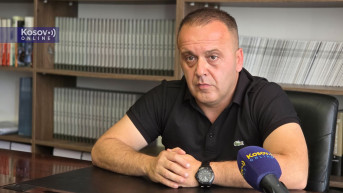
The recent statement issued by the Diocese of Raska-Prizren regarding the increasingly difficult position of the Serbian people and the Serbian Orthodox Church in Kosovo confirms what has long been evident on the ground—that the Kosovo Police has effectively assumed executive authority, while Kosovo's institutions show not even a minimum willingness to improve the lives of the Serbian community, historian Aleksandar Gudzic has said.
In its statement, the Diocese of Raska-Prizren particularly highlighted alleged violations of the rights of the Church and its faithful by the Kosovo Police, which, according to the Diocese, carries out activities directed against members of the Serbian community and the Serbian Orthodox Church (SOC). It further stated that Serbs no longer perceive the police as an institution tasked with protecting and assisting all citizens equally.
Commenting on the statement for Kosovo Online, Gudzic said it has long been apparent that the Kosovo Police has exceeded its authority.
"The Diocese has stated publicly what has already been evident on the ground for years: on the one hand, the police have effectively assumed executive powers and exceeded their authority by engaging in activities they should not be undertaking—constantly harassing people and interfering in matters that fall outside their competence. The police are deciding whether displaying national symbols complies with the law, whether a mural of Patriarch Pavle in central Kosovska Mitrovica is lawful, or whether the 'I Love Mitrovica' sign should be removed or installed," Gudzic said.
He added that, on the other hand, Kosovo's institutions show no genuine willingness to improve the everyday lives of Serbs.
"The Church is also under pressure through attempts by various Kosovo institutions and agencies to falsify history and appropriate Serbian cultural heritage. Certain institutions and ministries in Pristina even interfere in the work of the Diocese of Raska-Prizren and its activities on the ground. A few months ago, for example, the Ministry of Culture informed the Diocese that it could not carry out any works on the residential quarters of the Gracanica Monastery. This constitutes a violation of Kosovo's own legislation," Gudzic said.
The Diocese of Raska-Prizren also warned that, should the current situation continue without an international response, it could ultimately lead to the complete disappearance of the Serbian population from the area.
According to Gudzic, what is particularly concerning is that the international community has become increasingly reluctant to react in recent years.
"The international community does respond, but what is symptomatic and worrying is that, as time passes, fewer and fewer representatives of the international community speak out regarding incidents or violations of the law by Kosovo's institutions," Gudzic concluded.
0 comments