
Latinovic: The procedure for an emergency session of the Security Council is not simple; it matters how the request will be formulated
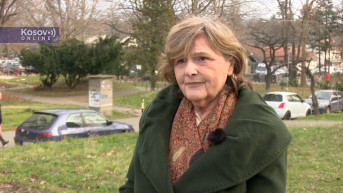
Branka Latinovic, former ambassador and representative of Serbia to the OSCE, assesses that many members of the Security Council are dissatisfied with the recent actions of the Kosovo Government, and Belgrade should see this as an opportunity to schedule an extraordinary, emergency session of the Security Council.
Latinovic says that the procedure for convening a session of the Security Council is by no means simple and that there are two ways to go about it. The first is to submit the request to the current chair, which is currently Guyana.
"Given that it is one of the countries of the Non-Aligned Movement, it may have a bit more understanding," Latinovic says.
She emphasizes that it is crucial how the request for an emergency session will be formulated, i.e., what the subject of that request will be, as the agenda is based on that, followed by a debate in the Security Council.
"The procedure is simpler if you have the support of one of the Security Council members who will join you, or initiate that request, and then it takes much less time. If not, then the chair submits that request for approval or consideration to all Security Council members. If the request is accepted, we proceed to the exchange of opinions conducted within informal consultations with a proposed agenda. The proposed agenda is essentially what the Security Council will accept, and then we move on to the debate," Latinovic explains.
In that case, she says that Serbia's request could be on the Security Council's agenda in just a few days. However, before that, Latinovic emphasizes that certain procedural steps need to be taken, opinions need to be provided to all permanent members, informal consultations need to be convened, a proposed agenda needs to be formed, and the session needs to be scheduled.
"It is very important to conduct thorough preparation, and this is done through bilateral consultations. What we see happening, i.e., decisions made in the Security Council, is based on the consensus that each member state receives from their 'capitol', or the instructions they receive from their capitals. In this case, it is not enough to focus solely on New York; attention needs to be given to the capitals of all countries with their representatives in the Security Council, regardless of whether we have better or worse relations with that country. A lot depends on the arguments presented in this regard," Latinovic emphasizes.
She adds that it would have to be a long-term process.
"It has to be a continuous dialogue, and it seems to me that we are a bit one-sided there, too critical towards those with whom we disagree. In this situation, the argumentation and persuasiveness of the data will be crucial," she notes.
Asked about the problematic aspect of scheduling a session due to the fact that Kosovo is recognized by nine Security Council members while six are not, Latinovic says that, generally, it is not good.
"But keep in mind that even the governments of the countries that have recognized Kosovo are extremely critical, not only about what happened but also regarding the continuity of activities and actions carried out by the current Government of Kosovo, namely Prime Minister Kurti. This does not contribute to the main goal of all activities of representatives of the international community directly involved in this process of negotiations and normalization of relations, which is to reduce the factors contributing to escalation and move towards eliminating those reasons. It's a package of de-escalation measures, and this does not contribute to it, but only increases it in a very sensitive area. It's not just about excluding the dinar from payment transactions but also the closure of social institutions, municipalities, healthcare facilities – things that an ordinary person depends on for their livelihood," Latinovic concludes.
She also says that we are witnessing an increased pace of holding emergency Security Council sessions, citing Russia's recent initiative regarding the bombing in Syria and Iraq.
"How all of this will fit in and how much time and attention the Security Council will have for our problems, we cannot know at this moment. We need to consider that what is happening in the Middle East is a more significant global security issue," Latinovic says.

0 comments