
Mazreku: We will be exposed to pressure in order to avoid escalation in the Western Balkans
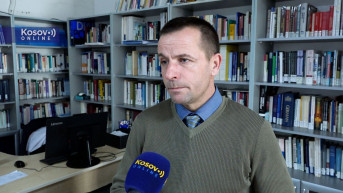
Professor of European law Avni Mazreku notes that the world today is moving from unipolarity toward multipolarity, as part of a new global configuration, which will have its legal consequences. When it comes to the repercussions of global developments on the region, primarily on relations between Serbia and Kosovo, he assesses that political actors in Kosovo and Serbia will be exposed to political and diplomatic pressure in order to avoid escalation in the Western Balkans.
Speaking about developments in Venezuela and the issue of Greenland, Mazreku says he does not see a direct connection between what happened in Venezuela, and more broadly in the Western Hemisphere, and Kosovo. For him, the case of Venezuela is a clear indicator of the division of roles among global powers, in the context of the marginalization of China and Russia.
“We are living in a time when the world is moving from unipolarity toward multipolarity, as part of a new global configuration, and we will see other actions as well, which carry a belief in the principles on which the UN was founded,” Mazreku told Kosovo Online.
He states that the American action in Venezuela can be considered anti-dictatorial, but on the other hand, he also points to interpretations concerning violations of the principles of the UN Charter on state sovereignty, that is, direct interference by one state in the internal affairs of another sovereign state.
According to him, everything always comes down to a clash between legality and legitimacy.
“The question is whether legitimacy should prevail on the global stage, or whether the world order created after World War II should prevail, in which there was a different balance of power and which lacked the development of human rights. After World War II, the colonial system came to an end, a bipolar world was created that functioned according to the interests of two poles, the eastern one led by the Soviet Union and the western one represented by the United States. Interpretations have always depended on the interests and positioning of their governments,” Mazreku said.
The world, he says, is in the “context of its own development,” which will have legal consequences, which is why the West cannot allow the escalation of a new European crisis. As a “neuralgic point,” in addition to what is happening in Ukraine, he cites the Balkans, where there are two open issues.
The first issue, he points out, is Bosnia and Herzegovina, where the Dayton Agreement ended the war, but not the system of governance, even though three decades have passed without political actors in the country finding common ground to achieve stability.
“The second is the relationship between Kosovo and Serbia. Kosovo and Serbia have diametrically opposed views regarding status, because Serbia claims that Kosovo is an integral part of its territory, while Kosovo has undertaken all actions leading it toward independence from Serbia. It seems that political actors in Kosovo and Serbia will be exposed to political and diplomatic pressure during this period in order to avoid escalation in the Western Balkans,” Mazreku concluded.



0 comments