
Milic: Kurti's letter to the CoE a promise without guarantee, formation of the CSM depends on Western pressure
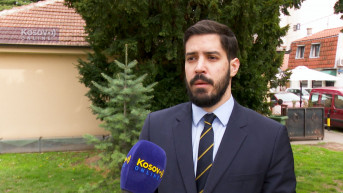
Dimitrije Milic, the Program Director of the organization "New Third Way," says that the promise made by the three Kosovo leaders ahead of the vote in the Political Committee of the Parliamentary Assembly of the Council of Europe to fulfill all international obligations, including the formation of the Community of Serb Municipalities, was their desire to demonstrate a form of general political will, however, it remains a question whether they will deliver on what they promised, and he says that it still depends on Western pressure.
Prime Minister Albin Kurti, President Vjosa Osmani, and Assembly President Glauk Konjufca sent a letter to the rapporteur for Kosovo, Dora Bakoyannis, before the vote on her report for Kosovo's accession to the CoE. Milic believes that their intention was to "raise optimism."
"It certainly wasn't intended to spread pessimism regarding the CSM and its implementation because that would be counterproductive at a time when the Kosovo side wants to be integrated into various international organizations. So, the goal was to send a positive message. Of course, whether it will be realized is another question, but it was, I assume, a desire to demonstrate a form of at least general political will. On the other hand, if they wanted realistic implementation, two things should be considered. On the one hand, the extent of Western pressure and, on the other hand, to what extent Kurti wants to test his capacities. In terms of how far he wants to test the readiness of the West to give him some form of approval for his actions," our interlocutor notes.
This action, as he adds, has faced condemnations but still insufficient condemnations to make Kurti change his political position.
"If we look at some opinion polls that are available, we can see that Self-Determination definitely has lower support than it did in the 2021 elections. So, there are some effects of Western condemnations on Kurti's government. Probably there are also economic issues because due to weak economic indicators, the government has a bigger problem than it does in the foreign policy sphere, where there is much greater support for its actions," Milic assesses.
Regarding the implementation of obligations before the international community and the formation of the CSM, Milic says that it "predominantly depends on Western pressure."
"I believe that currently, the West, due to its dispersion across different parts of the world, with issues such as Gaza, the war in Ukraine, and tensions in the Far East and South China Sea, currently doesn't have enough political capital and attention to invest in this issue. They are trying to somehow address this issue in passing along with all other issues happening, and of course, that focus increases when there is a larger escalation, of which fortunately, there hasn't been to a greater extent for some time," Milic emphasizes.
As he adds, the Kosovo issue is tied heavily to Western attention, and that Western attention is linked to general international events and instabilities in the world that exist, and which divert attention to much more critical issues.
"Much larger regions with many more inhabitants, threatening many more countries, are currently of greater priority, so I assume that further focus on this issue does not exist," Milic says.



0 comments