
Mitic: Weak pressure methods from Brussels, Sorensen operated “below the radar”
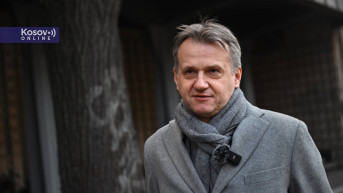
Senior research fellow at the Institute of International Politics and Economics in Belgrade, Aleksandar Mitic, told Kosovo Online that the previous year was not conducive to a more serious political dialogue between Belgrade and Pristina, and that the EU Special Envoy for the dialogue, Peter Sorensen, received his mandate at a time that was not an easy one for him.
Mitic notes that Sorensen is not a high-profile diplomat and that he evidently wanted to work “below the radar,” and that the circumstances were such as well.
“The fact is that there was no fully functional government in Pristina and that the election campaign was practically permanent. On the other hand, the policy of discrimination against Serbs continued throughout the entire year and, in a way, was partially unblocked in the last quarter of 2025 by local elections and by a decision in Brussels to announce the lifting of restrictive measures. Therefore, it was not a year for a more serious political dialogue. It seems that, in some way, there were contacts with Belgrade and that they were correct, but apart from technical matters there were no particular political advances,” Mitic says.
It is good, he believes, that artificial dynamics were not created where they do not exist and where they cannot exist.
“I am concerned that now, under these different circumstances, when we have a different situation in Pristina, we could find ourselves in a situation in which some kind of artificial dynamics will be created and attempts made to exert pressure on Belgrade, which is already under pressure over many other issues and will likely be in an election year,” he notes.
According to our interlocutor, Sorensen has very few mechanisms at his disposal with which he could persuade both sides to implement already reached agreements.
“The fact is that his role is not of the profile that Lajcak had in the previous period, and it seems that he does not have the pressure instruments that may have existed earlier. His superior, Kaja Kallas, is largely focused on resolving other issues, primarily the conflict in Ukraine, and either has no interest or does not have enough time to deal with this issue,” Mitic says.
It remains to be seen, he adds, what 2026 will look like, especially in the event of an agreement on the conflict in Ukraine and a shift of focus somewhat more toward our region.
“It has been shown that Brussels has certain methods of pressure, that they are weak, but that they can, at least partially, in cooperation with Washington, create some pressure. Perhaps Washington’s decision to suspend the so-called strategic dialogue had a much greater impact on Pristina than what the EU and Sorensen have up their sleeve,” he emphasizes.
As he assesses, it is difficult for Belgrade to be subjected to influence greater than that which already exists and which is contained in the European Commission’s assessments regarding the opening of Cluster 3 and, in general, progress in European integration.
“What the situation will look like after the formation of new authorities in Pristina remains to be seen, whether we will return to the period before 2025 and the continuation of Albin Kurti’s policy of unilateral moves and escalation, or whether this period of relative de-escalation will be extended,” Mitic notes.


0 comments