
Radosavljevic: The boycott of the referendum does not come as a surprise; Serbs do not feel safe
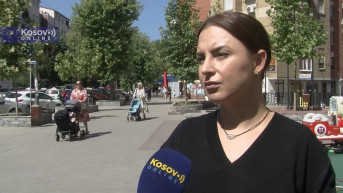
Jovana Radosavljevic, the director of the New Social Initiative, told Euronews Serbia that the boycott of the referendum scheduled for April 21st does not come as a surprise. She emphasized that the most realistic scenario was for the mayors themselves to resign, creating circumstances for new local elections after the Serbian community showed good will by initiating a petition.
"The boycott of the referendum, set for April 21st, does not come as a surprise, even though we saw at the beginning of the year, in January, that citizens initiated a petition, naturally supported by the Serbian List, to start the process for the mayoral recall. In the meantime, concerning events occurred, such as the decision by the Government of Kosovo, namely the Central Bank of Kosovo on the dinar, but also the strange and worrying decision to install cameras in voting centers," says Radosavljevic.
She adds that video surveillance in voting centers has not been a practice in Kosovo and that it is a practice in Albania.
"It seems as if they are now trying to test a new form of election monitoring in the north where the situation is delicate. Without thinking, this move raises suspicion and concern among the citizens who feel unsafe and deeply distrustful towards Kosovo institutions, especially in a context where Serbs left the institutions on November 5, 2022, under several conditions, among them the constant presence, i.e., the withdrawal of special units of the Kosovo police. These special units are still in Kosovo, they have even reinforced their bases, especially the base on the way to Bistrica which now has sniper nests, and people do not feel comfortable or safe under these circumstances," says Radosavljevic.
She highlights that due to all this, political actors cannot expect citizens to be willing to vote "for" or "against" the recall of mayors. She added that the number of voters in the north of Kosovo is "inflated."
"The fact that voting can only be done in person, i.e., an individual has to be physically present in the north of Kosovo to vote, is concerning. Postal voting or anything similar is not allowed, which affects voter turnout. Generally, far more voters are registered than are actually here, taking into account the fact that a large number of people have also left Kosovo in the meantime, it's very questionable whether the referendum will succeed in terms of having enough votes, i.e., 50 percent plus one voter who turned out and will vote in favor of the recall," she states.
Speaking about the international community's promise that if the petition passes, mayors of municipalities in the north will resign and that this did not happen, Radosavljevic says there was a lot of "speculation about what the secret agreements were and whether there were any at all."
"The most realistic scenario was for the mayors and council members themselves to resign, creating circumstances for new local elections. This did not happen, and with the initiation of the petition where the Serbian community showed good will, we should have met halfway, and the mayors should have resigned on their own," she says.
She adds that the international community is interested in getting out of the crisis.
"The most efficient, cheapest, and fastest way would be the resignation of the mayors. In circumstances when Kosovo is entering a pre-election campaign, it is very difficult to expect something like this to happen because out of the four municipalities in the north, we have two where the mayors are from Self-Determination, and in two, the mayors are from the opposition," she notes.
Speaking about the census currently being conducted in Kosovo, she said it was supposed to be held in 2021 but was postponed due to the coronavirus pandemic, and then again last year, because, as she says, there was not enough capacity to conduct it.
"There is a great concern that there is still not enough capacity to conduct the census as necessary, that there are not enough enumerators. We have statements from the mayor of Zubin Potok that the majority of Serbian enumerators have left these positions, leaving only two. I must mention that according to the Law on the Census of Population of Kosovo, it is necessary to form municipal census commissions at least six months before the start of the census, which must reflect the demographic structure, and it is very questionable whether this is the case in Serbian communities," she said.
She adds that there was almost no informational campaign about the census, especially in Serbian communities, so, according to her words, many citizens do not know that the census has started at all, nor are they aware that there are fines for not being enumerated.
"Fines range from 30 to 2,000 Euros. On the other hand, we have political representatives first from the Party of Kosovo Serbs, then Serbian Democracy, and finally the Serbian List where they all call for either a boycott or postponement," she says.
She added that it is necessary to have an informational campaign so citizens know what process they need to go through and can decide.
"The census itself and the questions posed are very concerning. From the fact that the translation into Serbian is scandalous, half of it is even incomprehensible, and whether the enumerators on the ground will have the capacity to conduct the census, that is, to translate to citizens what the question is and what they are asked to respond. We have very intimate questions directed at women - whether they have had an abortion, without the option not to respond, only "yes" or "no," or questions related to war compensation only for the period up to June 1999 where Serbian and other non-majority communities are discriminated against," says Radosavljevic.

0 comments