
Radosavljevic on Cultural Heritage Inspectorate law: Serbian Orthodox Church, our holy sites and survival under threat
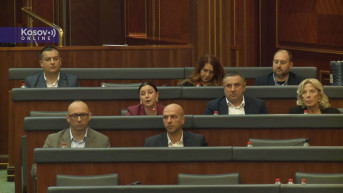
Serb List MP Jovana Radosavljevic said that the Law on the Central Inspectorate for Cultural Heritage, adopted at first reading by the Kosovo Assembly, directly affects the protection of Serbian Orthodox holy sites in Kosovo. She announced that the party would submit amendments ahead of the second reading and use all legal, institutional and political means at its disposal.
“Last night, at around 2 a.m., when neither the media nor observers were still present in the Assembly chamber, the Draft Law on the Central Inspectorate for Cultural Heritage was adopted at first reading. This is a law that directly affects the protection of Serbian Orthodox holy sites in Kosovo and Metohija,” Radosavljevic said. She is also the only Serbian representative on the Committee on Culture, Tourism, Sports and Youth.
She disputed the minister’s assertion in the Assembly that this was merely a “procedural” law concerning only the establishment of an agency.
Radosavljevic explained that under the law, an inspector would have the authority to halt work on Serbian monasteries and churches, prohibit their restoration and seek the revocation of permits in special protective zones.
“Nowhere does it mention the protection currently afforded to Visoki Decani, the Patriarchate of Pec, Gracanica and the Church of the Virgin of Ljevisa. Nowhere does it mention the Serbian Orthodox Church or its right to have a say in what happens around its holy sites. Nor does it mention the mechanism under which disputes are resolved with the participation of international representatives. In short, an inspector accountable to a ministry in Pristina will decide what the Serbian Orthodox Church may do at its own holy sites. The inspector’s measures take effect immediately, an appeal does not suspend them, and that same Ministry decides on the appeal,” Radosavljevic said in a Facebook post accompanying a video of her address in the Assembly.
This, she added, meant that the Serbian Orthodox Church would remain the owner on paper but would not be able to freely care for its holy sites.
“And all of this without consultations with the Church,” she stressed.
She also said that the manner in which the process had been conducted spoke for itself.
“The session was convened without the consent of the Presidency, which itself did not have a quorum. We asked for this item to be removed from the agenda. They outvoted us. Then they waited until 2 a.m., probably assuming that we would no longer be in the chamber. We were.”
Radosavljevic said that during her address in the Assembly she had also argued that a law of this kind had to be voted on in accordance with Article 81, which also requires the support of MPs representing non-majority communities, stressing that this was not a political privilege but a constitutional mechanism designed to protect against being outvoted by the majority.
Her request, however, was not taken into consideration.
“The vote proceeded as though this were an ordinary law, by a simple majority. In the end, there were 62 votes in favor, eight of ours against and one abstention,” Radosavljevic added.
She said that Self-Determination was no longer even attempting to conceal what it wanted.
“The Serbian Orthodox Church, our holy sites, the protected zones and, ultimately, our survival here are under threat,” she warned.
She also stressed that the safeguards currently in place had not been established by accident, but specifically to protect against majoritarian outvoting and the erasure of Serbian identity.
“Last night, we saw just how necessary those safeguards are and how easily they can be circumvented when no one is watching. If those safeguards can be bypassed by a single vote at two o’clock in the morning, then it is legitimate to ask how much all the other guarantees we have been given are actually worth,” Radosavljevic said.
She announced that the Serb List would submit amendments.
“We will continue this fight. Ahead of the second reading, we will submit amendments, insist on compliance with constitutional procedures and use all legal, institutional and political means at our disposal. And we will not remain silent while, under the pretext of administrative reforms, mechanisms protecting our identity and our existence are dismantled,” Radosavljevic concluded.
Earlier today, the Serb List also criticized the adoption of the draft law at first reading, arguing that it granted broad powers to the Inspectorate without clearly guaranteeing respect for the property rights of the Serbian Orthodox Church and the laws protecting the Church’s special status and its property.
Serb List parliamentary group leader Igor Simic also addressed the issue in the Assembly yesterday, calling for the draft law to be removed from the agenda. He said that the legislation affected the interests of the Serbian people, who had not been consulted on the matter.

0 comments