
Rajic: Slovakia remains part of the Western bloc, but also the firmest in its stance of not recognizing Kosovo
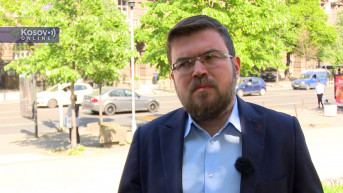
After Peter Pellegrini's victory in the presidential elections, Slovakia will remain part of the Western Eurozone bloc and will not make major shifts in foreign policy, but it will also not change its policy regarding Kosovo, Predrag Rajic from the Center for Social Stability says to Kosovo Online.
He notes that Slovakia is a member of the European Union, NATO, and the only Central European country that is a member of the Eurozone, so it will definitely remain part of the Western Eurozone bloc. He views Peter Pellegrini's victory as the consolidation of the former government and the return of Robert Fico's Direction party, which fell apart six years ago when Pellegrini himself left to form his own political party.
"They split precisely on the issue of Slovakia's foreign policy course, as Fico is very critical of Western governments in general, leaning towards liberal thought, similar to Orban, although he is nominally left-wing while Orban is conservative. Fico is closer to Orban on those issues and harbors a very pro-Russian sentiment. Pellegrini is somewhat different; he left Direction precisely because of that and stated that such a policy was not close to him. He doesn't see himself as a pro-Russian politician but as pro-Western. Over the years, you could always see him in public, even symbolically, with Slovak and EU flags, emphasizing that he sees Slovakia's future exclusively within that alliance," our interlocutor explains.
He predicts that Slovakia will now adopt a similar course to Hungary but that Pellegrini will be the "pro-Western link."
"Since a coalition was formed after the parliamentary elections late last year, comprising Fico's Direction, Mr. Pellegrini's party, and nationalists from Mr. Danko's Slovak National Party, and this government has taken a course that can be somewhat compared to Hungary's stance, we can expect them to follow that policy in the future, especially now with a president from that coalition. However, I believe that Pellegrini, both as a leader and someone who has held such views as we've seen in recent years, will be the pro-Western link within that coalition," Rajic says, emphasizing that Pellegrini will be the one carrying the message that Slovakia remains within the Western bloc.
"Of all three constituents of that coalition, Fico's Direction and Danko's Slovak National Party are declaratively, and even in actions, much more inclined towards what can be called pro-Russian, while Pellegrini has always harbored a moderate pro-Western sentiment. I don't expect a change in Slovak foreign policy, as it didn't change even after forming a government with Fico, who rhetorically is much closer to the Russian side. So I don't expect a change now with Pellegrini's victory, who within the ruling coalition is someone closest to Brussels," Rajic explains.
Regarding Kosovo, he says that it is practically impossible to change the policy there.
"Slovakia has taken a stance regarding the unilateral declaration of Kosovo's independence at the state level. Even during the previous government, which was extremely pro-Western, there was no change in that course. So even under the former presidents Zuzana Caputova and Andrej Kiska, who are strongly pro-Western, there was no policy change," he states.
He explains that it is not primarily the president's jurisdiction to make such decisions but the government's, and Slovakia, along with Cyprus, is the firmest in its stance not to recognize Kosovo.
"They even enacted a law that without parliament's decision, a new state cannot be recognized. Unlike the Czech Republic, which made this decision at the government level, Slovakia cannot do so, it requires parliamentary approval with a majority of total members voting 'for.' That's impossible, it won't happen, especially now as Pellegrini as president doesn't support so-called Kosovo, neither does Fico as prime minister, nor anyone in that government, and I would say not even the majority of the opposition has views going in that direction. In Slovakia, this is quite firm, probably alongside Cyprus, the strongest among these five EU member states that don't recognize so-called Kosovo," Rajic concludes.

0 comments