
Kosovo’s energy future between coal, imports and new partnerships
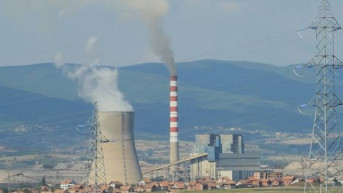
Kosovo’s energy security is once again at the center of political and expert debate ahead of a winter that Economy Minister Artane Rizvanolli has warned will be difficult due to high prices on the international market. While domestic generation capacity is facing problems and Unit B1 of the Kosovo B Thermal Power Plant remains offline due to ongoing works, Kosovo is relying on electricity imports. The question, however, is not only how to secure sufficient electricity over the coming months, but also how to reduce dependence on imports in the long term and build a stable and sustainable energy system.
Written by: Slobodan Cagic
The situation in the energy sector has once again been the subject of heated debate in the Kosovo Assembly in recent days, with the opposition criticizing the Government over the cost of electricity imports and insufficient investment in domestic generation.
LDK MP Janina Ymeri said that, for a single hour, from 5 p.m. to 6 p.m., imports of 275 megawatts of electricity had been planned at an average price of €162 per megawatt, which, according to her calculation, amounted to a cost of more than €46,000.
Alliance for the Future of Kosovo MP Burim Ramadani said that Kosovo had spent €1.055 billion on electricity purchases between 2021 and October 2026. He also said that €938,000 had been spent on electricity imports on November 12 alone. These were figures presented by Ramadani during the Assembly debate.
Economy Minister Artane Rizvanolli warned that Kosovo, like the rest of Europe and the world, was entering a difficult period in terms of energy. According to her, electricity prices on international markets had already reached €500 per megawatt-hour in early November, before the coldest days and the period of peak consumption had even begun. Rizvanolli said the Government would seek to avoid increasing consumer tariffs.
Following the debate in the Kosovo Assembly, the Government in Pristina adopted a decision suspending electricity trading with companies from Serbia, as well as two additional decisions concerning the introduction of emergency measures in the energy sector and the securing of cross-border transmission capacity.
The condition of domestic generation facilities is one of the key factors determining the extent to which Kosovo will depend on imports. On November 13, the Kosovo Energy Corporation (KEK) announced that it had begun the process of bringing Unit A4 of the Kosovo A Thermal Power Plant back online.
At the same time, Unit B1 of the Kosovo B Thermal Power Plant has been offline since April due to work on the installation of an electrostatic precipitator and a DeNOx system. The contractual deadline for completion of the works and boiler start-up was November 25, but the Ministry of Economy said that the contractor had announced a delay.
Responding to criticism, KEK explained that the environmental project was under the responsibility of the European Union, while the turbine modernization was a separate investment by the corporation. According to KEK, work on the turbine and cold commissioning was completed on November 2, while final testing depends on completion of the electrostatic precipitator and DeNOx project.
Energy expert Adhurim Haxhimusa warned that Unit B1 was not expected to return to operation before the end of the winter season, which, in his assessment, could make maintaining a stable electricity supply during December and January even more difficult.
Beyond the condition of the thermal power plants and short-term supply challenges, Kosovo’s long-term energy security will depend on decisions concerning new generation capacity, the development of renewable energy sources, electricity storage and improvements to the transmission grid.
Different approaches among international partners, primarily the United States and European countries, also intersect in this area, and their visions for the region’s energy future are not always aligned.
Energy crisis could have been avoided
The abandonment of the “New Kosovo” and “Kosovo C” projects, coupled with the lack of more extensive rehabilitation of the Kosovo A and Kosovo B thermal power plants, left Kosovo dependent on electricity imports, according to former Minister of Energy and Mining Etem Ceku.
“Of course, it did not have to come to this. How could we have avoided it? By continuing the lignite-based power generation projects, by developing the ‘New Kosovo’ and ‘Kosovo C’ projects that existed at the time, which would have provided a solution not only for electricity supply but for many other problems as well,” Ceku told Kosovo Press.
He believes that building new generation capacity, including a 500-megawatt unit, combined with comprehensive rehabilitation of the existing thermal power plants and the development of renewable energy sources, would have provided a more stable electricity supply. In his assessment, such investment would also have been significantly more cost-effective than long-term reliance on imports.
Ceku warns that high energy costs are particularly damaging to businesses, which are relying on generators and expensive fuel because of electricity supply problems.
“Industry throughout Kosovo, whatever the sector, and particularly the private sector, is being suffocated by the high cost of generating electricity with generators,” the former minister said.
He identifies the possibility of companies relocating production outside Kosovo because of high energy costs as one of the greatest risks. He therefore believes that urgent investment in domestic generation capacity, the development of solar and wind power, and political consensus on the future direction of the energy sector are necessary.
“The extreme politicization of the energy issue must come to an end. A working group needs to be established which, through the Assembly and the Government, would be tasked with developing this sector. Political consensus is needed to support the development of the energy sector. Otherwise, if our country continues down this path, in the years ahead it will be paying several times more for electricity,” Ceku warned.
Electricity imports burden budget, long-term strategy lacking
President of the Kosovo Business Alliance Agim Shahini told Kosovo Online that Kosovo lacked sufficient generation capacity and was lagging behind in the development of new energy projects, forcing it to spend substantial amounts on electricity imports.
“We are still importing quite a lot, nearly €1 million worth of electricity a day, which is a great deal for our budget. We have considerable potential to generate our own electricity, but the Ministry of Economy is behind schedule with tenders and its energy sector development plan. We know that we do not have sufficient generation capacity,” Shahini said.
He believes that the money spent on electricity imports could instead be invested in infrastructure and other development projects.
In his assessment, the energy crisis remains unresolved and Kosovo lacks a plan that would provide a long-term solution to the problem. He sees the construction of a new thermal power plant as one possible option, but notes that launching such a project would now be very difficult.
“The crisis is still ongoing, and there is no strategy for resolving it. We can solve this only if we launch the construction of another thermal power plant, but that is very difficult now. We have to move toward alternative energy sources—solar, wind and hydropower. However, progress there is also very difficult. We still do not have a strategy for launching the projects we need,” Shahini said.
As an additional challenge, he cited obligations to increase the share of renewable energy sources, stressing that it remained unclear how Pristina intended to meet the targets that had been set.
“We also have European Union requirements for alternative energy to account for at least 20 percent by 2030. That is something we certainly have to meet. We do not know how the Government views this or how it intends to meet those obligations,” the President of the Kosovo Business Alliance said.
Speaking about security of supply during the winter, Shahini warned that reliance on imports did not represent a reliable solution because the availability of electricity on the regional market depended on generation in other countries.
“We can never be secure when we constantly have to look for somewhere to import electricity from. Imports are never secure because generation in other countries is not guaranteed. They sell when they have surpluses, but in some cases, when they do not, they either do not sell at all or sell at three times the price,” Shahini said.
Energy is also a security and geopolitical issue
Political scientist Ognjen Gogic told Kosovo Online that the issue of energy in Kosovo extended beyond electricity supply and that various security and geopolitical interests intersected in this area.
“Energy, therefore, is not merely an energy issue for Kosovo, but also a security and geopolitical issue. A great many interests actually intersect over energy. Kosovo has a problem; it faces an unresolved question of energy security and the long-term sustainability of its energy sources,” Gogic said.
He points out that Kosovo relies on lignite-fired electricity generation while covering its shortfall through imports. At the same time, the future development of the energy sector is also linked to various international projects and interests.
He identifies the US initiative to connect Western Balkan countries through gas pipelines carrying liquefied natural gas from the Adriatic and Greece as one of the major projects.
“The Americans expect not only Kosovo, but the entire Western Balkans to be connected to the gas pipelines they are promoting. We are talking about liquefied natural gas that would be supplied via the Adriatic and Greece and would effectively connect the entire Western Balkans. This is also linked to the project, or initiative, to displace Russia’s presence in the energy sector here,” Gogic explained.
In his assessment, US interests are not limited solely to addressing the energy needs of individual countries, but also encompass an effort to establish a broader energy order in the region.
“Kosovo is actually part of this package of US interests. The Americans are projecting their interests here, without thinking solely about what is in Kosovo’s interest or about its energy security. They simply want to establish their own energy order here, under their auspices,” Gogic said.
Gogic points out that Germany advocates a different approach, with greater reliance on renewable energy sources, which, in his assessment, demonstrates that there is no single international vision for Kosovo’s future energy development.
“Germany has a different concept, a different vision of what Kosovo’s energy security and energy policy should look like. That means relying on other energy sources, primarily renewables. So this is essentially a clash of concepts, both locally and domestically, as well as internationally,” Gogic said.
Under these circumstances, Pristina is attempting to maintain relations with different partners and benefit from their support without becoming dependent on a single energy pathway.
“The interests of different actors intersect here. Kosovo is caught in between. It is trying to strike a balance, while also seeking to retain both sources of assistance and influence. Time will tell how successful it will be in doing so,” Gogic said.



0 comments