
Rakocevic: Draft law on Inspectorate threatens Serbian Orthodox Church and life of community gathered around it
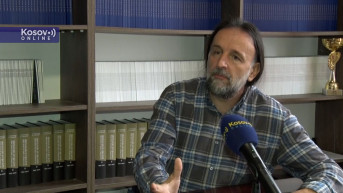
Writer Zivojin Rakocevic warned in a statement to Kosovo Online that the Draft Law on the Central Inspectorate for Cultural Heritage could seriously jeopardize the heritage of the Serbian Orthodox Church and the life of the community gathered around it. He said that pressure from the international community was necessary to have the draft law withdrawn from procedure.
Rakocevic assessed that the Draft Law on the Central Inspectorate for Cultural Heritage represented an attempt to introduce what he described as a “supra-law” that would, he claimed, override existing European-based legal arrangements and create scope for endangering Serbian cultural heritage and the heritage of the Serbian Orthodox Church in Kosovo.
“It appears that what remains of those laws and everything else is now supposed to be nullified by this new supra-law. That is why it is extremely important for the international community not to abolish its own role and to exert pressure to have this law withdrawn from procedure, because that is the best solution. This cannot be fixed,” Rakocevic told Kosovo Online.
He said that the concept of an “inspectorate in the field of culture” was paradoxical and sounded nonsensical.
“You cannot have an inspectorate for heritage, an inspectorate for culture, an inspectorate for the media, an inspectorate for public life. Things here are clearly delineated. There is Serbian, Ottoman and Albanian cultural heritage here. None of those three sides can assume primacy, nor can any policy or arrangement dictate to someone what their house should look like, what their church should look like, what should be done inside it or how. All the relevant professional services already exist, so the question is what this is supposed to lead to. This law is, in fact, intended to result in everything being turned into Kosovo cultural heritage through force and repression,” he said.
He stressed that the draft law threatened all previous legislation, which he said had been transposed from European legislation but was not being implemented.
“At its core, this law threatens the heritage of the Serbian Orthodox Church and threatens the life and the community gathered around the Serbian Orthodox Church, because churches are not built by the Church alone. The people build churches,” he said.
Rakocevic explained that the law could prevent any initiative by Serbs concerning the restoration and maintenance of Serbian Orthodox Church properties.
“This draft law also seeks to prevent initiatives by residents of a returnee village who want to do something in their small church. As things stand now, this law will determine who is allowed to replace a door handle and whether that handle meets the inspector’s aesthetic criteria, even though institutes and institutions for protection and restoration already exist, along with various bodies, including the Implementation Council, composed of representatives of the Serbian Orthodox Church, ministries and the international community. That Council should already be reacting and asking itself: ‘What are we here for?’” he said.
He stressed that it was extremely important for the Law on Special Protective Zones to remain in force, emphasizing that no one in Velika Hoca or Prizren should be allowed to move so much as a stone without the consent of the Serbian Orthodox Church.
“The essence of this law is actually to shift power away from European arrangements and from the solutions that emerged from the misfortunes of the past, so that everything can now be standardized to such an extent that it appears as though we do not exist. The essence of all these new arrangements is that we should not exist as Serbs, that Serbian cultural heritage should not exist, that we should be treated like the Incas, the Maya or the Vinca civilization—peoples and civilizations that disappeared long ago—and then dealt with within the framework of what they regard as legal solutions, such as this supra-law and Inspectorate. On the other hand, it is extremely important that there can be no perception or policy capable of turning us merely into Orthodox citizens on the territory of Kosovo or Greater Albania. It is clear for whom all of this was built, it is clear who built it, and it is clear that the people and the Church are an organic part of this area and that the holy sites are inviolable,” Rakocevic said.
The Diocese of Raska and Prizren has expressed serious concern over the Draft Law on the Central Inspectorate for Cultural Heritage, warning that the Inspectorate’s new powers could jeopardize the legally guaranteed rights of the Serbian Orthodox Church and circumvent existing mechanisms for the protection of monasteries and churches in special protective zones.
Serb List parliamentary group leader in the Kosovo Assembly Igor Simic said that the party would submit amendments to the Draft Law on the Central Inspectorate for Cultural Heritage because, in his assessment, it failed to guarantee respect for the autonomy of the Serbian Orthodox Church and existing laws protecting its holy sites and property. He warned that if the law were adopted in its current form, inspectors could independently interpret regulations and make decisions restricting the activities of the Church.
0 comments