
Zaklin Nastic: Germany is contributing to the escalation of the conflict in Kosovo with a unilateral approach
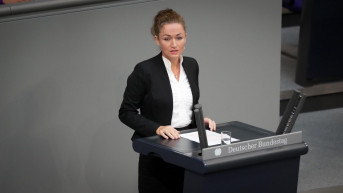
The German government is playing a very problematic role in the case of Kosovo, and instead of working on a solution acceptable to both sides and de-escalating the situation, it is taking sides and contributing to the escalation of the conflict, Zaklin Nastic, the MP of the Left in the German Bundestag, says in an interview for Politika.
Nastic points out that, while Albin Kurti and his government in Pristina are frowned upon for many shortcomings in terms of the rule of law, including the arbitrary arrests of former Serbian policemen, agreements such as the formation of the Community of Serb-majority Municipalities, which were already included in the 2013 Brussels Agreement, are not implemented.
"I call on the German government to make a fundamental change in its policy and to take into account the interests of both sides and work on mutual concessions," the German MP said.
According to her, Germany bears responsibility towards Serbia, because the red-green government participated in the illegal war against the former Yugoslavia and contributed to the current situation.
"So it bears a historical responsibility for that, and because it describes itself as 'values-based', it must also be measured against the standards it has set itself. Those who preach values, but do not deal with their own war and violation of international law, are not credible and must be open to accusations of double standards," Nastic added.
She also pointed out that, at the moment, the key to solving the conflict lay, first of all, in Pristina, where, according to her assessment, many problems were happening.
"If the so-called Western values, which created this artificial state, do not put enough pressure on Kurti, he will continue to play his game of nationalist politics," Nastic is convinced.
To the statement that the Community of Serb-majority Municipalities has not been formed even after 10 years, she replies that this says a lot about the authorities in Pristina, especially about how seriously Kurti can be taken as a negotiating partner because he clearly has no interest in peaceful coexistence in Kosovo.
"Now I have the impression that he is running a racist policy to appease right-wing and far-right voters. This is deeply troubling and dangerous. The ongoing conflict and the recent boycott of the Serb list of municipal elections are mainly the result of the fact that for 10 years the agreed CSM has not been established. However, there are numerous positive examples of such communities in the EU and some of its regions, which can be seen from successful examples in some regions of Spain, among others," Nastic says.
During the 28 months of Albin Kurti's rule in Kosovo, there were more than 320 ethnically motivated attacks on the Serbs, with injuries and shootings, and Nastic points out that this is shocking.
"It is particularly worrying that such incidents are occurring in the heart of Europe, but there appears to be minimal reporting and inadequate action to address the issue. During my visits to Strpce and Mitrovica, all parties informed me that the situation had worsened since Kurti had come to power. Arbitrary arrests, armed attacks, and attacks on Orthodox churches are increasing. It is unimaginable that people in the middle of Europe have to live in great fear and political segregation. The West can no longer sit idly by while the security of the Serbs in Kosovo continues to deteriorate," Nastic said.
That is why she expects decisive action to ensure compliance with UN Security Council Resolution 1244, which guarantees the protection of Serbian cultural sites, as well as appropriate pressure on the government in Pristina to ensure the establishment of the rule of law and the protection of all human rights and democratic standards.
When asked how they viewed the policy led by Serbian President, Aleksandar Vucic, in Germany, the policy of economic development, reconciliation, and cooperation in the region, she expressed her belief that Serbia's policy was a "thorn in the side" of the German government, especially in relation to the policy of sanctions against Russia.



0 comments