
Nastic: The atmosphere in which Serbs live in Kosovo is terrifying
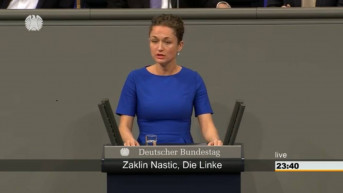
Member of the Left Party in the German Bundestag, Zaklin Nastic, visited Bosnia and Herzegovina, Serbia and Kosovo in March because, as she told N1, she wanted to gain a personal impression of the people, to gain insight into the functioning of the rule of law and the functioning of coexistence.
She adds that it was especially important to her because, as she states, Germany "encouraged the illegal attack on Serbia (1999) and recognized Kosovo".
When it comes to her impressions of Kosovo, she says that she had to be accompanied by an armed policeman for her safety, which, according to her, says a lot about the situation there.
She states that she was also in Gracanica and adds that the wire that surrounds that part in the middle of Europe frightened her.
"The monastery has to be protected like all the monasteries there, and it's scary," she points out.
She also visited the wounded boys Stefan Stojanovic and Milos Stojanovic, who were shot on Christmas Day, because in Germany some leading politicians claim that their assassination attempt was the work of the Serbian population.
She was also with the mayor of Strpce and in North Mitrovica, where she spoke with representatives of the Serbian List.
"The atmosphere in which the Serbs live in Kosovo is terrifying, and it reminded me a little of the situation with the Israelis and the Palestinians," she says in N1 Studio Live.
She adds that she has seen things that indicate to her "the escalation of the behavior of the regime in Pristina, daily life is restricted and thus coexistence is prevented."
Attacks are becoming more frequent; she states and reminds us of the Molotov cocktail that was thrown at the church in Prizren on Easter.
"I hear information that these cases are not being prosecuted or resolved," she says and adds that it is important that the American ambassador in Kosovo expressed concern about the situation and requested an investigation into such attacks.
She believes that "the government in Pristina is not convincing when it says that there is a will for peaceful coexistence on their side, and that is why it is important that the EU monitors the respect of human rights in Kosovo."
She points out that she personally and her party do not recognize the independence of Kosovo and that she will talk to her colleagues about everything she saw.
"It is important to turn the spotlight on the public, to discuss these topics, it is important to point out the circumstances and openly and honestly talk about the results of the war that was fought there (1998 and 1999)."
She also stayed in Serbia where, according to her, she talked with various politicians.
"It was about dealing with the consequences of the bombing in Pancevo and the use of depleted uranium, and preventing uranium bombing in the future. It is a very dangerous weapon and it is dangerous to send it to Ukraine now, not only for use against Russian soldiers, but it is also bad for Ukrainians," she points out.
She also spoke with the associations that have been looking for missing persons in Kosovo, saying that this requires the support of Western countries that participated in the war.
"States do not open files so that people can find the places where people are buried," she says and recalls Carla del Ponte's statement that the West did not offer help to solve some war crimes.
She also spoke about the pressure on Serbia to join the sanctions against Russia, which, as she indicates, most of the world did not join.
"People in Serbia have experienced a lot, they experienced the NATO attack, which was a violation of international law, and they feel injustice," she concludes.
She also commented on the West's demand that Serbia recognize Kosovo, assessing that "recognizing Kosovo would also mean acknowledging that the war was valid."



0 comments