
Zivkovic: Key messages of the Assembly displease both Pristina and the West
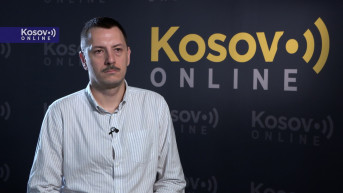
Historian Bogdan Zivkovic assesses that one of the key messages of the All-Serbian Assembly, which is displeasing to both Pristina and the West, is that Serbia does not give up the fight to preserve its territorial integrity.
"It is clear that Albanian nationalism currently profits significantly from the Western stance towards Serbia and seeks to present itself as a credible partner and as a victim of Serbian nationalism. In this regard, it was logical and expected that there would be negative reactions from the Albanian national corpus to this Assembly," Zivkovic stated for Kosovo Online.
He says that the most vehement reactions came from Sarajevo, Pristina, and Podgorica because they "are used to having Western support in their fight against Serbia and Serbian interests to achieve their national interests."
"This Assembly gave strong support to returning to the original Dayton Agreement and strengthening the powers of the Republika Srpska. In this regard, of course, those who primarily might have objections are the collective West, which supports Bosniak efforts towards the unitarization of Bosnia and Herzegovina, as well as the Bosniaks themselves. This is an issue of broader significance in the region," he stated.
He emphasizes that one of the key messages of the Assembly, which is displeasing to both Pristina and the West, is that Serbia does not give up the fight to preserve its territorial integrity.
"It is clear that Albanian nationalism currently profits significantly from the Western stance towards Serbia and seeks to present itself as a credible partner and as a victim of Serbian nationalism. In this regard, it was logical and expected that there would be negative reactions from the Albanian national corpus to this Assembly," Zivkovic assessed.
He added that Pristina's key rhetoric is equating the north of Kosovo with the Republika Srpska.
"Albanians, in their propagandistic claims, often try to equate the north of Kosovo with the Republika Srpska. And, of course, it is logical that these are their reactions. What is more important is how the West will react to this, whether they will receive Western support based on these reactions or not. It seems to me that there is no significant displeasure on Western addresses regarding this Assembly and that this is crucial for regional repercussions. So, it all depends on whether the West will support these aspirations or not," Zivkovic noted.
Commenting on reactions in Montenegro, this historian notes that Milo Djukanovic's Democratic Party of Socialists tried to use the Assembly to offer themselves a return to power by claiming that Serbian representatives had humiliated Montenegro.
"Of course, this is a propagandistic claim, but what is important to say is that many, including the DPS, believe that the West is silent about this Assembly," Zivkovic said.
He adds that Belgrade was disappointed with the decision of the Montenegrin leadership to support the Resolution on Srebrenica and that the messages from the Assembly's representatives show that there are two political approaches among Serbs in Montenegro.
Zivkovic notes that one is represented by Andrija Mandic, who believes that despite the support for the resolution, Serbs should remain in the current government and fight for their rights within the system, and the other is Milan Knezevic, who does not exclude the possibility of leaving the government.
"In this dichotomy, it seems to me that official Belgrade has given slightly more support to Knezevic," Zivkovic explained.
He emphasizes that one of the unspoken messages of the Assembly is that, due to the vote on the Resolution on Srebrenica, the Montenegrin government should now make some concessions to the Serbian community, such as voting for dual citizenship.
"In this regard, Andrija Mandic explicitly spoke about introducing dual citizenship. This is a very sensitive issue. I doubt it will happen, but I certainly think the message after this Assembly is that Serbs will somehow increase their demands in the political struggle in Montenegro. Whether they will be successful or not remains to be seen, but it seems to me that Mandic's approach, which is somewhat more moderate, might be more fruitful and might yield greater results, whereas Knezevic's radicalism might lead to the Europe Now movement turning to other actors to form a government with them," Zivkovic concluded.



0 comments