
Bacovska Nedic: Macedonian politicians lack creativity in election campaigns, local issues sidetracked
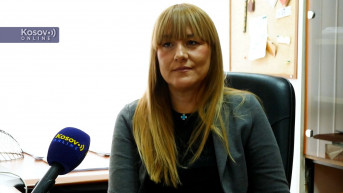
The campaign for the local elections in North Macedonia, though still in its early stages, is already showing the old habit of political parties to focus on national issues, while local problems such as infrastructure and the environment are once again being pushed into the background, says Jasna Bacovska Nedic, professor at the “Iustinianus Primus” Faculty of Law in Skopje and expert in media and communications.
“We are only at the very beginning of the campaign, but there was a pre-campaign period, as always. And as we can see, we can’t seem to abandon our tradition where national topics dominate political campaigns, even local election ones. These are themes that are deep and highly specific to parliamentary elections, for example, identity, the country’s name, or general state issues. We can see that the candidates in this race are not moving away from that agenda in their rhetoric, despite the fact that local elections are something completely different, where the individuality and personal profile of the candidates are very important,” Bacovska Nedic told Kosovo Online.
According to her, candidates should focus more on their local communities.
“A candidate should have a positive perception within the community that elects them and rely less on their political party as a background, and more on their own integrity, ideas, and plans for the local community,” she explained.
She reminded that North Macedonia faces a series of local problems, such as infrastructure, hygiene, and environmental issues, that candidates rarely address.
“Local self-government is inefficient, and citizens find it difficult and slow to exercise their rights. If we analyze the content of the candidates’ speeches in this campaign, we can see that they deal very little with local issues. From that perspective, political parties should think about internal education for their candidates. It is not only about winning votes, they should also act responsibly toward society and take concrete action,” she noted.
The professor added that, from a professional standpoint, “the local response is much more important than the external one in foreign policy.”
“We must first put our own house in order before expecting to be perceived positively abroad. That is the kind of tendency that should be reflected,” Bacovska Nedic said.
Commenting on the visual identity of the campaign, she argued that creativity is also lacking in that area.
“When we look at the posters and billboards, they are all the same, there is no greater creativity. You can’t even tell the difference between the visual identity of local and national campaigns. The billboards we see across the city just show the candidates’ faces, without a single problem or solution highlighted, nothing that distinguishes this campaign from previous ones,” she pointed out.
She added that campaigns should do more to engage young people and pull them out of political apathy.
“The campaign has only just begun, it usually intensifies toward the end. We will see how innovative and creative the candidates will be, and how they will reach out to young people on social media. Campaigns aren’t only about getting votes or self-promotion; they should also serve as an educational tool for young people, to sensitize and involve them, so we don’t end up with politically apathetic youth,” Bacovska Nedic explained.
Finally, she emphasized that the candidates also lack authenticity.
“That is important as well, and from what I can see, the candidates aren’t very authentic. They don’t invest energy or emotional intelligence, and they identify more with their political parties than with their own ideas for solving problems,” the professor from Skopje concluded.



0 comments