
Zaimi: Europeans are in a dilemma over what to do with the Western Balkan countries, Rama’s veto proposal is not accidental
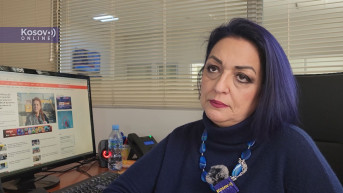
Gerta Zaimi, a researcher at the Center for International Strategic Studies in Tirana, believes that the proposal by Albanian Prime Minister Edi Rama for Tirana to give up the right of veto if the European Union admits it to membership is not accidental, as it emerged at a moment when Europeans are facing a major dilemma about what to do with the small countries of the Western Balkans.
“With what status should they admit countries with 800,000 inhabitants such as Montenegro, or several million like Serbia, which is the largest country in the region but is still comparable to some large European cities? So they face a dilemma as to whether these countries should enter the EU with the right of veto, or whether, with their accession, the principle of the veto should somehow be bypassed. Rama’s proposal is not something personal, so I do not believe it was made without consultations with the EU. I think his proposal is an appropriate way to avoid a major European problem, while Western Balkan countries have an interest in integration. I do not think it is such a negative idea,” Zaimi told Kosovo Online.
At the same time, she points out that the right of veto within the EU was introduced with the aim of preventing large countries from making decisions on behalf of small ones, and that what is known as the veto issue, which is today one of the pillars of the European Community, emerged in order to prevent the dominance of large countries, especially France and Germany, which were the most powerful, as well as Italy.
“The aim was to ensure that large countries do not make decisions on behalf of small ones. This idea arose from a democratic principle. The problem is that over time even Europeans themselves have seen that the veto has become a major problem. They do not know how to change this principle, because to do so they would have to amend the fundamental treaties of the European Community. For this reason, EU leaders do not know how to act. Perhaps a solution can be found through agreements, as was done in the case of Brexit, when it was decided how the United Kingdom should leave the Union without changing the main treaties,” Zaimi notes.
Rama’s idea on the veto, she says, is not in contradiction with other Western Balkan countries that will sooner or later want to become part of the European Union.
“Even if different countries may have personal disputes with Rama, Western Balkan countries share more or less the same political goal, which is to join the EU. Even Serbia, despite surveys showing that the population is not particularly in favor of joining the EU, or other phenomena such as Serbia’s ties with Russia and other countries, we can say that all the signals coming from politics in Belgrade show that Serbia also wants to be part of Europe. Perhaps this will not happen soon, but later, as it is also linked to the Kosovo issue, yet we can still say that this is a long-term plan for EU accession. It is a long-term plan for many different reasons,” our interlocutor says.
In addition to his readiness for Albania to be without the right of veto in the EU, Rama also stated that another member state, such as Italy, could represent Albanian interests in the European Commission, but Zaimi says she does not know how serious that proposal was.
In her assessment, it was more of a joke intended to show sympathy at a meeting with Italian representatives, rather than a serious plan on such an issue.
“I would say that Albania does not need anyone else to represent it, because it is capable of representing itself when it needs to be represented in the highest EU bodies. As for the veto issue, it can be bypassed under Rama’s proposal, but above all this is a European problem that the EU itself must resolve. So we are faced with a situation in which it is better to have countries like Hungary inside the Union than outside it, because you can exert more influence on them on all kinds of issues when they are within the European Community. If they were outside the EU, they would be uncontrolled. The same applies to Western Balkan countries, which are better off as members than outside the EU,” Zaimi concludes.



0 comments