
Amnesty International: There is a lack of adequate treatment for victims of domestic violence in Kosovo
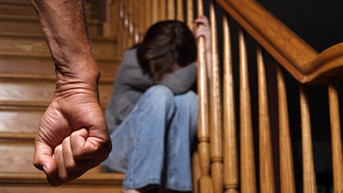
A report published on Thursday by the human rights organization Amnesty International shows that victims of domestic violence in Kosovo, who in most cases are girls and women, face uncertainty and a lack of support from the system, the Voice of America writes in the Albanian language.
Survivors of domestic violence interviewed by Amnesty International said the state's response had been insufficient to support them to live independently, forcing many to return to their abuser.
Rina Kika, the author of the report, told Voice of America that the state's response to domestic violence was not focused enough on the victims.
"One of the main findings of our report is that the response of Kosovo is very focused on criminal justice, and even this response is inadequate when it comes to cases of domestic violence. Meanwhile, very little is being done to enable the person who experiences domestic violence to live independently and have social support in terms of housing, employment, and training and live a life without violence," Kika said.
Women survivors who try to leave abusers face serious obstacles, such as a lack of information about available help, harassment by police officers, overburdened social workers, and inadequate support services, according to the report.
"The moment they go to the police, they are treated with disrespect, gender bias, using language that blames them for the violence they have experienced, and this usually discourages them from reporting other cases of violence. The same happens in the courts where we have very low sentences. According to the analysis we did, these are punishments inconsistent with the gravity of the crime, mostly suspended sentences and fines," Kika says.
She also states that one of the essential factors that puts women in a difficult situation is their economic dependence on their family or husband.
"We also saw official state statistics that show how low women's participation in property is, how few women own property, how few women are formally employed, and this naturally made them dependent and vulnerable, forcing them to return to situations of abuse because they cannot be independent," she emphasizes.
According to data published in the 2017 report, only 17 percent of women were formally employed compared to 50 percent of men, and in 2021 only 18 percent of property was owned by women compared to 79 percent owned by men.
Moreover, women are often excluded from family inheritance or renounce their rights due to social pressure, despite laws guaranteeing them equality with men in these matters.
Amnesty International's study recommends that the system include victims of domestic violence in policy-making processes, as well as implement comprehensive prevention policies that ensure that survivors have sufficient protection and support to leave situations of abuse and to access justice and reparations according to their needs and priorities.
Since 2018, there has been a continuous increase in reports of domestic violence.
In 2019, the Kosovo Police registered 1,915 cases, and in 2022, they marked the highest level of domestic violence so far with 2,764 reported cases.
The report says that, as alarming as they are, the figures are likely to understate the actual number of domestic violence cases, as many women choose not to report them to the authorities.
A 2019 survey by the Organization for Security and Cooperation in Europe found that nearly 50 percent of the 1,990 women surveyed in Kosovo believe that violence is a private matter that should be dealt with within the family.



0 comments