
Lucic: Telekom Srbija illustrates Kurti’s intent to expel all Serbs from Kosovo
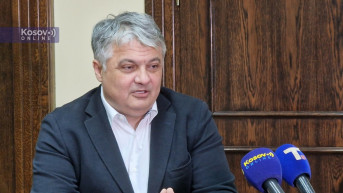
General Director of Telekom Srbija, Vladimir Lucic, stated that during his recent visit to the United States, he held important meetings at the State Department, where he outlined all the challenges the company faces in Kosovo as the only remaining Serbian company operating there, Politika reports.
"Through our example, we illustrated the intent of Kurti's administration to expel all Serbs. I believe Telekom Srbija, which should be able to operate freely under the Brussels Agreement, but instead faces numerous administrative barriers, clearly shows how Kurti’s administration violates its own laws just to hinder the work of a Serbian company employing Serbs," Lucic said.
He recently spoke at a forum in Washington on transatlantic economic cooperation in Southeast Europe and addressed Congress, stating that it was an honor to be a guest of the Atlantic Council.
He explained that he was invited as the keynote speaker because Telekom Srbija is an excellent example of successful engagement with American and European institutions, which has improved its business performance.
According to Lucic, business breaks down borders, including political ones.
"The strongest impression I had was that relations between Serbia and the United States have improved significantly thanks to President Aleksandar Vucic. The changes are visible at every turn. This was my most successful visit yet. We are the first telecom operator in Europe to receive direct support from the U.S. Export-Import Bank for the development of 5G, which is a major milestone. Bringing the U.S. Export-Import Bank to Serbia is great for our country. Once they begin working on the 5G development project here, it will open the door for other American investments as well—and I’m confident that will happen," Lucic said.
He stated that, considering revenue growth over the past three years, Telekom Srbija is a leader in Southeast Europe and expressed pride in the company’s financial results.
"Telekom Srbija had a historic year last year due to exceptional revenue growth. It's true that in 2023 we had a one-time revenue of 500 million euros from selling towers, which makes comparisons with 2024 difficult. But if we exclude that one-off income and compare 2022, 2023, and 2024, we see that Telekom Srbija achieved revenue growth that is unique not only in Southeast Europe but hard to match even in other European countries," Lucic said in an interview with Novosti.
He emphasized that the company increased its revenue by over 300 million euros in Serbia alone, now totaling €1.358 billion domestically and approximately €1.8 billion for the entire group.
Consequently, he added, the operational profit (EBIT), a key indicator of a company’s valuation and stability, also grew by €300 million.
"Telekom Srbija’s EBIT stands at €660 million, while at the group level it's close to €900 million," Lucic noted.
He credited this strong performance primarily to an increase in the number of users, highlighting that the company gained over 250,000 new clients and is approaching a total of 12 million users.
According to him, this trend is expected to continue into 2025.
"We will achieve what few telecom operators have managed—sustained high revenue growth. Comparing 2025 with 2018, when we launched this new investment cycle, you will see that we’ve practically doubled our revenue in Serbia," he pointed out.
Lucic also said he discussed with U.S. officials Telekom Srbija’s exceptional financial performance in 2024, despite efforts by various critics in Serbia to discredit it.
Despite claims that the company is over-indebted and nearing bankruptcy, Lucic reminded that in the second half of last year, Telekom Srbija signed a preliminary agreement and finalized the acquisition of part of the United Group. After a major investment cycle and intense market competition, the company emerged victorious.
"They exited the market and sold their telecom operations to us and PPF, and sold us Sport Klub," he stated.
Another testament to the company’s success, according to Lucic, is its entry into the stock market.
He emphasized that Telekom Srbija was the first company—not only in Serbia but in the entire Western Balkans—to issue a $900 million bond on the Dublin Stock Exchange and receive a credit rating.
"This means our financial position is very transparent. We received a very good credit rating for a telecom operator, and I can say we did very well on the stock exchange—$6 billion in offers came in on the first day. So, we successfully navigated a financially challenging 2024, which included record payments for sports content, high but decreasing interest rates, and the need to secure funding for part of the United Group acquisition. We ended the year with debt still below 4 times EBITDA, which is a standard in the telecom sector," Lucic stressed.
He added that acquiring Sport Klub will reduce the cost of sports broadcasting rights, noting that early purchases indicate a fourfold drop in price.
This, he explained, will significantly reduce Telekom Srbija’s investments while revenue continues to grow, resulting in net debt reduction. When asked about future plans, he said the company’s position is strong and will allow for new investments over the next decade.
"Our main competitors on the market are Yettel and A1, which are entering fixed-line services. What's important is that Yettel and A1 will use our optical network and content. This means we will profit from every user, whether ours or theirs, as they will pay for our content and primarily lease our optical infrastructure," Lucic explained.
He said Telekom Srbija’s two main strategies are the development of TV content and digital services.
"We will become a regional streaming platform offering the latest news, music, sports, movies, and series. We are already recognized worldwide for our films and series—we sell to 30 countries, including HBO, Amazon, and Disney+. We’ve even reached the level where major platforms like Amazon co-produce series with us—like SCAR, which we made with Amazon Spain," Lucic concluded, as reported by Tanjug.

0 comments