
Stevic: The “Mother of the Nine Jugovics” Soup Kitchen – 25 years as a place for help, no one leaves here hungry
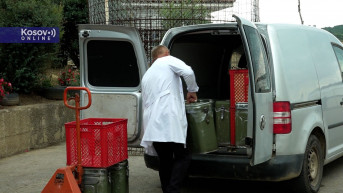
The “Mother of the Nine Jugovics” soup kitchen, operating under the Diocese of Raska-Prizren and led for 25 years by Svetlana Stevic with the support of employees and people of goodwill, provides a free daily meal for almost 2,500 people. In difficult times for Serbs in Kosovo, the challenges only served as motivation to continue providing all types of assistance to the most vulnerable, regardless of their religion or ethnicity. Today, a quarter of a century later, this soup kitchen remains a gathering place and a destination people turn to for help.
Since the Novo Brdo area was considered one of the poorest, the first soup kitchen was opened in Prekovce, in the municipality of Novo Brdo, where meals for 86 beneficiaries were prepared daily – a number that has since grown.
The head of the soup kitchen, Svetlana Stevic, recalls 1999, when the local population, caught off guard by the situation, had no means to survive and not even a shop nearby.
“The idea arose to directly help people by preparing food and baking bread. It was a very difficult start at that time, and we came here, to the village of Prekovce, since Novo Brdo was, and still is, one of the poorest and most vulnerable municipalities – 90% of the population worked in the mine and had small-scale livestock. We found this facility in chaos – it had been built by the former Yugoslavia as part of the ‘JU Program’ to help Serbs in Kosovo and Metohija. It was a former Jugoterm Gnjilane heating appliance plant, completely destroyed. We started slowly, cooking on a single ‘Smederevo’ stove, for 86 people. Now we serve 860. That alone shows that the situation has not improved – it has worsened, and surviving in Kosovo has been very hard all these years,” Stevic said.
The number of beneficiaries grew every year, Stevic noted, adding that the kitchens are now spread across six locations in Kosovo.
“Here in Prekovce we serve the municipalities of Novo Brdo and Gnjilane. We have two in Gornja and Donja Kamnica, one in the village of Vrbovac in the Vitina area, and the most recent in Klinë, in the village of Berkovo – six soup kitchens in total, feeding about 2,500 people. The distribution points are hard to count. For example, one driver delivering to Novo Brdo finishes his first route, then starts a second, because the vehicle is too small to carry all the bread and food at once. He drives around 140 km daily to reach people waiting with containers and bags for food and bread,” Stevic explained.
But it’s not only food that reaches the beneficiaries and others living in difficult conditions.
“We also distribute hygiene products, depending on what donors send – children’s clothes, shoes, and in September, school supplies. We try to provide everything a family needs to function – furniture, clothing, farm equipment, seeds, even livestock for families to raise. But none of this would be possible without good people who have known about us for 25 years. I like to say we are an outstretched hand – simply a channel for resources that donors send to families who have stayed here,” Stevic said.
She admitted there were moments she thought about giving up.
“Like any human being, you sometimes think, ‘I can’t go on,’ because working with people is very hard. When you hear heartbreaking stories – I’m a mother of four and grandmother of three – it hits you deeply. You need a strong heart to see and endure it, especially when children are involved. Some live on welfare, but it’s not enough to survive, to educate children, to give them security,” she said.
Without donors and the Government of Serbia, through the Office for Kosovo and Metohija, this work would not be possible.
“We strive to help everyone, especially children – renovating homes, building bathrooms, providing school supplies. The Bastionik organization from the Republic of Srpska helps a lot, sponsoring over 150 students each month, along with others like Serbs for Serbs, Partizan and Red Star fan groups, and the Office for Kosovo and Metohija, which has greatly supported us in recent years. Director Petar Petkovic even visited to see our work. We are not just a kitchen; we are a center where people seek help for treatment, medicines, and sending children to central Serbia for care. It’s hard, but over 25 years we’ve endured many trials. I am preparing for retirement, and someone else will take over if needed. I have given my whole self here, as has my family – my husband, a priest, my children, and many volunteers from Serbia and abroad who help with firewood, hay, or anything else,” she said.
The kitchen has also developed its own agricultural production for self-sustainability.
“We have over 57 cows, 26 bulls, 137 goats, over 200 sheep, poultry, laying hens, and a pig farm with over 250 pigs. We cultivate 46 hectares, growing vegetables for the kitchen. We have a vegetable pasteurization unit, and what’s left we sell to buy firewood or pay electricity. We also have a dairy for cheese and milk for our needs. We’ve worked hard to ensure nothing is lacking in meat, milk, or dairy products,” Stevic said.
Most of the workforce are volunteers, with some paid with the help of the Office for Kosovo and Metohija.
“About 85 families are supported by our work – on the farm, in the bakery, in the kitchen, in distribution, and in agriculture. We hire seasonal workers for farming. We have over 30 greenhouses, producing all kinds of vegetables for the kitchens. We try to contribute as much as we can to make the kitchens secure and worry less about tomorrow,” she noted.
The kitchen operates 24/7.
“The bakers start at 6 a.m., the cook lights the stoves and starts cooking. Food leaves at 11:15 for Novo Brdo and at noon for Gnjilane. In the afternoon, we prepare for the next day, then the bakers fire up the wood-fueled bakery to bake bread. We are here around the clock,” she said.
Beneficiaries are anyone in need, regardless of ethnicity or religion.
“Albanians also receive dry goods – around 25 families come monthly. Roma in the Kamenica area use cooked meals from the Bostane village kitchen. No one is turned away. This kitchen has been running for 25 years without stopping. It’s hard, but hopefully it will get better,” she said.
Stevic is convinced things will improve, because people give her strength.
“It would be wonderful if the kitchens could close, and everyone could return to their lives before 1999 – working in the mine or factories, farming, and living from their own work. But we will continue as long as even one person needs food, especially the elderly, sick, helpless, and large families. We are here to provide food and other support, and we are not planning to leave Kosovo,” she concluded.
Chef Miladin Kostic, who has worked alongside Stevic since 2001, shares that nothing is too difficult if done with love.
“It’s not hard when you have the will and know who you’re doing it for. Seeing happy faces as people leave gives me moral strength to keep going. We start at 7 a.m., and by 10:15 everything must be ready – 360 liters daily for around 520 beneficiaries in the Gnjilane and Novo Brdo areas. I’ve worked in kitchens at 50°C, then rushed into a cold room at 15°C – it’s not hard when you love what you do,” Kostic said.
Anyone wishing to help can send an SMS with the word “Pomoc” to 1033 via Mts, A1, Yettel, and Globaltel networks (message text: “Pomoc Narodnim kuhinjama na KiM”), or donate directly via bank account 205-243659-06, in the name of “Eparhija Rasko-Prizrenska,” Monastery Gracanica, 38205 Gracanica, with the note: “Pomoc za Narodne kuhinje.”

0 comments