
Bisenic: Two congratulations from the US are a sign of special attention towards the country of Serbia; Baraliu: Blinken's carrot and stick

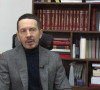
The congratulations of US Secretary of State Antony Blinken to the citizens of Serbia on the occasion of Statehood Day, which came after the congratulations of President Joseph Biden to the President of Serbia Aleksandar Vucic on the same occasion, shows the special importance that official Washington shows today to the state of Serbia and the Serbs, according to Dragan Bisenic, a long-time journalist and excellent expert on international affairs. We asked him and the well-known Pristina analyst Mazllum Baraliu for their assessment of what the leaders of the US told the citizens of Serbia through their congratulatory message.
Bisenic says that it is "striking" that Washington sent Serbia "two congratulations on the Day of Statehood".
"It is customary for the head of state to send a congratulatory message to the head of state, which is what US President Biden did, while simultaneous ministerial congratulation is quite rare. Both together represent a sign of special importance given to that country. For a long time, the special attention with which the US treats Serbia, and that didn't go unanswered because two weeks ago, the Serbian Minister of Foreign Affairs, the Patriarch of the Serbian Orthodox Church, and the Chief of the General Staff were in the US," Bisenic said for Kosovo Online.
Bisenic: Blinken is aware of the gravity of the situation
He says that the American president particularly welcomed Serbia's support for the European Union's proposal on normalization, "which will contribute to creating a more peaceful and prosperous future for the region."
"Biden stated that we needed to "call Russia to account for its unjust and unprovoked war against Ukraine”. Blinken's message represents a refinement and additional elaboration of the two most important elements of President Biden's message: the normalization of relations with Kosovo and relations between Serbia and Russia. Secretary of State Blinken's congratulation is a clear encouragement to the Serbian leadership since he is addressing the "Serbian leaders", to sign the Franco-German proposal on Kosovo and to impose sanctions on Russia. Blinken's support clearly points out and especially emphasizes the incentives, especially for the "Serbs" if they take the necessary steps, that it seems that it was given only for that reason because such utilitarian messages in the president's congratulatory message would be somewhat inappropriate," Bisenic explains.
Bisenic points out that Blinken is aware of how much Kosovo means to the Serbs and that accepting its separation from Serbia is unthinkable for them.
"The most important meaning of his congratulations is that Serbia will not regret it because the "reward for the Serbs" will be "huge" if it makes "difficult compromises", that is if the Serbian side accepts and supports the definitive separation of Kosovo from Serbia and the creation of an independent state. The tone indicates that Blinken is aware that such a thing is unreal and unimaginable for the Serbs.
Therefore, the US Secretary of State follows the matrix and relationship of "sacrifice" and "rewards" from Serbian history and mythology. Referring to the severe consequences and victims that occurred after March 27, 1941; British Prime Minister Churchill said, "Yugoslavia had fallen, but we raised it", and US Secretary of State Blinken similarly promises satisfaction for the Serbian sense of loss," Bisenic emphasizes.
He adds that "these two messages are just a continuation of Washington's intensive involvement in the situation in the Balkans."
"In some cases, precisely on the side of Serbia, and precisely through these two issues; in the case of Serbia and the dialogue between Serbia and Kosovo, the US engaged strongly and somewhat harshly in order to fulfill the request of the Serbian side regarding the formation of the CSM and the fulfillment of the provisions of the Brussels Agreement, which signed 10 years ago, that they clearly threatened Kosovo's Prime Minister Kurti, who was the most resistant, that they would remove him and form the CSM with or without him. The US is aware that, after doing Serbia a favor, Serbia will have to reciprocate. This is not just about political moves, but about deeper issues. They had already been clearly presented by the American ambassador Christopher Hill. The American ambassador announced a week ago that Serbia had already made a decision to join the Western countries in relation to Russia.
The American ambassador stressed that he believed and had no doubts that Serbia had already made a decision in many ways.
"The message is clear. Serbia will be part of Europe, let me mention another dimension of this - the Atlantic structures. It is already happening. It is only a matter of pace and scope. Serbia should keep a close eye on its interests, that its moral compass always points to the west," Ambassador Hill concluded, Bisenic recalled.
He added that Hill had said that the time for imposing sanctions on Russia was running out and that everyone had understood its message due to Serbian hesitation.
"The American president, the secretary of state, and the American ambassador have a unique message: that Serbia will not regret it if its leadership renounces Kosovo and Russia in one move. Many in Serbia fear that it would be a small victory in a big defeat," Bisenic concluded.
Baraliu: I doubt the readiness of Pristina and Belgrade
At the same time, Pristina analyst Mazllum Baraliu said that the statement of US Secretary of State Antony Blinken was serious, but that it was not only a carrot but also a stick, because, in addition to the economic package offered by the mediators in the dialogue, there was also a clear "take it or leave it" condition.
"This is in the spirit of the promises made during the Kosovo-Serbia dialogue process. Not only American, but also European representatives have promised to provide what they call an "economic package", but we still do not know what it will contain. They will provide economic help, but they also offered an obligatory option, that is, both Belgrade and Pristina were told to take it or leave it. Otherwise, if Belgrade and Pristina did not accept the European plan, sanctions, and other measures would be introduced that would certainly harm the countries," Baraliu said.
As he stated, Blinken's statement was a serious offer that contained a stick and a carrot.
He added that Belgrade and Pristina should understand that relations had to stabilize.
"Personally, I doubt that both Belgrade and Pristina are ready to accept a temporary agreement because they are "far" from each other and because they have pressures from public opinion. It is certainly necessary to achieve stabilization, Belgrade and Pristina should come to their senses because the geostrategic circumstances are such that the West and the international community, in general, will not remain patient for much longer," Baraliu concluded.


0 comments