
Rastovic: The Uprising on Sretenje in 1804 was greeted with delight among the Serbs in Kosovo; soon the terrible reprisals of the Albanian tribes began
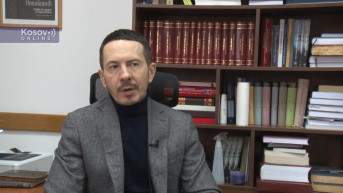
The Serbian revolution, better known as the First Serbian Uprising, which took place on this day, on Sretenje in 1804, had far-reaching consequences for the entire Serbian Nation in the region, and especially for the Serbs who lived in the area of Kosovo and Metohija, the historian and director of the Historical Institute. Belgrade Dr. Aleksandar Rastovic says for Kosovo online.
"The Serbian revolution that started on this day in 1804 by the decision of the people's elders in Orasac marked the beginning of a painstaking, multi-decade struggle for the restoration of Serbian statehood, which was lost long ago in 1459 when the Serbian despotism ceased to exist, i.e. fell under Turkish rule. Several centuries after the disappearance of Serbian statehood, Serbian insurgents began a national liberation struggle, which in Serbian historiography is officially called the Serbian Revolution. That revolution was the beginning of a chain of Balkan revolutions, which, after the successful start of the Serbian revolution, moved to other parts of the Balkan Peninsula, and they were accepted by other Balkan nations," Rastovic says.
He reminds that the Greeks started a national revolution in 1821 and that the uprisings then spread to the areas of Wallachia and Moldavia and practically encompassed the entire area of the Balkan Peninsula. This shows, says Rastovic, that the Serbian revolution of 1804 did not have only a local character.
"On the one hand, it represented the beginning of the arduous struggle of the Serbs to restore their long-lost statehood, but on the other hand, it also gained a wider Balkan and European context, because in a way it encouraged other Balkan people to embark on similar processes of national and social liberation. Of course, in the first few years, the Serbian insurgents had much more modest plans, their goal was to end the reign of terror of the four Turkish elders from Belgrade who, right before the beginning of the uprising, inflicted enormous terror on the Christian population in Belgrade Pashalik, but already after two to three years, after the magnificent victory and liberation of Belgrade by the insurgents in 1806, the insurgent goals changed and gained a wider context and significance," Rastovic points out.
Since then, he says, the main goal of the insurgents and the Serbian revolution has been the restoration of long-lost Serbian statehood and international recognition.
"That process was long-lasting; it lasted for several decades, in contrast to the Greeks who completed their process of national and social liberation in a short time. They won independence in 1829, while the process was more difficult for the Serbs with huge human and material costs, victims, and ended at the Congress of Berlin in 1878. Of course, in that process, an important stage in the victory of the goals of the uprising was the obtaining of local self-government by which Turkey, through the three hatt-i sharifs of 1829, 1830, and 1833, offered the Serbs internal self-government and in this way, it was the realization of only part of the goals of the uprising, which were set after the liberation of Belgrade in 1806," Rastovic says.
He adds that, of course, the uprising resonated positively among the Serbs and the population outside the borders of the Belgrade Pashalik, among, as he says, brothers from the unliberated regions of Montenegro, Bosnia and Herzegovina, and Old Serbia.
"By that, we mean the present-day area of Kosovo and Metohija, the Raska region, North Macedonia, that is, the Skopje-Tetovo region. We welcomed the beginning of the national liberation struggle of the Serbs with great hopes and excitement, and after 1806, the insurgent goals included the liberation of the Serbs outside the border of the Belgrade Pashalik, the area of Bosnia and Herzegovina, as well as the area of the Prizren vilayet, which at that time more or less coincided with the area of Kosovo, i.e. Old Serbia. Our people in the area of Old Serbia, Kosovo and Metohija, and Montenegro were especially encouraged when the insurgent troops led by Karadjordje, arrived in Novi Pazar, where, among other things, they met with the leaders of the Montenegrin tribes, with the Moracani, Vasojevici, Bihorci, and there are reports that the Serbian insurgent companies reached the area of Kursumlija and Lab on the border of the Prizren vilayet, i.e. the area of Kosovo and Metohija," Rastovic says.
Rastovic adds that the desire and the will of the Serbs were encouraged even more by these actions, but that unfortunately, lasted relatively short, and due to the defeat at Kamenica in 1809, Karadjordje was forced to return to the framework of the Belgrade Pashalik.
"The whole situation became even more complicated after the suppression of the First Serbian Uprising in 1813. Albanian tribes began to intensively settle the area of Kosovo and Metohija only at the end of the 17th and the beginning of the 18th century. Until then, their number amounted to only a few percent, because the home territory of the Albanians is the area of today's central Albania, i.e. the area around the town of Kruje and the Mat and Skumba rivers. At the end of the 17th and the beginning of the 18th century, they began to descend from those mountains into the fertile Kosovo-Metohija plain, and of course from then on throughout the 18th and the 19th century until the Balkan Wars and the liberation of Old Serbia from Turkish rule, they were the striking fist of the Turkish administrative, military and police system. The suppression of the uprising encouraged the Albanian tribes to launch massive reprisals and terror against the Orthodox Serbian population in the territory of Old Serbia," Rastovic says.
According to him, the persecution of the Serbs continued, and the situation especially became complicated in the late 1930s and 1940s through a certain number of uprisings, which the Albanian tribes in the area of Old Serbia began to raise, culminating during the Crimean War, the great conflict between Imperial Russia and the Ottoman Empire.
"At that moment, the Albanians were dissatisfied with the attempts of their masters, the Ottoman authorities, to carry out certain reforms of the Turkish administrative and administrative system, based on the famous reforms, that is, Hatt-I sharif from Gilhana in 1833, who indicated that the non-Muslim population would be guaranteed civil rights and Hatt-i Humayun from 1856, which proclaimed religious freedoms for non-Muslims as well. This further irritated the Albanian tribes and encouraged them to rebel against the Ottoman rule, but also to start committing terrible crimes and terror against the Orthodox population, which would subside only in the 1960s, so that after the opening of the great eastern crisis in 1875-1878, it would begin to intensify again," Rastovic points out.
Rastovic also emphasizes that one cannot talk about the Albanian nation in the 19th century. He adds that it arose only after the Berlin Congress and reached its peak after the First Balkan War.
"The area of Kosovo and Metohija is inhabited by a Christian population. It was only after the Albanian rebellion in the 1940s and 1950s that the religious structure of the population began to change radically, and the Orthodox population, which was the majority, now gradually leaves the area of the Kosovo vilayet, which was formed on the eve of the Berlin Congress," Rastovic said.
He states that at that time the Albanian tribes, the Muslims, began to increasingly dominate the area of Kosovo and Metohija.
"It is the result of terrible crimes, pressures, and daily violence against the population. As a result, the population had to move out, and there are numerous data from diplomatic prominence, Austrian, German, Russian, and British consuls from the Balkan Peninsula, who say that after the Berlin Congress, there were cases when 10,000 Serbs emigrated from the area of today's Kosovo and Metohija. Therefore, the ethnic picture gradually changed in favor of the Albanians and the Islamic population," Rastovic explains.
He adds that it is interesting that the data on Austrian prominence, which was collected by distinguished Austrian intellectuals, doctors, colonels, and military personnel, in the 1840s and 1970s, before the Berlin Congress, speak of the relative predominance of the Serbs in the area of Kosovo and Metohija. However, according to him, such a situation suddenly changes after the Berlin congress.
"A number of Albanians who lived in the areas that became part of the newly recognized Principality of Serbia after the Berlin Congress, that is the area of Toplica, Kursumlija, Porkuplje, are leaving their hearths, going to the area of Kosovo and Metohija and are dissatisfied with the fact that they left the area that they had previously inhabited, begin to exert additional terror on the Orthodox population of the Kosovo vilayet, which contributed to the fact that in addition to the difficult life, the oppression of the Turkish authorities and the domestic oppression of the Albanian tribes, these additional Albanian refugees from the area of Toplica exert additional pressure, so that the population moves out. Numerous diplomatic data speak of an increasing outflow of the population moving to the areas of the Principality and the Kingdom of Serbia, after 1882," Rastovic says.
He adds that those Austrian data, which are very precise, until the end of the 19th century speak of the relative majority of the Orthodox population living in the area of Kosovo and Metohija.
"Only since the end of the 19th century, as a result of increased emigration, persecution, pressures, everyday crimes, murders, to which the Orthodox population is exposed, the ethnic structure has changed in favor of Muslim Albanians, so that at the beginning of the 20th century, also Austrian statistical data spoke of this that the majority of the population, 188,000 of them, were Albanians, and 160,000 were Orthodox Christian Serbs. Already at the end of the 19th and the beginning of the 20th century, the ethnic picture was changing in favor of the Albanians, that is, the Muslims in Kosovo and Metohija," Rastovic points out.
As he underlines, this is all the result of crimes and pressures, but also the benevolent attitude of the Turkish authorities towards those crimes, because they saw them as a suitable tool for realizing their interests.
"And, the basic interest was that the legitimate desire of the Serbs to connect with their mother Principality of Serbia, i.e. to unify Serbia with Old Serbia, would never happen. Of course, the period after the Berlin Congress is characterized by the fact that prominent representatives of the Serbs emigrate. Between 1882 and 1886 alone, the Turkish authorities, with the support of local Albanian tribes, imprisoned and captured between 150 and 300 of the most prominent representatives of the Serbs. These were educated Serbs, among them Petar Kostic, teacher and rector of the Prizren Theological Seminary. Teachers and craftsmen were among them. It was a kind of special war that was being waged to frighten the Serbs in order to start emigrating from that area," Rastovic said.
He says that during that period not a single year passed without an increase in the number of the killed Serbs, which is accurately recorded by foreign diplomatic representatives.
"The number of the killed Serbs, i.e. Orthodox Christians, ranged from year to year between 50, 150 and 250 killed, so that in 1906 the British Minister of Foreign Affairs, Edward Grey, presented one relevant piece of information at a session of the British Parliament that only during 1905 and the first months In 1906, between 150 and 188 Christians, i.e. Serbs, had been killed on the territory of Kosovo and Metohija," Rastovic emphasizes.
According to him, the data spoken by numerous intellectuals of that time, from Jovan Cvijic, and Stojan Novakovic to other most respected and foreign diplomatic representatives, before the Berlin Congress, that is, from the end of the 17th century, when Albanians had begun to descend into the valleys, until the end In the 19th century, about 200,000 Christians had been evicted from Kosovo and Metohija, and from the end of the Berlin Congress to the Balkan Wars, that number had increased by another 150,000.
"About half a million Christian people had to leave their centuries-old hearths in that period," Aleksandar Rastovic says.


0 comments