
Does the Ohrid agreement threaten the fate of the Brussels agreement?
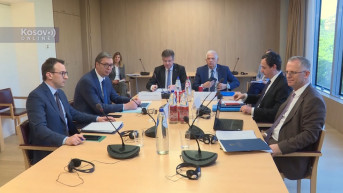
When it was announced two months ago, after all-day talks in Ohrid, that Belgrade and Pristina agreed on the Annex on the implementation of the European proposal for the normalization of relations, it seemed that a big step forward had been made, but the last two rounds of dialogue showed that things are still buried, primarily because of Kosovo's persistent refusal to form the Community of Serb-majority Municipalities, as agreed by the Brussels Agreement back in April 2013.
At the meeting in Brussels, after the Ohrid talks, the Declaration on the Missing Persons was adopted, but it "stuck" as soon as it reached the key point, the Draft Statute of the CSM, which is a condition for Belgrade to continue further negotiations and moves, and Pristina sets the conditions in this regard which are not provided for in the Brussels Agreement.
At the same time, accusations are coming from Pristina against Serbia that it is the one that does not respect the Ohrid agreement, by preventing Kosovo from becoming a member of international organizations, so a logical question arises - is the Ohrid Agreement threatened by the fate of Brussels from 2013, since that document remained a "dead letter on paper" because Pristina did not agree to form the CSM for 10 years.
Answering that question, sociologist Vladimir Vuletic tells Kosovo Online that it is difficult to say at the moment, but that the Ohrid Agreement is designed to be different from the Brussels Agreement because the EU will monitor the fulfillment of the obligations of both parties.
"The Ohrid Agreement was designed to be different from the Brussels Agreement, in the sense that it is not expected to result in some kind of agreement between the two parties under the supervision of the EU, but to be some kind of obligation that the two parties accept, which are imposed by the EU, but it is in some way, it was made clear that the Union will monitor how each party fulfills its part of obligations," Vuletic explains.
It is to be expected, he adds, that both sides are watching what the other is doing, and there is a justified fear that the EU if it sees the other side lagging behind, will interpret it as some kind of fraud.
That is why, he says, it could happen that, first of all, Belgrade will be reserved in fulfilling what is expected of it, until it sees clear indications that Pristina fulfills its obligations, first of all, those concerning earlier agreements, in fact, the implementation of the CSM.
"In that sense, there is no doubt that there is now a certain kind of fear that the implementation of this agreement will not go far. It remains to be seen in what way those who censored him will react," Vuletic said.
When asked how the EU would persuade Pristina to fulfill its obligations, he answers that - "we don't even know if it will be able to force it at all".
He points out that the clause that the obligations of the two parties are not directly related to each other, but that the EU observes what each party is doing, sends a message that Serbia's progress towards the EU will be accelerated if it fulfills its part of the obligations, that is, if Kosovo does not do so, there may be some sanctions, in the form of slowing down or preventing the continuation of the procedure for admission to the Council of Europe, or perhaps by re-introducing the visa regime.
"These are the possibilities now available to the European Union, and whether it will do it or not remains to be seen. There are now few chances to realize what was planned to happen by the end of this year," Vuletic concludes.
The Coordinator of the Working Group of the National Convention on the European Union for Chapter 35, Dragisa Mijacic, says that the Agreement on Normalization that was reached in Brussels and the Annex on Implementation in Ohrid have a systemic error because they are based on the assumption that it is possible to achieve progress in the normalization of relations between Serbia and Kosovo without solving the crisis situations in the north of Kosovo, above all the establishment of the CSM and the withdrawal of special units.
"Therefore, regardless of the fact that the agreement was reached, its implementation stands still," Mijacic states for Kosovo Online.
Sociologist and political analyst from Pristina Artan Muhaxhiri states that it would be a great loss if "Ohrid 1.0 becomes Brussels 2.0".
In the statement for Kosovo Online, he states that it has become common that the dynamization of the development of the dialogue between Kosovo and Serbia depends exclusively on the level of pressure from the key actors of the international community, and that the lack of true will and commitment of political leaders to this project is evident.
He adds that it is obvious that the parties have passive approaches - the basic ideas come from American and European diplomacy, and then populist discourses are used to obscure compromises.
"Unfortunately, it seems that the same style of dialogue will be present in the near future. Pragmatically speaking, the last thing our region needs is for the final agreement to be postponed indefinitely. This would contribute to an even greater lack of optimism for the young generation to plan their future here. From another perspective, the tactic of frequent and planned delays at various stages until reaching a final agreement can serve as an alibi for Kosovo and Serbian leaders when the time comes for forced compromises by powerful geostrategic and geopolitical powers. This is probably how they plan to justify this situation as a lesser evil," Muhaxhiri says.
That is why he notes that "the great progress achieved in Ohrid must certainly be accompanied by concrete achievements that would give more motivation in the further process".
"It would be a great loss if Ohrid 1.0 became Brussels 2.0," Muhaxhiri stated.



0 comments