
After the release of the policeman who wounded Jovanovic under house arrest: Serbs are imprisoned for a spoken word, Albanians shoot without punishment
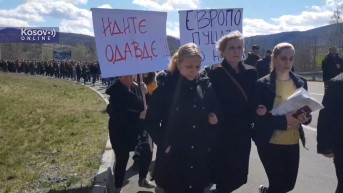
Laws should apply to everyone equally, but judging by the series of decisions of the Kosovo judiciary, which prosecutes and convicts the Serbs for a spoken word, and releases Albanians after shooting at Serbs or punishes them with house arrest, this is not the case in Kosovo, Kosovo online interlocutors point out. The unequal treatment of the Kosovo judiciary, which "measures" decisions according to the ethnic principle, they add, means that the Serbs live in constant uncertainty.
They also warn that the authorities in Pristina are encouraging Albanians to violence with their statements and actions, and the judiciary to harsh punishments only for the Serbs.
Thus, the member of the special unit of the Kosovo Police who shot and wounded Milan Jovanovic on the Bistrica Bridge was sentenced to house arrest, and the member of the KSF who wounded a Serbian boy and a young man in Gotovusa on Christmas Day was sanctioned in the same way, while the acts they committed were not qualified as attempted murder, but as "causing general danger".
On the other hand, the Serbs are tried for the spoken word, so just one example is Nikola Nedeljkovic from Belgrade, arrested in Gazimestan on June 28, who spent six months in prison for "causing ethnic hatred and intolerance".
Justice is not the same for everyone
Director of the NGO "Communication for the Development of Society" Ivan Nikolic pointed out that in Kosovo justice was not equal for everyone.
"This situation does not surprise me, I wanted to believe that justice would be equal for everyone. However, it is obvious that we have reached the old saying "judge, jury, and executioner," Nikolic said.
As he stated, the unjust decisions of judicial authorities affected the life of the Serbs, stating that the Serbs had completely lost trust in Kosovo institutions.
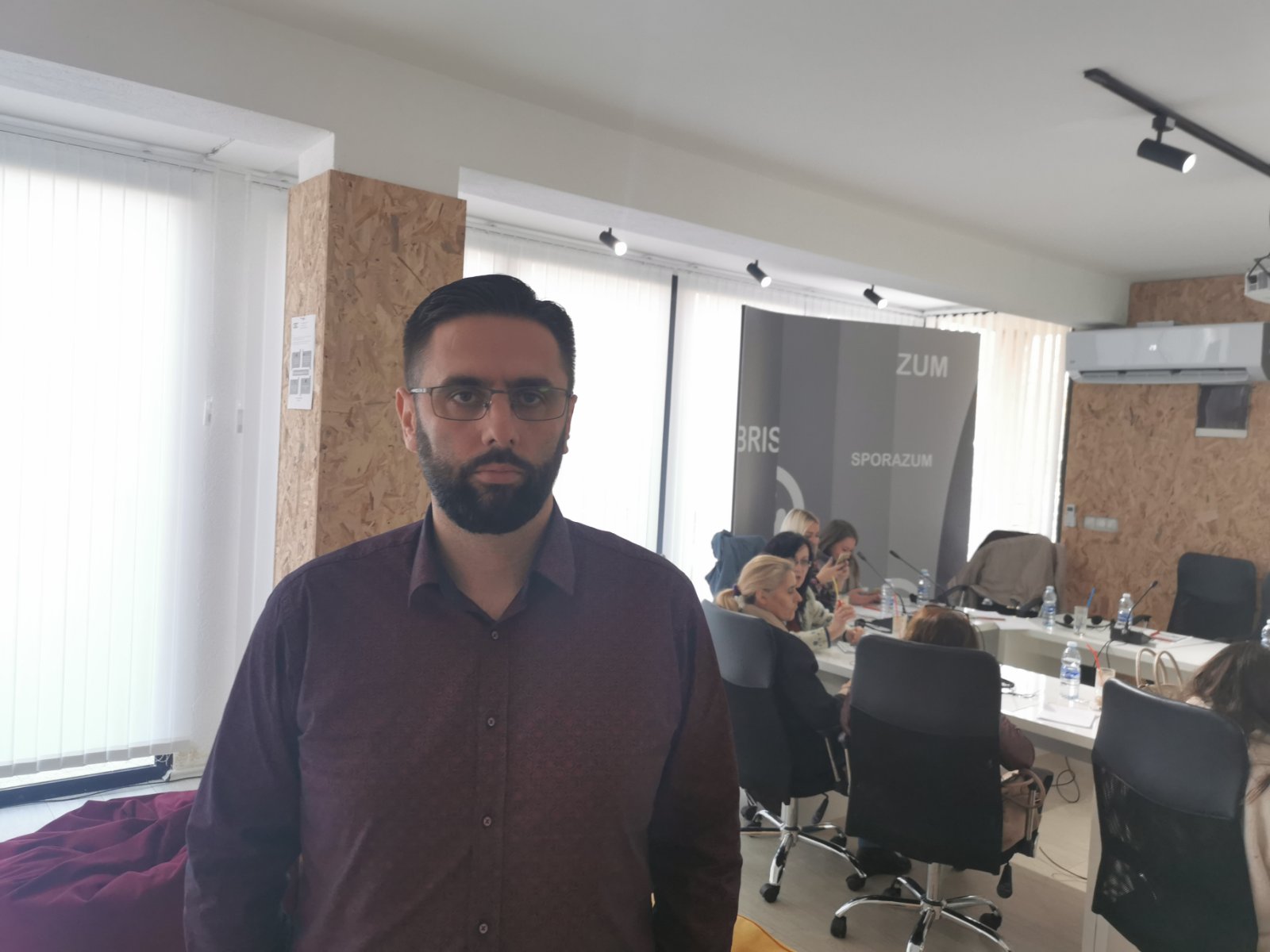
"Whether the reason for this is the lack of political will to treat all communities equally, or whether messages are being sent to the Serbian community in this way, I would not like to be a conspiracy theorist, but such decisions have a negative effect on the quality of life of the Serbs, first of all, and it helps the Serbs to leave Kosovo, they contribute to the fact that Kosovo Serbs completely lose confidence in all Kosovo institutions, especially in the security institutions, in which they should have the most confidence in a way because they are the first when it comes to the conflict and any other problem," Nikolic adds.
He believes that the statements of Kosovo officials and the decisions of the judicial authorities give the wind behind the Albanians to commit violence against the Serbs, who, he states, know that they will not be punished for it.
"For those who want to show their violent side, this kind of behavior by the security institutions gives them a tailwind to continue using force and ignore the existence of the rule of law," Nikolic says.
He points out that there is no explanation for the decisions of the judiciary in Kosovo, and that it is not clear under which laws the courts are governed.
"Neither from a legal nor from a moral point of view, I have no explanation for this behavior of the judiciary. Such judgments are not normal. How they managed to justify such actions, that the Serbs end up in prison for a spoken word, while an attempted murder is ignored, is not clear to anyone." Nikolic points out.
As he states, it is even less clear why representatives of the international community are silent about that.
"The question is, where they are in all of this when these kinds of verdicts are passed," Nikolic said.
Albanians know that they will not be held accountable for attacks on the Serbs
Analyst Ljubomir Stanojkovic pointed out that physical and armed attacks on the Serbs in Kosovo had not stopped even after 24 years.
"Exactly 24 years have passed since the bombing in 1999, it can be said that it is quite a long period and that the consequences of the bombing, according to all indicators, should be reduced, and in the psychological and emotional sense for the citizens, perhaps even erased. Again, on the other hand, we who live in Kosovo, feel, more or less, in one way or another, as if the bombing happened in the near past. Admittedly, there are no such cases of murders and kidnappings, but tensions, and frequent physical and armed attacks on the remaining Serbs are happening," Stanojkovic says.

According to him, what contributes to the frequent attacks on the Serbs and the decisions of judicial authorities not to prosecute Albanians for this is Pristina's insistence that "Serbia is to blame for everything".
"We, who are direct witnesses and some of them victims of all this, have a simple explanation. It is clear for a simple reason, we have the opportunity to constantly listen, watch and read all possible Kosovo media in the Albanian language, the breaking news is, even after 24 years - memories of the events of 1999, the executors of the crimes are only members of the Serbian community. Then, we have constant broadcasts, debates, and lectures in which the participants are both members of the government and the opposition, as well as professors and analysts, in which it is decisively emphasized that Serbia is the eternal occupier of Kosovo; that the Serbs are essentially a genocidal people; that the Serbs are the main obstacle to the realization of full statehood in Kosovo, and that Serbia is the main culprit for the lack of progress in the dialogue between Pristina and Belgrade," Stanojkovic says.
According to Stanojkovic, young Albanians respond with violence to such statements, having learned from previous examples that their actions will be qualified as mildly as possible.
"When you have such a media campaign directed in one direction, when the Serbian side is always to blame for everything bad in Kosovo, and in that campaign, the main media and the current government play a crucial role, it is not surprising that, above all, young people lightly resort to violence and attacks over the remaining Serbs. Especially since these same young people, through previous experiences, know that there is a high probability that such violence will be qualified as mildly as possible by the Kosovo judiciary," Stanojkovic adds.
And yet, he says, we have a situation where the Serbs are imprisoned under an urgent procedure and their crimes qualify as the most serious.
"How many of them have been imprisoned and convicted for alleged war crimes," Stanojkovic reminds.
He points out that it is necessary to condemn all crimes and stop the rhetoric that the Serbs are to blame for everything.
"Of course, we must be honest, some members of the Serbian community also committed criminal acts and crimes, we should not run away from that and we should not hide something like that, we should even openly condemn it. But, there were also such crimes on the Albanian side, let's remember only, Staro Gracko, the Nis Ekspres bus, Gorazdevac, Cernica, and the pogrom on March 17, 2004. The media and Pristina politicians should therefore also give due importance to these crimes," Stanojkovic believes.
He emphasizes that it is necessary to turn to solving the problems of citizens, but that the central government does not intend to make it a priority, stating that, as long as national problems are the priority of the current government, there will be attacks and violence against the Serbs, for which, unfortunately, no one will answer.

0 comments