
The secret connection between Athens and Pristina - is Greece the weakest link among the five EU countries that do not recognize Kosovo
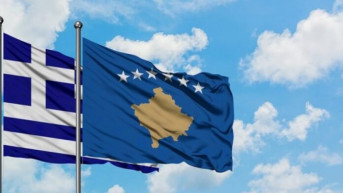
Frequent meetings between Greek and Kosovo officials and Greece's reticence during the vote in the Council of Europe on Kosovo's request to start the process for membership in that organization have once again brought up the question of whether official Athens will change its position and recognize Kosovo. Interlocutors of Kosovo Online, diplomat Zoran Milivojevic and president of the Citizens’ Party of Greeks of Serbia, Vasilios Proveleggios, believe that this will not happen, primarily because of the Cyprus issue, although there is no doubt that official Athens is under serious pressure to change its position.
That Serbia was very unpleasantly surprised by Athens' move in the Council of Europe is also shown by the gesture of Prime Minister, Ana Brnabic, who just one day later canceled her visit to Greece and participation in the Delphi Forum.
In 2019, Greece opened an office for economic affairs in Pristina, with the explanation of the head of Greek diplomacy, Nikos Dendias, that economic and trade relations should be strengthened regardless of Greece's attitude towards the status of Kosovo.
A few days ago, the Prime Minister of Kosovo, Albin Kurti, spoke in Athens with Dendias, among other things, about how "relations between Kosovo and Greece can be further improved".
Diplomat Zoran Milivojevic says for Kosovo Online that Greece is under special pressure because Greece has no reason of its own not to recognize Kosovo, like other countries that do not recognize it.

"Because of Catalonia and the Basque Country, Spain always has a risk of possible secession, so the Kosovo precedent could be used, we don't even need to talk about Cyprus, the situation there is completely clear. Romania also has its reasons - the Hungarian minority, which is a potential danger, but also the issue of Bessarabia, which was stolen from it, and it has retained the right to open that issue at any time, which can now be seen in the policy towards Moldova. Slovakia has a concentrated huge minority right on the border with Hungary, from Bratislava to Komarno, and this is something that is a potential danger for it and, in that sense, it adheres to principles," Milivojevic explains.
Greece is not such a case, and that is why it is under special pressure, says Milivojevic, but underlines that Greece certainly has an interest, because of its national issue and because of Turkey, and precisely in the treaty with Cyprus.
"Greece would therefore, as a rule, have to be with Cyprus, because it is a Greek national issue, a Greek corps outside the Greek state, which is why it is strategically important for Athens to preserve Cyprus because Greece is the only Cypriot hinterland and the only breakaway of Cyprus to survive in the national and state-legal sense," Milivojevic adds.
That is why he points out that for now there is no particular reason for Athens to change its position and recognize Kosovo, but, he points out, Greece will be the fastest if things "open up" - if there is a breakthrough in the dialogue and if an environment is created that does not insist exclusively on non-recognition and if Serbia accepts it.
In that case, he notes that Greece will be the fastest to adapt to such an attitude, much faster than Spain, Romania, and Cyprus, and partly also than Slovakia, which is "right after it".
Milivojevic also explains that Athens is under pressure from two lines, on the one hand from Washington, because it is in the sphere of interest of the US, as one of the countries that are closer to Washington than Brussels, while on the other hand, due to its relations with Turkey, a coalition at the level NATO, which guarantees it everything that is of Greek national interest.
The second line of pressure, he explains, is related to the economic situation and Greece's dependence on the finances of the European Union.
As the third important thing, he states that it is in Greece's own interest to keep its relations with Albania high on the ladder, because it has a large Albanian minority in the north, and because of the "greater Albanian project" it is important for it to keep relations with the Albanian population and the "Albanian factor" at a certain level.
This is how he understands the opening of the economic office in Pristina, its elevation almost to diplomatic status, as well as the frequent communication and frequent visits of Greek officials, including the Minister of Foreign Affairs of Greece.
To all that, he adds that Greece is trying to restore its former position when it was seen as a leader of the West in this part of Europe, which is where its interest is to maintain ties with Pristina and not to be excluded from its "space of interest", which is and its physical connection with central Europe.
"However, if things get tougher, then the greatest pressure will be on Greece, and then everything depends on the politics on the Greek side," Milivojevic says and draws attention to the fact that Syriza and other opposition parties have negatively received Greece's position in the Council of Europe, but New Democracy was more flexible and behaved pragmatically.
The President of the Citizens’ Party of Greeks in Serbia, Vasilios Proveleggios, points out for Kosovo Online that Greece, despite the atmosphere that has been created recently, is the toughest among the five EU countries that have not recognized Kosovo's independence.

"I'm sure it won't change that decision. The main reason is Cyprus," Proveleggios says.
The story that has been happening in recent years is that Albanians are investing more and more money to create public opinion in Greece in their own favor, above all among young people who will make decisions in the future.
"The passivity of our country, which has excellent positions among the Greeks and the political elite due to age-old friendship and togetherness, is incomprehensible to me," Proveleggios adds.
He is of the opinion that there are no internal reasons for Athens to change its position and recognize Kosovo, so, he says, he is surprised that such assessments have been spreading lately that Greece is supposedly the weakest link among the five EU countries that have not recognized Kosovo.
"It is true that on the external front, Greece relies heavily on the US, as a defensive factor in relation to Turkey, and that America has an influence on the Greek government. Tsipras came to power to reach the Prespa Agreement with so-called North Macedonia regarding the name so that the US would not achieve its goal of bringing Macedonia into NATO," Proveleggios says.
But he adds that the current New Democracy government is much more resistant to that kind of external influence than Tsipras's government was, which is why he is convinced that Greece will not give in.
He says that the fact that more and more Greeks are coming to Belgrade and Serbia as tourists should be used, in order to expand Serbian influence in Greece, among the people, who already see the Serbs as friends.
"I am a little surprised, but also worried about the passivity of our government, which does not use the influence it already has among the Greeks, to strengthen Serbia's position there, as it is doing smartly with Hungary, Romania, and Bulgaria, neighbors with which it maintains very close ties,” Proveleggios says.


comments