
What are the consequences of Kosovo entering the procedure for admission to the Council of Europe?
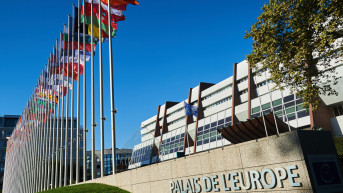
The decision to start the procedure for Kosovo's admission to the Council of Europe, made yesterday in Strasbourg, is another defeat of international law, a violation of the rule of law and human rights, and this is precisely in an organization that is based on these three pillars of action. The interlocutors of Kosovo Online point to this and note that the eventual admission of Pristina to the Council of Europe would have a series of very serious consequences, especially when it comes to the position and rights of the Serbs in Kosovo.
The news from Strasbourg is also read by Kosovo Online interlocutors as a concrete message for Belgrade and Pristina, at a time when the Serbs in Kosovo are suffering systemic discrimination and only a day after local elections were held in the north, after which Albanians without legitimacy should decide on their behalf given that, only 13 Serbs went to the polls, and the turnout was around three percent.
The Minister of Foreign Affairs of Serbia, Ivica Dacic, said that the decision to start the procedure for Kosovo called into question the meaning of the Council of Europe. He says that a number of rules have been violated, including the CoE Statute, because something that is not a state cannot be a member of this organization.
Analyst Nemanja Zavisic from the Center for Social Stability tells Kosovo Online that "the eventual admission of the fake state of Kosovo to the Council of Europe would represent a brutal violation of international law."
"Such a decision would be completely contrary to the goals for which the Council of Europe was created almost eight decades ago. If that precedent were to happen, the importance and role of that international organization, whose primary goal is to protect human rights and freedoms, would be rendered meaningless. The fake elections that Kurti organized in the north of the province on Sunday are the best indicator of democracy and respect for human rights in so-called Kosovo," Zavisic says.
He adds that "for the key countries of the political West, elections in which barely three percent of citizens came out to vote in containers are completely legitimate and democratic."
"In addition, in the last few years, we have had hundreds of brutal attacks on the life and property of the Serbs, which remained without any judicial epilogue, and to which the international community kept silent each time. Unfortunately, this attempt by the Quint countries to overnight, with legal violence, literally push a fake state into this organization, shows that the policy of double standards is still dominant among Western elites. What is valid in one case, for one nation and state, is not valid in another case," our interlocutor says.
Zavisic also points to another dangerous consequence of Kosovo's eventual admission to the Council of Europe, which is that it could shake the entire region.
"Admission of a fake state to the Council of Europe would also represent a very bad message for regional peace and stability, i.e. it would deepen even more the trenches that exist between the Serbs and Albanians. Such a decision would be completely contrary to the spirit of reconciliation and dialogue and would make it significantly more difficult for further negotiations between Belgrade and Pristina, as well as for the prospects for reaching a compromise solution," Zavisic says.
As Elvira Kovacs, who is a member of the delegation of the National Assembly of Serbia to the Council of Europe and vice-president of the PACE, says for Kosovo Online, the decision to start the procedure for the admission of Kosovo at the extraordinary session of the Committee of Ministers is truly a precedent.
"On the one hand, it's not the time for that because the entire CoE is preparing for the Summit in May, unity is needed in this organization, and apparently they wanted to replace the main topic, Ukraine, with another topic. It has never happened in the history of this organization that in the week when the PACE session will also be a meeting of the Committee of Ministers. This does not mean that tomorrow Kosovo will enter the Council of Europe, but that the admission procedure will begin, with the Committee of Ministers of the Council of Europe sending Kosovo's request to us in the Parliamentary Assembly for an opinion," Kovacs says.
She explains the further sequence of steps - the PACE Bureau will only make a decision at the next session on Friday, April 28, to transfer it to the appropriate committees, above all for political issues. It should appoint a reporter who will go to the field, assess the situation and compile a report. Two more committees - the legal and the equality and non-discrimination committee - should give their reports.
"In normal situations, the rapporteur goes to the field, investigates the situation, and writes a report, and the committees usually have about two years to do it. Eminent lawyers are also elected who also write a special report. It is a procedure that lasts and only at the end of all that it can come to the voting of the deputies, who decide on admission by a two-thirds majority," Kovacs explains.
She adds that at yesterday's meetings in PACE, there were arguments that in the case of previous admissions to membership, the request that arrives was put on the agenda within a few weeks, and that Kosovo had been waiting for almost a year.
"Yes, but here we are not talking about a state that is recognized by all members of the European Union, not even by all in the EU. And in the European Union itself, which in the past period had enormous problems with finances, after the exclusion of Russia, which gave 12-13 percent of the total budget, and which somehow, lost its compass, it was clear that there was a need for unity. That is why the issue of Pristina's membership was not even emphasized, but it was now brought up at the insistence of the Quint, above all Germany, and even Italy. This is really a precedent, emphasizing something like that, while ignoring Serbia's arguments," our interlocutor points out.
She indicates that it will be interesting how the rapporteur who will go before the PACE legal committee on Kosovo will report on the state of the rule of law and human rights.
"Yesterday, the head of the Hungarian delegation in the PACE, Nemeth Zsolt, also asked that question, pointing out the low turnout in the just-held elections in the north of Kosovo," Kovacs says.
The former head of diplomacy, Vladislav Jovanovic, tells Kosovo Online that, if Kosovo were to be accepted into the Council of Europe, the question could be raised as to whether Serbia has a place there.
"I believe that there is no place for both us and Kosovo in key international organizations. Accepting Kosovo into the CoE would be the grossest violation of international principles because it is not a state. Those who advocate for it should change their approach, and tell Kosovo, 'we tried everything, but it still doesn't work, you can't be an independent state, but you can be a 'state' in the state of Serbia’. Find yourself somewhere; the dialogue should turn towards that. Unfortunately, I think this is a test experiment; today they are dragged into CoE, tomorrow into some other organization. If we give in here, it will be easier for them in the next international organization," Jovanovic warns.
He believes that this situation will also affect the dialogue that should continue at the highest political level on May 2 in Brussels.
"I am in favor of a dialogue, but one that will be principled, and not that Serbia is constantly under pressure in those talks," Jovanovic says.
Regarding the information that there was a rush to start the procedure of Kosovo's admission into the CoE because it was a condition of Kosovo Prime Minister Albin Kurti in order to start forming the Community of Serb-majority Municipalities, Jovanovic says that this is completely unacceptable.
"First, the CSM has already been determined, confirmed, and signed, it has been waiting for ten years, and any revision of it or connection with some other issue is blackmailing Serbia. And that is out of the question. The first and only condition is to realize what we have been waiting for ten years. And that connection with other issues and blackmail could still go on because they are already trying to please Pristina by giving them some 16 European models for the CSM to choose from, for something that has been agreed upon and defined how it will look like a decade ago. If the EU forces Kurti to form the CSM, I'm afraid it won't be the Community that was refined by the Brussels Agreement," Jovanovic says.

comments