
Hofbauer: Kosovo is one of a series of "failed states"
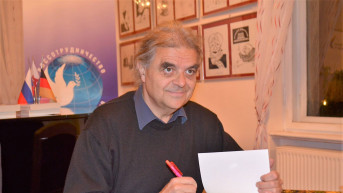
A decade and a half after the declaration of independence, Kosovo had been included in a series of "failed states", and the recognition of Kosovo had created a negative precedent, the Austrian publicist Hannes Hofbauer assessed.
Hofbauer, who will present the new edition of his book "Image of the Enemy, Russia" at the Faculty of Political Sciences in Belgrade at the beginning of March, indicated in an interview for Kosovo Online that the goal of the Franco-German plan was to put pressure on Serbia to recognize Kosovo.
Did the independence of Kosovo and the aggression against Serbia change the world and did it create a precedent that has now led to the war in Ukraine?
The recognition of Kosovo's independence by a number of countries, including the majority of EU members, created, without a doubt, an international precedent with negative consequences for the situation in the world. Thus, for example, Moscow pointed to the example of Kosovo regarding the recognition of the Georgia provinces of Abkhazia and South Ossetia. Then an American general, during a discussion at the Vienna Military Academy, when asked why the US supported the anti-Serbian secessionists in Kosovo, and not the anti-Georgian forces in South Ossetia, said that "one was a freedom fighter, and the other was a terrorist".
And the Western treatment of the Russian-oriented aspirations for independence in Donbas shows that it is about geopolitical interests - when once the insurgents are supported, and the other time the fight is waged against them. The Transatlantic Alliance sees Russia and Serbia as a threat to its interests, which is why all opposition movements in those countries are portrayed positively, to weaken Russia and Serbia.
Do international law and the United Nations Charter still apply?
Officially they are still valid, but as can be seen from the treatment of Kosovo or both Donbas republics, the international community led by the US does not adhere to the resolutions of the United Nations. Thus, UN Resolution 1244 speaks of the "territorial integrity of Yugoslavia", which means Kosovo, while UN Resolution 2202 recognized the results of the Minsk Agreement. Since then, more and more leaders of NATO countries have stated that the federalization of Ukraine contained in that document should not be taken seriously, but that Minsk 2 had been viewed only as something to buy time for the purpose of building the Ukrainian army. This made the UN just a "paper tiger".
Is Kosovo really an independent country 15 years after its declared independence?
For some yes, for others no; it is curious that even within the European Union, five countries do not recognize Kosovo. I would say that Kosovo is on the list of "failed states", together with Abkhazia, South Ossetia, Transnistria, and Ukraine. How long that state of desired but unrealized statehood can last is shown by the example of Cyprus, where we have had such a state since 1974.
Germany and France are now pressing for a solution to the Kosovo issue. Does that proposal, which the EU has adopted as its own, have the potential to resolve the dispute?
The goal of the Franco-German plan is to put pressure on Serbia to recognize Kosovo. The fact that it is only partially known to the public does not make it more serious. The statements of EU representatives always talk about transparency, and when it is important, they hide behind high walls of silence. If Serbia, for example, as he writes, should be forced not to put obstacles in Kosovo's way to membership in international organizations, that is an indirect recognition. Whether that is what Serbia wants, there are currently discussions about it, and not only in the parliament. A permanent solution is not easily achievable, with such secret diplomacy behind the scenes.
Would Kosovo's membership in NATO only further complicate the situation?
It is clear that the expansion of NATO anywhere, including Kosovo above all, is bad for the country and its citizens. I would like to remind you that the NATO aggression against Yugoslavia on March 24, 1999, involved three newly admitted countries of the Alliance, which at that time had only been members for 12 days. Hungary, Poland, and the Czech Republic after only two weeks of membership in NATO - were already at war.
Why do Western countries and Austria not see numerous ethnically motivated attacks on the Serbs in Kosovo?
You can't read anything about it in the Western media. People do not know anything about it, and the numerous Serbian community in Austria is not able to convey it. Newspapers, like the "Der Standard" from Vienna, are publicly anti-Serbian. And politics does not deal with the problem of Kosovo.
In Austria, there are numerous so-called experts on the Balkans, such as Florian Bieber, and Vedran Dzihic, but also politicians like Lukas Mandl or journalists who constantly attack and blame the Serbs and Serbia for everything. Why is this happening in Austria?
You forgot the journalist Adelheid Wolfl from "Der Standard", who is one of the most faithful anti-Serb reporters. Austria was and remains one-sided. Politically, the anti-Serb direction was prepared already in 1987. Then the social democratic chancellor handed over the ministry of foreign affairs to Alois Mock. Former chancellor Bruno Kreisky criticized the decision fiercely. Mock became the leader of anti-Serb politics. He was the one who, for example, at the 1992 CSCE session in Berlin, when Yugoslavia's membership was suspended, had a Slovenian politician in his team, which was an additional provocation for Belgrade.
Is Serbia being punished because it does not want to join the sanctions against Russia?
The current pressure on Serbia is clearly connected with the position on the issue of sanctions against Russia. Belgrade does not want to participate in the economic war with Russia and is being pressured step by step by Washington and Brussels with threats to end or freeze accession negotiations. Among other things, what the Brussels Union means for an economically peripheral country can be seen in the example of Bulgaria. The big promises of the European Commission are empty and do not lead to heaven. On the contrary, there was an emigration of the professional workforce and young people. Since joining the EU, Bulgaria has lost as many as 1.1 million people, almost twice as many as Serbia, which has a similar population.
0 comments