
Kosovo in international organizations - wishes and possibilities
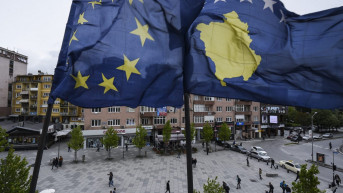
Although almost all the meetings of politicians from Kosovo with European and world officials send a message of support for Kosovo for membership in international organizations, Kosovo has not yet achieved its goals such as membership in the Council of Europe, EU, NATO, Interpol, and UNESCO, and apparently, Kosovo's integration is conditioned, to begin with, by only one issue - dialogue with Serbia.
Kosovo saw Russia's exclusion from the Council of Europe as an opportunity to become part of that organization. The request for membership in the Council of Europe was submitted on May 12 last year. Minister of Foreign Affairs Donika Gervalla said with great enthusiasm that "a new chapter has opened for Kosovo".
However, Kosovo's application has not been on the agenda of the Committee of Ministers of the Council of Europe to date, and the United States of America and three EU members have asked several member states of the Council of Europe not to put the issue of Kosovo's membership in that organization on the agenda of the Committee of Ministers of the Council of Europe until Pristina showed constructiveness regarding the Community of Serb-majority Municipalities.
"The stick, not the carrot, is very visible in the current state of the Kosovo application process in the Council of Europe," analyst and sociologist Artan Muhaxhiri says for Kosovo Online.
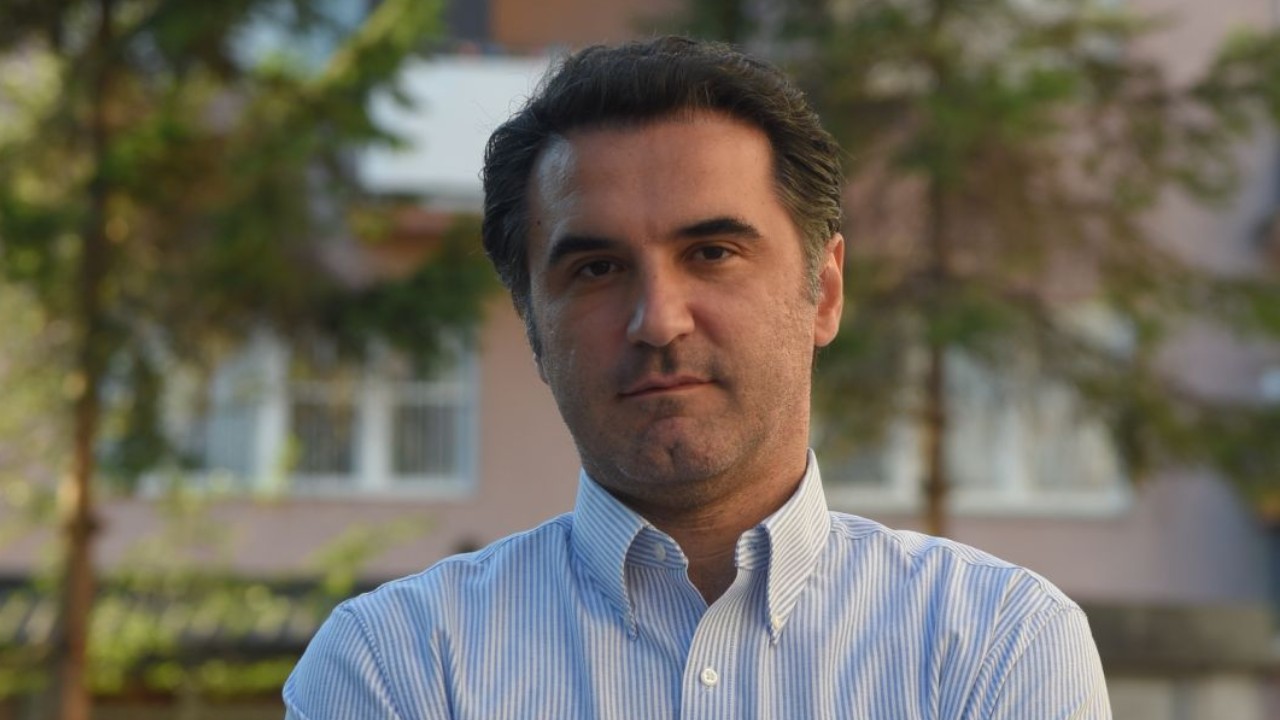
"There are many direct and indirect obstacles and complications. Since the dialogue between Kosovo and Serbia is considered an essential basis for a historic agreement and long-term political normalization of the region, it is logical that now everything comes down to the quality of participation in the dialogue." Muhaxhiri stated.
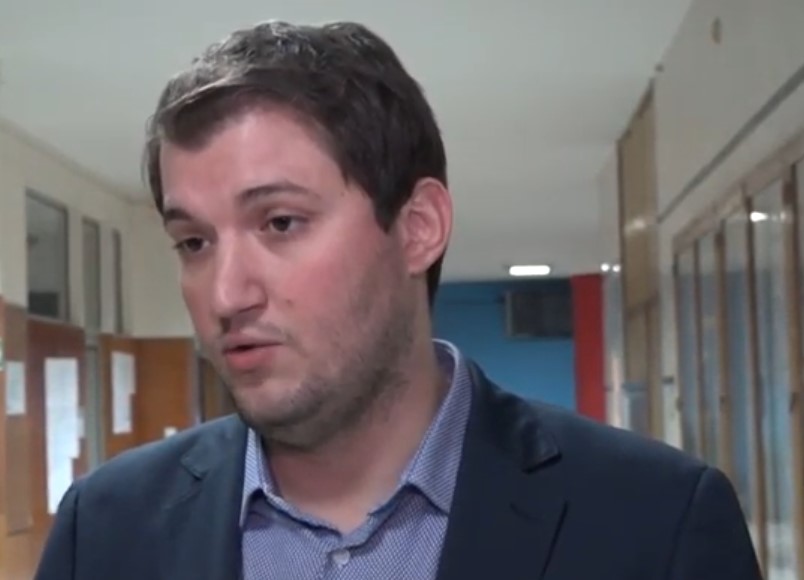
Assistant professor of the Faculty of Political Sciences, Milan Krstic, says that Kosovo calculated that its application for membership in the Council of Europe would be easily accepted, but it turned out that it was not an easy task either.
"The Council of Europe is the first institution in which Kosovo perceives that it can reach membership relatively easily, but it has turned out that even this is a more difficult task at the moment, regardless of the fact that over two-thirds of the members recognize Kosovo, which is necessary for the admission procedure. But the procedure for admission is such that it also implies the fulfillment of other criteria in addition to whether someone interprets you as a state, and Kosovo obviously does not meet the other criteria at the moment. Through the US initiative to block Kosovo's membership in the Council of Europe, it can be seen that those other things are very problematic," Krstic said.
Towards the end of 2022, that is, on December 15, Kosovo's Prime Minister Albin Kurti officially submitted Kosovo's candidacy for EU membership in Prague, counting on the help of the Czech Republic, which then presided over the European Union. Since there was not enough time for the issue of Kosovo to be on the agenda, the EU presidency was taken over by Sweden, which announced that it would resolve Kosovo's request for EU membership, taking into account the views of the member states.
Kosovo's diplomacy has a lot of hope in Sweden regarding EU membership, given that Spain is the next to take over the presidency of the EU, which recently explained that it is not changing its position on the non-recognition of Kosovo.
Muhaxhiri believes that Kosovo's path to joining international organizations is very problematic for well-known reasons.
"There are five EU countries that do not recognize Kosovo, some of which are NATO members, and they are the main reason for reducing expectations towards important developments on this issue. Without changes in the relations between Kosovo and Serbia and enormous multi-level pressures on these countries, it is unlikely that they will be ready to change their current attitudes towards Kosovo," Muhaxhiri added.
For the Kosovo analyst, without the influence of the US and the EU, Kosovo cannot progress on the way to international institutions.
"Significant international organizations operate with a network of power relations, so changes cannot be expected to occur without decisive domino effects. The United States of America and the European Union - with a special focus on Germany and France, are key factors in changing the overall context for the better and accelerating times from one level to another," Muhaxhiri said.
According to Krstic, Kosovo's admission to the EU and NATO was being blocked by countries that did not recognize Kosovo's independence.
"Admission to the EU and NATO would certainly be interpreted as a small recognition, or at least continental or macro-regional recognition for Kosovo, even if it does not become a member of the UN, it would be important for them for economic and military security reasons, but an additional problem is that membership in the EU is a complicated issue, and Kosovo is not recognized by five countries. Admission to NATO is simpler, but in the case of Kosovo it is not extremely simple either, firstly due to the fact that four NATO countries do not recognize Kosovo, and also due to the fact that it would imply another element of direct violation of the UN Resolution 1244, the Kosovo Army would have to be constituted, then the question would arise as to what would happen to KFOR. This would open a whole series of new precedents that at this moment probably do not suit those who refer to international law,” Krstic said.
As he added, the United Nations are an important goal for Kosovo, but it was clear to Pristina that the path to membership was much more difficult.
Kosovo is not seeking membership in international organizations for the first time. It applied twice for admission to Interpol, and the requests for membership in UNESCO were also unsuccessful.
"Interpol and UNESCO are the addresses where Kosovo applied for admission but failed to do so. UNESCO is additionally important because of the Serbian cultural heritage in Kosovo, so we had an example when Japan, which recognized Kosovo, did not vote for the admission of Kosovo. I think it is difficult that the situation will change," Krstic added.
While the question of the formation of the CSM for Kosovo has become a ramp for consideration of the application for membership in the Council of Europe, the interlocutors of Kosovo Online believe that Kosovo Prime Minister Albin Kurti will find it difficult to give up his views, even at the cost of Kosovo's integration.
"Prime Minister Kurti tries to present himself as a completely different leader from his institutional predecessors, a strategy that sometimes backfires. Although the former prime ministers of Kosovo in some cases indeed made compromises without receiving important institutional and social gains in return, there are cases when Kurti acts in an unrealistic political style. This approach can prove to be risky if it affects the deterioration of the relationship between populism and realism. The huge difference and advantage in the electorate should be the strongest guarantee for Kurti to make difficult decisions that would prove to be visionary in the future," Muhaxhiri said.
On the other hand, Krtic believes that Kurti sees that his position on the CSM is an obstacle to many unresolved issues, but that he will stick to it until he finds himself in a situation where he will have no other choice.
"Specifically, Kurti's refusal to form the CSM is currently blocking Kosovo's path to Council of Europe. His radicalization can probably lead to some positive effects from his point of view, and that is why he is doing it, but I believe that there are also political factors. He is someone who came to power with radical positions and now he cannot deviate from that. So he sees that this is an obstacle for some gains for Pristina in the international field, but I do not believe that he will easily step down until he is eventually blackmailed or put in a situation where he does not have a choice," Krstic concluded.
In addition to unsuccessful applications or applications that have not yet been considered, there was no good news for Kosovo in 2022 regarding international organizations, except for the fact that the citizens of Kosovo will be able to travel to EU countries without visas from January 2024.


0 comments