
Campaign for Local Elections in Kosovo: Will communal or political issues dominate?
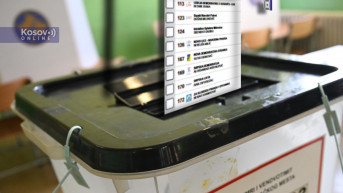
If the first “signals” are any indication, these local elections in Kosovo will also not be marked by communal issues but rather by clear political themes. According to interlocutors of Kosovo Online, the October elections will provide answers to several important questions. For the Serbian community, the key issue is whether it will succeed in taking power in municipalities where it constitutes a majority, especially in the four northern municipalities. At the same time, for the Self-Determination Movement, it will be an attempt to improve its rating and recover from its disastrous local result in 2021.
Written by: Djordje Barovic
“All I would like is for things to be a little better, for life to be better. What citizens lack is peace—peace and tranquility, and the freedom of movement,” said one resident of North Mitrovica in an interview with Kosovo Online reporters.
This message can be heard throughout northern Kosovo. Everyone expects that October 12 will bring change.
They have been “dreaming” of a better life for three years—since April 23, 2023, when Albanian mayors took power in the four northern municipalities based on the results of the local elections held at that time.
The president of the Central Election Commission (CEC), Kreshnik Radonjiqi, announced that 1,567 voters participated in those elections, out of a total of 45,000 eligible citizens.
The mayors were elected with a percentage of votes from the majority community that amounted to a “statistical error.”
The Director of the Serbian Government’s Office for Kosovo and Metohija, Petar Petkovic, pointed out that only 0.029 percent of Serbs participated in those elections.
This was partly confirmed by the Quint representatives.
“The local elections for the presidents of the four northern municipalities and for two municipal assemblies were held on April 23 in accordance with Kosovo’s constitutional and legal requirements.
However, after the boycott of a significant part of the Serbian community, the results are not a long-term political solution for these municipalities,” the Quint said in a statement published by the U.S. State Department.
Still, nothing further came of that statement, while the work of the new municipal administrations was mostly focused on removing all Serbian symbols—from flags and Cyrillic inscriptions to institutions.
For this reason, analysts believe that the October election campaign will not be marked by communal but by clear political themes.
“Triple Rhetoric”
Research fellow at the Institute of International Politics and Economics, Aleksandar Mitic, believes that the local election campaign in Kosovo will be characterized by a “focus on the Serbian community” and a “triple rhetoric” of Albanian parties, in which communal issues will be relevant only in areas where they are an absolute majority.
“I expect practically triple rhetoric: one directed at purely Albanian areas with a focus on communal affairs, another aggressive one—where the Serbian community exists and where there is a chance to make an impact on political and social life—and, of course, one artificial narrative directed toward the Serbian people,” Mitic told Kosovo Online.
He is convinced that “local issues” will only be in focus in those parts of Kosovo where the “national question has been resolved.”
“Where Albanians consider the national question resolved, and where they are satisfied with the way the Serbian community has been eliminated from political and social life, the focus will be on issues typical of local elections, as everywhere else in the world. But as we know, the situation in Kosovo and Metohija is absolutely abnormal for the Serbian community. Therefore, wherever the Serbian people are present, wherever there is a possibility for them to play a more significant role in socio-political life, I expect Albanian rhetoric to be much more focused on national issues,” Mitic said.
He added that the “second level” of the campaign will consist of “conciliatory tones” aimed at the Serbian community in order to “attract them with artificial multiethnic rhetoric.”
“Of course, this largely fails with the Serbian people, but it is certainly aimed primarily at ensuring that Western institutions, embassies, and media record it as some kind of ‘official’ rhetoric,” Mitic explained.
“Healthy Campaign”
The president of the NGO Communication for the Development of Society (CSD) from Gracanica, Ivan Nikolic, also doubts that these local elections will be marked by a “moment of a healthy pre-election campaign.”
“I don’t see this pre-election campaign being significantly different from the others, especially when it comes to the Serbian community,” Nikolic told Kosovo Online.
He noted that within the Serbian community, the Serbian List—as one of the strongest parties—will act in a similar way as in previous campaigns, with an emphasis on violations of the rights and freedoms of Serbs in Kosovo through the “strange moves” of the Central Election Commission.
“I am convinced that its course of action will be very similar, except that now I expect emphasis on yet another undermining of the rights and freedoms of the Serbian people through a series of ‘strange moves’ by the Central Election Commission: both regarding the registration of new voters and the deletion of old ones. The fact is that this can seriously affect the election result, the distribution of councilor seats, and even the selection of mayors in minority municipalities,” Nikolic said.
He stressed that Gracanica is a specific case because Albanian parties have united there in an effort to win as many councilor seats as possible.
This analyst is convinced that the October elections will also be marked by the lack of a “healthy pre-election campaign.”
“What I miss is the moment of a healthy pre-election campaign, where parties would present their programs and ideas for concretely solving problems on the ground. This might happen to some extent through the media, but the fact is that on the ground there will likely be other tactics—persuasion and perhaps drawing attention to the shortcomings of ‘the others,’ in this case, political competitors. The pre-election campaign will certainly be interesting to follow,” Nikolic emphasized.
Asked what citizens would like to hear or be promised during this campaign, he warned that the Serbian community, especially majority-Serb municipalities, is “seriously burdened with a number of problems that are growing year after year.”
“I think citizens want to hear solutions to concrete problems: how to improve the economic situation, how to resolve the problems caused by the massive closures of Serbian institutions, how to involve the international community more in all processes—because in a way, they relied on it and expected it to exert more serious pressure on the Kosovo side, on Albanian politicians,” Nikolic said.
He added that the key question for Serbs in Kosovo is “what next.”
“Citizens want to hear how things will develop in the future: whether healthcare and education are endangered, what ideas exist to reduce youth migration. Citizens have a number of questions, from the most general to the most personal ones: employment and solving infrastructure problems. But I think somehow those answers are missing. They are too general, the rhetoric is entrenched, and I think the citizens are perhaps not very satisfied,” Nikolic concluded.
“Litmus Test”
Political analyst from Pristina, Shkëlzen Maliqi, is convinced that the October elections may serve as a kind of “litmus test”—a trial run for extraordinary parliamentary elections and at the same time an opportunity for the Self-Determination Movement to try to repair its “catastrophic result” from 2021.
“Local elections are always specific. The main topics are local problems. Each city, each community has its own problems, and voting patterns at the national level are not reflected at the local level. We saw this in 2021, when Kurti and his coalition won more than 50 percent of the vote in the general elections, but performed disastrously in the local elections. Now he is trying to improve that situation somehow, but it will be very difficult,” Maliqi told Kosovo Online.
He explained that in the most important Kosovo municipalities, there is never a winner in the first round of local elections.
“In the second round, citizens rally around the ‘second party,’ not the ‘first.’ It rarely happens that the first one wins,” Maliqi said.
At the same time, he argued, local elections will be a test for potential extraordinary parliamentary elections in Kosovo.
He did not rule out that the biggest Albanian parties might form coalitions precisely in that context.
“That will then also be a test for possible general elections, with potential coalitions. This blockade that exists must be broken. Everyone has some ‘red lines’ they don’t want to cross. LDK won’t go with PDK, no one wants to go with Self-Determination… Kurti will either have to soften his positions, or the other parties, especially the LDK, will have to ‘lower the ball’ a little, and at least at the local level solve practical problems—not the big ones—and make coalitions,” Maliqi said.
“Two Angles” of the Campaign
Strategic Director at the Center for European Policies, Miloš Pavkovic, is convinced that the pre-election campaign for local elections will not be marked by communal but by political issues.
Speaking to Kosovo Online, he emphasized that for Serbs it will be an attempt to restore institutions in the north, while for Albanian parties it will be the “strengthening of sovereignty” in this part of Kosovo.
“From the perspective of the Serbian community, I believe the campaign will emphasize the return of Serbs to the institutions, that is, the restoration of institutions currently held by illegitimately elected mayors from the 2023 elections. On the other hand, Albanian parties will focus on strengthening Kosovo’s sovereignty and statehood and maintaining full control over those northern municipalities,” Pavkovic said.
Hence, he is convinced that “local issues” will be completely pushed aside from the campaign “agenda.”
“Here the major political themes will dominate: unity of the Serbian community, preservation of unity, preservation of Serbs in Kosovo. These are the themes that dominate all campaigns in Kosovo, but especially now, in this context where Serbs feel threatened, such a campaign will be particularly emphasized. That is my expectation,” Pavkovic said.
He added that the focus of Albanian political parties in mixed or minority areas will be on attempts to seize power, but that it is hard to expect this to happen in majority-Serb areas.
The Self-Determination Movement performed far worse in the last local elections than in the parliamentary ones.
Pavkovic said there is “no clear answer” as to whether this might change in the upcoming elections, but he expects the party to once again play the “nationalism card.”
“What I expect from Self-Determination is that it will once again rely on nationalism, sovereignty, and actions in northern Kosovo—whether shutting down Serbian institutions or applying some other form of institutional pressure on the Serbian community—in order to ‘ignite’ nationalist aspirations and build up support that way,” Pavkovic said.
He specified that it has been shown that the Self-Determination Movement “loses support and municipalities when it comes to economic and local issues.”
“The only topic that works for them is nationalism. I hope that this time that ‘card’ will not bring them votes,” Pavkovic concluded.


0 comments