
Can Dardan Molliqaj’s SDP secure a parliamentary seat by criticizing the opposition?
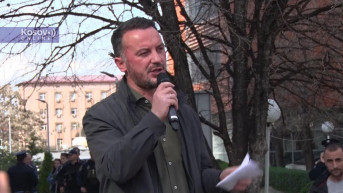
Unlike other opposition parties that have focused their election campaigns on attacking Self-Determination, Social Democratic Party (SDP) leader Dardan Molliqaj is attempting to carve out a path to parliament by criticizing the opposition itself. He tells voters that the opposition is incapable of confronting Albin Kurti and that Kurti can do whatever he wants with them, while portraying the SDP as the only party the government truly fears. Analysts familiar with political developments in Pristina doubt that the SDP will surpass the electoral threshold on June 7, but believe that Molliqaj, a former member of Self-Determination, would be a formidable opponent of Kurti if elected to parliament.
Written by: Dusica Radeka Djordjevic
Should the Social Democratic Party enter the Assembly, its MPs would carry greater political weight than the entire current opposition combined, according to party leader Dardan Molliqaj.
Although known for his criticism of the current government and for describing Albin Kurti as an authoritarian leader, Molliqaj has devoted much of his campaign to criticizing the opposition.
According to him, the SDP’s main reason for participating in the elections is the absence of a genuine opposition in Kosovo.
Molliqaj and Kurti, meanwhile, have a long political history.
Molliqaj served as Secretary-General of the Self-Determination Movement from 2011 and became one of its MPs following the 2017 elections. However, in March 2018, he left the party and, together with around ten dissatisfied members, formed the Group of Independent Deputies. Shortly thereafter, in May of the same year, the group joined the Social Democratic Party, and Molliqaj was elected party leader in December 2019.
Positioning
Political analyst Nexhmedin Spahiu believes that the Social Democratic Party has little chance of surpassing the electoral threshold on June 7 and entering the Assembly. Nevertheless, he argues that Molliqaj would represent genuine opposition to Albin Kurti if he were elected.
According to Spahiu, Molliqaj opposes Kurti but has directed his criticism toward an opposition that accommodates the Self-Determination leader and fails to challenge him effectively.
“This is a specific type of campaign. It does not necessarily mean that he expects to enter parliament in this election, but he will certainly make an important step forward for future elections. If he wins two or three percent of the vote, that would be a success for him,” Spahiu told Kosovo Online.
In his view, Molliqaj’s key campaign messages are that Kosovo is moving toward Albin Kurti’s dictatorship and that this process is being enabled by an opposition that is deeply corrupt and incapable of challenging him.
“He believes that someone who can stand as Kurti’s equal is needed in order to remove him from power. He would be a real opposition figure if he managed to enter parliament,” Spahiu assessed.
Political scientist Ognjen Gogic says that the SDP leader’s decision to attack parties that are not part of the government may indicate that he is aware of the existence of a broad anti-Kurti electorate and sees an opportunity to win over those voters by presenting himself as superior to the rest of the opposition.
According to Gogic, Molliqaj is a distinctive figure on Kosovo’s political scene and is generally known for his unconventional and often eccentric public appearances.
“There is little consistency in his approach. At times, he appears contrarian for the sake of being contrarian. He often criticizes not only the government and Kurti, but also the opposition and the international community. It depends on the circumstances and current events, and he tends to latch onto whatever issue is most topical while maintaining a contrarian stance,” Gogic told Kosovo Online.
During the current campaign, Gogic notes, the SDP leader has reiterated certain criticisms of the government and has even questioned issues considered highly significant in Kosovo, such as militarization and the establishment of a gendarmerie force.
“By criticizing the opposition, he undermines opposition unity, because opposition parties generally refrain from attacking one another and instead focus their criticism on Kurti. This suggests that they anticipate future cooperation in parliament and believe that internal attacks would be detrimental to their collective electoral performance. Molliqaj has apparently concluded that it would be more beneficial for him to try to attract voters by discrediting other opposition actors. However, it remains unclear whether this reflects a coherent strategy or simply an attempt to test various tactics and see what works. The chances of his party crossing the threshold this time are small, but he may be positioning himself for future elections that are expected to take place in Kosovo,” Gogic said.
Familiar with Kurti’s Weaknesses
Given Molliqaj’s previous close Community with Kurti, the question arises whether he holds an advantage over other politicians because he knows the Kosovo Prime Minister so well.
Gogic points out that Molliqaj left Self-Determination in 2018, before Kurti came to power, and therefore did not have the opportunity to observe him while governing, which represents a different political experience.
“Nevertheless, he certainly knows Kurti well and understands the way he thinks. As a result, he is capable of doing things that irritate Kurti and target his weak points. For example, he has accused Kurti of inconsistency and of abandoning his previous principles regarding relations with the international community and social policy, given that they all come from a broadly Marxist ideological background. However, he has never managed to seriously threaten Kurti politically. It appears that he is not taken particularly seriously on Kosovo’s political scene. He has never significantly affected Kurti’s approval ratings, so even if he has a better understanding of how Kurti operates, he has not demonstrated an ability to use that knowledge effectively,” Gogic observed.
Among the positions Molliqaj has repeatedly advocated are the view that the establishment of the Community of Serb-Majority Municipalities would create a federal division between Kosovo and the Serbian community, as well as the argument that a territorial exchange represents the best option for resolving disputes with Belgrade.


0 comments