
Ukshini: A technical government serving solely to organize elections would ensure a level playing field
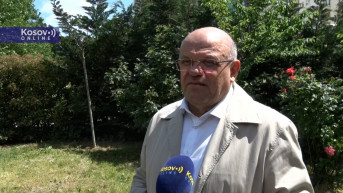
Former diplomat Silje Ukshini told Kosovo Online that, if there is genuine willingness to hold fair and democratic elections, the opposition should seek the establishment of a technical government, similar to those previously formed in North Macedonia and many other countries, which would organize elections in a manner that would prevent the caretaker government from using public resources, the budget, and state funds, thereby ensuring equal conditions for all participants during the electoral process.
“If institutions are not formed after the elections, then for the next elections a technical government should be appointed, composed of people who do not participate in politics, who are neutral and proposed by all political parties. These should be individuals from the fields of arts, science, and academia, without ties to political parties. Such a government would serve solely to conduct the electoral process, and we would have an equal contest. The current government has the advantage because, if it is able to distribute 200 million, this disadvantages opposition parties and gives the government an unfair edge,” Ukshini pointed out.
Commenting on promises by the leader of the opposition Democratic Party of Kosovo (DPK), Bedri Hamza, regarding increases in salaries and pensions, as well as tax cuts without explaining how these measures would be implemented, Ukshini stated that Hamza had served as finance minister and possesses both experience and ideas, but that these proposals should be explained to citizens in a more concrete manner.
“Instead of sporadic assistance, it would be better to regulate and increase salaries through legislation, while additional financial distributions during election campaigns should be prohibited. Such practices existed in the past as well. This means there should be no tenders or anything else that could lead to favoritism. Bedri is an outstanding expert, but it is up to the citizens to decide whom they will support with their vote,” our interlocutor said.
He also suggested that nationalist rhetoric should be avoided during the pre-election campaign.
“In Kosovo and throughout the Balkans, terms such as ‘traitor’ in relation to Serbia should be eliminated, because we are reaching an absurd situation. All citizens of Kosovo work with Serbia, and all Serbs work with Kosovo Albanians. Who is a traitor, who is a patriot, who is an angel, who is a devil — people are not interested in that; they want prospects for the future. Young people want jobs and a better quality of life, education, healthcare — these are the issues that should be addressed. Croatia, Montenegro, Kosovo, Albania, and North Macedonia all face migration problems. We should discuss how to stop this trend and make life more attractive. My daughter, who is in secondary school, is not interested in history, problems, or who is or is not a traitor. At the end of the day, she asks me which school or university is best for improving her future life,” Ukshini noted.
According to his assessment, the younger generations have different interests and expectations.
“We have had enough of these Balkan issues. A country is beautiful to the extent that its democracy is stable; it is also beautiful when it is multiethnic and when everyone feels equal. I know this because, when I was young, we were not all equal — there was hatred and collective depression. A European Kosovo is beautiful when Albanians feel good, but also when Serbs, Turks, and Roma feel good. Nationalist slogans should be avoided so that we can offer programs for the country’s progress that lead us toward genuine European values. The entire Balkans has suffered greatly — from the Balkan wars until today. Even in Europe we are viewed with suspicion, regardless of whether we claim to be better or worse than Serbs or Albanians. In Berlin, they see us all as the same,” he said.
In his view, the Balkans should abandon the culture of hostility and hatred and turn toward issues of progress and improving living standards. When people live better lives, he added, they no longer concern themselves with who belongs where, what religion they practice, or which nation they belong to.
“Countries will progress when they embrace cultural diversity, because ideas come from all directions. That is how we achieve a better life. Nationalist slogans in the Balkans are like sweets — they appear pleasant, but if consumed in excessive amounts they lead to diabetes, and the consequences are borne by those peoples. Due to hatred toward others, they themselves pay the price. The Germans paid that price as well. They are still suffering and paying for what they did between the two world wars. The peoples of the Balkans should learn from negative examples in order to create a better, more beautiful life in democracy,” Ukshini concluded.

0 comments