
Can Kosovo achieve membership in the Council of Europe without submitting the Draft Statute of the Community of Serb-majority Municipalities to the Constitutional Court?
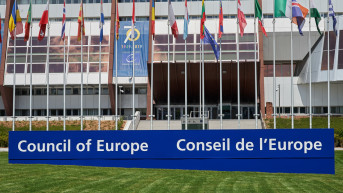
Membership in the Council of Europe remains an unfulfilled aspiration for Kosovo, and in recent days this issue has been discussed at meetings between Kosovo and European officials. Sources speaking to Kosovo Online view the renewed push for Council of Europe membership as an attempt to capitalize on the current momentum following the formation of Kosovo’s government, especially given that the past year was assessed by the EU and its institutions as largely unsuccessful. However, they emphasize that the outcome largely depends on the political will of the ministers of member states. Whether the establishment of the Community of Serb-majority Municipalities (CSM), or at least the submission of its draft statute to the Constitutional Court for review, will remain a condition for Kosovo’s membership in the Council of Europe also depends on the stance of the new EU Special Representative for the Belgrade–Pristina dialogue, Peter Sorensen, and whether he, like his predecessor Miroslav Lajcak, will insist on this requirement.
Written by: Milena Miladinovic
In April, Council of Europe membership was discussed during a meeting between Kosovo Prime Minister Albin Kurti and Belgian Deputy Prime Minister and Minister of Foreign Affairs Maxime Prévot. At that time, Kurti reiterated that Kosovo is clearly committed and oriented toward membership in the Council of Europe.
On the same day, Kurti also discussed Kosovo’s Council of Europe bid with EU envoy Peter Sorensen.
Kosovo’s intensified efforts are further evidenced by the fact that the Minister of Foreign Affairs and Diaspora of Kosovo, Glauk Konjufca, held meetings with senior Council of Europe officials in Strasbourg, emphasizing that Kosovo is ready to join the organization.
At a joint press conference with Belgian Foreign Minister Maxime Prévot, Konjufca criticized former EU envoy Miroslav Lajcak, claiming that he had imposed the condition of establishing the Community of Serb-majority Municipalities as a prerequisite for Council of Europe membership.
“The man who resigned in a disgraceful manner, Mr. Lajcak, placed a burden on us that does not belong to us… There was no condition within the Council of Europe to establish the Community; that was unfairly imposed on us by Lajcak,” Konjufca stated.
According to Kosovo Online’s interlocutors, Council of Europe membership would be highly significant for Kosovo, as it could open doors to other international organizations. However, accession does not depend on Pristina alone, but on the ministers of member states, and introducing a divisive issue at this moment would not be desirable.
Attempt to Marginalize Lajcak
Former Serbian Ambassador to the Council of Europe Dragana Filipovic told Kosovo Online that Kosovo’s membership in the Council of Europe has always been on the agenda. She noted that Pristina is now using the momentum created by having a functioning government and a foreign minister, but stressed that the issue remains political and is unlikely to be placed on the agenda of the Committee of Ministers, primarily because Kosovo has not fulfilled its obligation to establish the Community of Serb-majority Municipalities.
Filipovic emphasized that the renewed activity is politically motivated:
“According to the European Parliament’s report on the state of democracy, last year was essentially a lost year for Pristina due to internal problems, political tensions, and the inability to form a government. Now they are using the momentum of having a functioning government and foreign minister to revive an issue that has always been on their agenda, driven by a strong desire for international subjectivity.”
She added that Council of Europe membership would be politically significant for Kosovo, as it could facilitate access to other international organizations, including eventually the United Nations.
Filipovic noted that Kosovo came close to membership but failed to meet the requirement of submitting the draft statute of the Community of Serb-majority Municipalities to the Constitutional Court.
“What Kosovo is also attempting now is the total marginalization of Lajcak and the relativization of everything he did, including claims that he imposed political solutions—which is not true. He merely conveyed what was agreed in Brussels.”
She stressed that the obligation to establish the Community remains in force and cannot easily be bypassed:
“This obligation is still referenced within the European Union, in official documents and communications. The same applies to the Council of Europe. For it to be overlooked, there would need to be a higher strategic interest on the part of both the Council of Europe and the EU. But this is a fundamental issue—it would provide the legal framework for the Serbian minority to exercise essential rights, including minority and human rights.”
Filipovic also underlined that Serbia must keep the issue high on the diplomatic agenda.
Membership Depends on Political Will
Political analyst Nedžmedin Spahiu stated that Kosovo’s membership in the Council of Europe does not depend solely on Pristina, but primarily on the political will of member state ministers.
“It depends on the ministers of the Council of Europe. Whether they could make such a decision or not is a matter of political will. It is possible, but at this moment I cannot say anything with certainty.”
Spahiu also pointed out that the condition regarding the submission of the CSM draft statute was previously emphasized by Miroslav Lajcak, but that the arrival of a new EU envoy could influence the process:
“I cannot know what strategy the new representative will adopt. That condition may have been set to facilitate an agreement—or it may itself be an obstacle.”
He added that the issue has been revived partly due to the upcoming end of Moldova’s chairmanship of the Council of Europe, which will be succeeded by Monaco. A large number of ministers will attend the handover meeting, making it easier to secure a simple majority.
Despite this, Filipovic reiterated that Kosovo’s membership remains a highly sensitive political issue and is unlikely to be placed on the agenda—not only due to unmet conditions, but also because Pristina continues to disregard its obligations under the Brussels Agreement, including the establishment of the Community of Serb-majority Municipalities and respect for minority rights under the Declaration of Human Rights.
“The Council of Europe currently faces far more pressing issues. It is not advisable to place on the agenda a matter that could lead to divisions and disputes.”
She concluded that Kosovo has reactivated the issue partly because it perceives Serbia to be under EU pressure and seeks to leverage the arrival of the new EU envoy Peter Sorensen to marginalize the demands previously set by Miroslav Lajcak.

0 comments