
Can Kosovo join the Council of Europe? A race against time and conditions
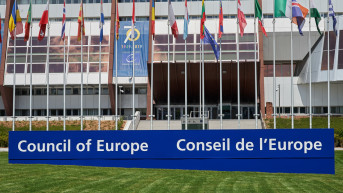
Despite receiving a positive recommendation from the Parliamentary Assembly of the Council of Europe (PACE) in April last year, Kosovo may once again find itself empty-handed this spring in its bid to join Europe’s oldest pan-European organization. The reason: its persistent avoidance of submitting the EU-drafted statute for the Community of Serb-majority Municipalities (CSM) to the Constitutional Court for review. The Committee of Ministers of the Council of Europe is set to meet on 13–14 May in Luxembourg, and although the formation of a new government in Pristina before then could theoretically allow for this formal step to be taken, the central question remains: what guarantees exist that the CSM will actually be established?
Written by: Dusica Radeka Djordjevic
On 16 April last year, PACE adopted a report by rapporteur Dora Bakoyannis recommending Kosovo’s accession to the Council of Europe. The Greek MP’s report passed with 131 votes in favor, 29 against, and 11 abstentions.
Nonetheless, Kosovo’s application was not included on the agenda of the Committee of Ministers in May 2023, the body responsible for making the final decision. A similar scenario could unfold this year, as Prime Minister Albin Kurti’s government has failed to take the initial step toward forming the CSM—submitting the EU-drafted statute to the Constitutional Court for review.
While Bakoyannis did recommend Kosovo’s admission, her report also called for three urgent actions by Kosovo authorities: enforcing the Constitutional Court’s ruling on the property of the Visoki Decani Monastery (which has since been fulfilled), respecting the law in the process of expropriating property from minority communities, and establishing the Association of Serb-majority Municipalities.
Ultimately, PACE advised the Committee of Ministers to consider the formation of the CSM as a post-accession obligation. Nevertheless, multiple European capitals have indicated to Pristina that submitting the draft statute to the Court would be a “welcome step” toward securing support for Kosovo’s membership.
The German Embassy in Pristina recently stated that Kosovo will not be able to join the Council of Europe this year either unless it submits the EU-drafted statute to its Constitutional Court.
“We have been consistent and transparent, together with our partners, in identifying the key step needed to secure a majority: submitting the CSM draft to Kosovo’s Constitutional Court. The Committee of Ministers’ agenda is prepared by its Secretariat. If the necessary steps are completed before the meeting, we are confident the agenda should—and must—be amended to include a vote on Kosovo’s membership,” said Christian Boucher from the Communications Department of the German Embassy earlier this month.
Lack of Political Will
Stefan Vladisavljev, Program Coordinator at the BFPE Foundation for a Responsible Society, believes that not enough criteria have been met to give the international community, or those shaping the Committee of Ministers’ agenda, confidence that Kosovo is approaching the CSM issue seriously.
“As such, I give extremely low odds that a vote on Kosovo’s membership will even be held this year,” Vladisavljev told Kosovo Online.
He added that there appear to be no real signs of political will among the current (caretaker) government—or potentially the next government in Kosovo—to seriously address the CSM issue, which is not only part of Kosovo’s path toward the Council of Europe but also integral to the EU-facilitated dialogue between Belgrade and Pristina.
“There are no credible signals or sufficient conviction that a realistic approach will be taken to the CSM draft—one that would be acceptable to the Serbian community in Kosovo and to international actors who are guarantors of the normalization agreement, and by extension, the CSM’s establishment,” Vladisavljev stated.
He noted that the uncertainty over when and by whom Kosovo’s next government will be formed makes it difficult to predict what priorities it will pursue—or whether it would submit the CSM statute to the Court if established before 13 May.
Election Rhetoric and External Pressures
Beljgzim Kamberi from the Musine Kokalari Institute observed that the main Albanian political parties in Kosovo did not commit to submitting the CSM statute to the Constitutional Court during the campaign, and nothing heard from them so far suggests such a move would be likely before the upcoming Committee of Ministers meeting.
“If a new government is formed in Pristina, we will have to see how they agree internally on the CSM statute and this issue,” Kamberi said, adding that the key question is whether the EU will continue to lead the dialogue or whether the process will shift to U.S. leadership.
“If we stay on the same track, it will be difficult for Kosovo to become a member of any European or multilateral organization without submitting the CSM statute to the Court—because that is what both Brussels and Strasbourg are demanding as a precondition for Kosovo’s accession to the Council of Europe.”
Kamberi emphasized that only progress in implementing the Ohrid Agreement—which includes the CSM—would suffice, not just formal submission to the court.
He also pointed to the upcoming local elections in the north of Kosovo as a crucial test. These elections, expected in the autumn, will coincide with Kosovo’s regular municipal elections and will represent a key challenge for both the new government in Pristina and Serb participation in the dialogue.
Skepticism Remains Among Serbian Officials
Dunja Simonovic Bratic, a member of Serbia’s delegation to PACE, told Kosovo Online that Serbian MPs have received assurances from Quint member states that Kosovo’s membership in the Council of Europe cannot proceed unless the CSM is formed as agreed.
“We hope those assurances will be upheld and that, like last year, Kosovo’s request will be rejected,” she said.
Simonovic Bratic noted increased activity by Pristina officials, who are now intensifying lobbying efforts in what they perceive as the final stretch before the Committee of Ministers meeting.
While some countries, like Germany, have signaled that submission of the draft statute might be sufficient to unlock membership, Simonovic Bratic stressed that even if that step is taken by 13 May, it does not guarantee that the CSM will be implemented in practice.
“A year ago, it was said that Kosovo’s membership was almost certain—yet it didn’t happen. A year has passed, and we hope for a similar outcome this time. If the Quint countries maintain the positions they shared with us, others will follow as they did last year. That gives us hope that Kosovo will not be allowed to join the Council of Europe—though, of course, we must be prepared for any scenario, including those unfavorable to us,” she concluded.
She also warned that even if Kosovo’s membership is not addressed during the Committee of Ministers meeting, a session of the PACE Political Committee will be held at the end of May in Crete, organized by Dora Bakoyannis. According to her, this could present a new opportunity for Kosovo to obtain special guest status within PACE.


0 comments