
Can Lajcak score in the extension of his mandate?
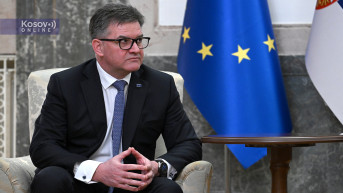
The European Union representative for the dialogue between Belgrade and Pristina, Miroslav Lajcak, will remain in his position for several more months after August 31st, when his mandate officially expires. This extension is meant to bridge the gap until the new High Representative of the EU for Foreign Affairs and the new mediator in the dialogue take office. Although it is hard to imagine that Lajcak will achieve anything in the extension that he could not accomplish in the previous four years, analysts believe it is significant that someone will oversee the potentially crisis-prone situation during the upcoming vacuum.
Lajcak himself stated this week that despite last year's agreement in Ohrid, there exists a parallel reality characterized by tensions, violent escalations, and conflict.
"We have had crises and violence on the ground. This forces the dialogue, my team, and me to focus on crisis management and de-escalation instead of progress and normalization of relations. There can be no normalization if there is conflict on the ground," Lajcak noted.
Yesterday's high-level round of dialogue in Brussels was not a good sign for Lajcak if he hoped to score as a mediator during his extended mandate.
According to his and Josep Borrell's plans, the EU High Representative, a trilateral meeting was supposed to take place yesterday where Serbian President Aleksandar Vucic and Kosovar Prime Minister Albin Kurti would talk. Kurti came to Brussels but refused to sit at the table unless his conditions were met, conditions he knew in advance were unacceptable to Belgrade: signing last year's Brussels Agreement, withdrawing a letter from former Serbian Prime Minister Ana Brnabic regarding the Agreement on the Path to Normalization and its implementation annex, clarifying that they are acceptable only in a context that does not imply de facto and de jure recognition of Kosovo, and highlighting reservations regarding Kosovo's UN membership, as well as the handover of Milan Radoicic to Kosovar authorities. The only conclusion Borrell could draw afterward was that the sides "remained very far apart on how the normalization process should proceed."
Dragisa Mijacic, coordinator of the National Convention on the EU Working Group for Chapter 35, told Kosovo Online that regardless of Lajcak's past successes or failures as a mediator, it is good that he will remain in that position until January next year. According to Mijacic, Lajcak will try to persuade the sides to implement the agreements and will work on crisis management.
"We have seen that crisis management has marked his mandate, that is, resolving many crisis situations, of which there are still many," says Mijacic.
He adds that concerning the dialogue, things are largely determined, as both sides have accepted the Agreement on the Path to Normalization and the Ohrid Annex from last year. Belgrade and Pristina are required to work on their implementation.
"Mr. Lajcak or another envoy is there to facilitate these processes, to listen to the remarks from both sides, and to lead towards joint implementation. Given that a new European Commission is about to come and a new High Representative for Foreign Affairs and Security will be appointed, it is logical and expected that Lajcak will remain in that position until a new person is appointed, if that happens at all. There is a possibility that the High Representative will handle Kosovo issues, though this is unlikely, but remember that both Catherine Ashton and Federica Mogherini dealt with them, which means that whoever comes as the new High Representative will decide who will be the new envoy and what the new strategy will be," says Mijacic.
Political analyst Arbnor Sadiku believes that when the European Union decided to extend Miroslav Lajcak's mandate as mediator in the dialogue between Belgrade and Pristina, it was not motivated by any expectations from him, but because of the upcoming election of new leadership within the EU.
"I think the EU did not focus on extending Miroslav Lajcak's mandate because they have any expectations from him, but simply because they are facing the upcoming new EU leadership," Sadiku told Kosovo Online.
Speaking about what can be expected during this "extension," Sadiku reminds that Kosovo is in an election year and that Prime Minister Albin Kurti is not inclined to form the Community of Serbian Municipalities.
"He can only attempt to do this after the general elections in Kosovo next year," Sadiku says.
Neither the program manager of the NGO Social Initiative, Milica Andric Rakic, expects progress in the dialogue, nor the taking of concrete steps regarding the establishment of the Community of Serb Municipalities during the extension of Lajcak’s mandate.
"The extension of Lajcak’s mandate is first and foremost a collegial act of goodwill by Borrell, towards the person who will replace him in that position, i.e. the future high representative of the European Union. Simply, to give space to that person, to start a dialogue first, and then to choose the person who will be the mediator, that is, take over the role of Miroslav Lajcak, and with whom he will work in the following period. So, I think that's the only thing that led to the extension of his mandate. He will most likely participate in finding a successor for most of that mandate, and also help that person to go into dialogue in more detail," says Andric Rakic for our portal.
She points out that this decision has no major political significance and that it is a practical matter and an act of collegiality towards the new high representative.
As he adds, it is not realistic that there will be any progress in the dialogue, especially since the Kosovo elections have been announced for 2025.
"Everything we can expect, we can expect from the beginning of next year. After the American president is elected and the American administration is established. Until then, we can only expect the crisis to be controlled, and I really don't see any room for political solutions. In the event that in the mandate of the new Kosovo government we have a Self-Determination government that will again be independent, without major coalition partners, I do not see that even then the formation of the CSM can happen," she states.
Our interlocutor adds that, if there is a coalition with the opposition, especially with the DPK, there may be room for internal coalition pressure on Kurti to join the formation of the CSM.
"Even then it is really under a big question mark. It's just that all his political capital is based on opposition to the CSM and I don't see that that will ever change under any pressure," says Andric Rakic.
Miroslav Lajcak was appointed as mediator in the dialogue on April 3, 2020, and as some media reported a few months ago, he was supposed to take over the duties of EU ambassador in Switzerland from September 1. Borut Pahor, the former president of Slovenia, was already recommended as his successor as mediator in the dialogue, saying that he had a number of ideas on how to refresh or revive the stalled dialogue. This "rotation" has now been put on hold until it is made official whether the Prime Minister of Estonia, Kaja Kallas, will be Borrell’s successor and until it is seen whether she will appoint a new mediator for the dialogue between Belgrade and Pristina, or perhaps she will do the job herself.

comments