
Can a solution for receiving payments in dinars be found in 2025?
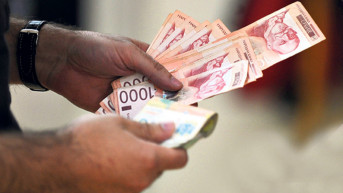
Assurances from Kosovo's Prime Minister Albin Kurti at the beginning of last year that all problems Serbian citizens might face due to the ban on the use of dinars in Kosovo would be quickly resolved, remained only words. To collect their salaries, pensions, and other payments from the Serbian budget, they still have to travel a hundred or more kilometers to the nearest branch of their bank across the administrative line. Analysts do not see a way out of this situation without the formation of the Community of Serbian Municipalities (CSM).
Written by: Dusica Radeka Djordjevic
"It's tough. We struggle. We suffer. We have to cope," are the words with which citizens of North Mitrovica describe how they access their earnings.
Traveling to Raska and back to withdraw his pension, according to one pensioner from North Mitrovica, is both a health and financial problem.
"My legs hurt, by the time I go there and back, half of the pension is gone," he told reporters from Kosovo Online.
The ban on dinars was based on the Regulation on Cash Operations adopted by the Governing Board of the Central Bank of Kosovo on December 27, 2023. The regulation, which designated the euro as the only currency allowed in cash payment transactions in Kosovo, came into effect on February 1, 2024.
Serbs protested this decision by the Kosovo authorities in North Mitrovica on February 12 last year. Carrying banners with messages "Europe open your eyes", "This is occupation", "UN, USA, help", they indicated that the decision of the Central Bank of Kosovo was discriminatory and politically motivated.
Neither did Europe open its eyes, nor did America help, although the then US Special Envoy for the Western Balkans, Gabriel Escobar, pointed out that "no one hears the most vulnerable, the helpless, pensioners, and students" and that the dinar issue was an urgent, humanitarian issue that needed immediate resolution.
In Brussels, talks on overcoming the situation created by the dinar ban were unsuccessfully held over seven rounds of dialogue, while those affected directed their efforts towards the 'gymnastics' of accessing their money, as Biljana Vukicevic, principal of the “Branko Radicevic” elementary school in North Mitrovica, vividly describes. It was very difficult to obtain documents, teaching materials, and textbooks, she notes.
"It was difficult even about free textbooks that we always receive for the first grade, about purchasing textbooks ordered by parents, trips to Pazar, Raska, crossings... After that insane Kurti's decision to abolish the dinar, we all somehow clutched our heads wondering how we will go on, how to lead people to Raska to withdraw money. There are many old and sick people who can't even sit in a bus, or a car, and they don’t have the means. But I hope that this year 2025 will be much more sensible when it comes to decision-making by people who throughout the last year made very extreme decisions that most severely affected the Serbian people in the region of Kosovo and Metohija, specifically in the northern part," Vukicevic told Kosovo Online.
Suzana Aleksic, director of the “Danica Jaramaz” preschool institution in North Mitrovica, hopes that during 2025 a solution will be found for withdrawing salaries in Kosovo, which employees at this institution receive in dinars from the Serbian budget. As she told Kosovo Online, life after the decision to abolish the dinar has been greatly complicated.
"Receive your salary, and there is no possibility to withdraw it at ATMs or in banks, but you must go to Raska, to some nearest city. Consequently, there is also a problem with payment and purchasing in the city and procuring groceries. Whole families suffer and it is impossible to function normally. It is necessary to resolve this problem as soon as possible," says Aleksic.
Can Belgrade and Pristina find a solution to this issue during 2025 if they were not able to during the previous year?
Political scientist Ognjen Gogic says that it seems the positions of Belgrade and Pristina remain very distant and it is questionable whether there will be room for compromise in 2025 after so many rounds of dialogue have been fruitless.
What Pristina is interested in, as he points out, is to have it recorded that these earnings pass through the Kosovo Ministry of Finance and other financial institutions, which is unacceptable for Belgrade at least until the Community of Serbian Municipalities, which would integrate Serbian health and educational institutions, is formed.
"Then maybe that transfer of authority for receiving funds from Serbia could be shifted to CSM, but without that, it is unacceptable for Serbia. However, it seems that not even a technical solution that would not prejudge the status issues was sought because that is exactly what Pristina wants. Pristina's offer was actually for the central banks to negotiate directly, which implies recognition, something Serbia does not want," Gogic told Kosovo Online.
He also points out that the problem is that the public has never been informed about where the process has stalled and what the parties proposed when it was impossible to find a consensus. The only idea that appeared publicly, he adds, was to license the Banka Postanska Stedionica and give it the ability to operate in Kosovo, but there was no will in Pristina for this.
In the entire situation with the dinar ban, he emphasizes, the problem is the fait accompli that establishes a new reality on the ground, after which it is very difficult to revert things to the previous state.
"As more time passes, the chances for such a reversal diminish. Everyone in the international community is aware of this. They have stopped calling for a solution to this issue. Once the bar is raised, it is unlikely that another government in Kosovo, should there be a change of power, would revert things to the previous state. So, it seems that this matter is currently unsolvable, in the sense that a compromise cannot be found, but since the formation of the Community of Serbian Municipalities (CSM) still exists as an option, then perhaps in some distant perspective, if it ever comes to the agenda, the issue of payment transactions and receipts from Serbia would also be addressed," evaluates Gogic.
Following the decision of the Central Bank of Kosovo, he reminds, the Government of Kosovo announced it would implement a number of adjustment measures that would allow the population to more easily transition to the new state of payments in euros, but this has never been realized.
"The Government of Kosovo has listed a whole series of measures from facilitating procedures for opening bank accounts, simplifying these processes, and opening a number of financial institutions in the north of Kosovo. These were all lists of beautiful wishes, but none of these things were ever implemented in practice, nor has anyone called for accountability from the institutions in Kosovo for not taking measures," Gogic highlights.
Marko Milenkovic from the NGO "New Social Initiative" assesses that there was no political will in Pristina to find a solution for this issue, although there were announcements that a solution would be found within the Kosovo institutions. Currently, he says, he is not optimistic about the situation regarding the dinar.
"What is needed is the political will to resolve these issues and to understand the problems in the Serbian community. This issue is unsolvable without a broader framework and results in dialogue and without the formation of the Community of Serbian Municipalities, as this is the basis within which payment transactions from Serbia should be regulated and many other things, including the functioning of Serbian institutions that operate in Kosovo and still conduct transactions in dinars," Milenkovic stated for Kosovo Online.
In the coming period, he notes, he expects greater pressure from the international community to make progress in Pristina towards forming the CSM and solving the increasing problems for the Serbian community in Kosovo.
According to his words, the ban on the dinar has most affected pensioners and socially vulnerable categories of the population who have difficulty accessing their money.
"Besides these vulnerable groups, employees in the educational and health sectors, institutions functioning under the Republic of Serbia, healthcare, and education, as well as many other sectors that cannot perform dinar operations are also at risk. Our latest research, which is ongoing and covers the situation in the business sector in the north, shows that businesses are very threatened by decisions such as the ban on importing goods and the ban on using dinars. People now withdraw money in places in central Serbia and mostly spend it there, whereas previously that money was intended for businesses here. We had more cash in circulation, and business sectors and all other sectors functioned more normally and better," Milenkovic notes.
He adds that students who cannot meet their financial obligations and sectors such as elementary education, kindergartens, and supply are also facing problems.


0 comments