
Gogic: Without the formation of CSM, the issue of receiving payments in dinars remains difficult to resolve
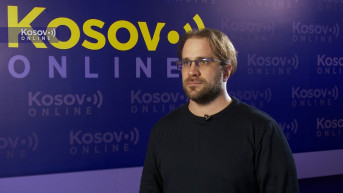
Political scientist Ognjen Gogic assessed for Kosovo Online that the positions of Belgrade and Pristina remain very distant regarding the resolution of problems related to citizens in Kosovo who receive their salaries, pensions, and other benefits in dinars from Serbia. He points out that it is questionable whether there will be room for compromise in 2025, after so many rounds of dialogue dedicated to this topic last year have been fruitless.
According to him, Pristina is interested in ensuring that these payments go through Kosovo's Ministry of Finance and other financial institutions, a proposition that Belgrade finds unacceptable at least until the Community of Serb Municipalities (CSM) is formed, which would integrate Serbian health and educational institutions.
"Then maybe the transfer of authority for receiving funds from Serbia could be shifted to CSM, but without that, it is unacceptable for Serbia. However, it seems that not even a technical solution that would not prejudge the status issues was sought, because that is exactly what Pristina wants. Pristina's offer was actually for the central banks to negotiate directly, which implies recognition, something Serbia does not want," says Gogic.
He also points out that the public has never been informed where the discussions have stalled and what the sides proposed when it was not possible to find a consensus. The only idea that surfaced publicly, he adds, was for the Bank Postanska Stedionica to be licensed and given the ability to operate in Kosovo, but there was no willingness in Pristina for this.
In the whole situation with the dinar ban, he highlights, the problem is the accomplished fact that establishes a new reality on the ground, after which it is very difficult to revert things to the previous state.
"As more time passes, the chances of doing so decrease. This is known to everyone in the international community. They have stopped calling for a solution to this issue. When the bar is raised like this, it is unlikely that another government in Kosovo, if the power were to change, would revert things to the previous state. So, it seems that this matter is currently unresolved, in the sense that a compromise cannot be found, but since the formation of CSM still exists as an option, then perhaps in some distant perspective, if it ever comes to the agenda, the issue of payment transactions and receipts from Serbia would also be addressed," evaluates Gogic.
Generally speaking, the incomes, whether they are salaries, pensions, or other entitlements that Serbs in Kosovo receive from Serbia, were never discontinued as they are deposited into their accounts, most often at Bank Postanska Stedionica, but the problem is where this money is withdrawn because, due to actions by the government of Pristina, branches and ATMs of Postanska Stedionica were shut down, and the operation of post offices in the north of Kosovo was hindered, complicating access to money and the ability to withdraw it in the places where these individuals live.
He also recalls that after the decision of the Central Bank of Kosovo, the Government of Kosovo announced that it would implement a number of adjustment measures that would make it easier for the population to transition to the new state of payments in euros, but this has never been realized.
"The Government of Kosovo has listed a whole series of measures from facilitating procedures for opening bank accounts, simplifying these processes, and opening a number of financial institutions in the north of Kosovo. These were all lists of beautiful wishes, but none of these things were ever implemented in practice, nor has anyone called for accountability from the institutions in Kosovo for not taking action. So, besides the dinar being banned and payment transactions with Serbia being discontinued, no measure that was supposed to help the population overcome this situation has been implemented," concludes Gogic.


0 comments