
CEFTA - Where is it leaking and who will fix the roof?
As the chair of CEFTA during 2024, Serbia will host a special meeting of the Joint Committee tomorrow, which is expected to give the green light to several agreements that have been negotiated but are pending due to a lack of consensus for a long time. Adoption of these decisions requires the approval of all seven current signatories to the Free Trade Agreement: Albania, Bosnia and Herzegovina, North Macedonia, Moldova, Montenegro, Serbia, and Kosovo, which is represented in CEFTA through UNMIK.
Written by: Dusica Radeka Djordjevic
Among the agreements waiting to come into force are decisions on facilitating e-commerce, intellectual property rights, services of travel agencies, and an additional Protocol 7, which represents a mechanism for resolving disputes between the parties.
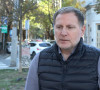
"The meeting of the CEFTA Joint Committee in Belgrade at the ministerial level will be a success in itself, as these meetings have not been held for several years due to the well-known differences between Belgrade and Pristina. We are witnessing very intense efforts from Berlin aimed at reaching an agreement that would ensure the unblocking of CEFTA's functioning," says Nenad Djurdjevic, an advisor to the President of the Serbian Chamber of Commerce, for Kosovo Online.
CEFTA is a market of 20 million consumers, and Djurdjevic emphasizes that this agreement is significant not only for Serbia but for the entire region, noting that after the European Union, Serbia’s largest trading partners are the economies within the CEFTA agreement.
Kosovo, it should be noted, has repeatedly requested in recent years to be represented independently within CEFTA, without the mediation of UNMIK, which signed the CEFTA agreement on behalf of Kosovo in 2006. However, there has never been consensus on this request. Recent developments hint at potential changes, as German Special Envoy for the Western Balkans Manuel Sarrazin recently offered Kosovo a "package deal": to be represented in CEFTA with an asterisk but to lift the blockade on Serbian goods imposed in June 2023.
According to Djurdjevic, the direct economic damage to Serbia caused by this blockade, from June 14, 2023, to August 1, 2024, amounted to around 280 million euros.
Kosovo's Prime Minister, Albin Kurti, announced yesterday that the ban on Serbian goods would be lifted, although only at the Merdare crossing, which some economic experts interpret as an indication that Pristina is still obstructing the free flow of goods. It remains to be seen what will happen with Sarrazin's proposed package.
Djurdjevic notes that there are several options regarding Kosovo's future representation within CEFTA and reminds that Kosovo is represented solely as "Kosovo" in the Berlin Process, while in all other regional forums, and even in documents regulating Kosovo's accession to the European Union, it is represented with an asterisk and a footnote.
“We will see what minimum agreement has been reached, but I think the essence is far more important, which is that an agreement will be reached. I hope that after this, the atmosphere will improve both within CEFTA’s working bodies and among those responsible for implementing the agreement, as it is very important for our companies and businesses. Particularly significant are the pending agreements, which aim to reduce costs and increase efficiency, preparing them for EU membership. There are many positive aspects, no negative ones, yet we’ve been in a political deadlock for four years,” Djurdjevic states.
Due to this blockade, he points out, the economies of all CEFTA members have suffered.
"In CEFTA, decisions are made unanimously, meaning all seven member states must agree. If there is no unanimity, no decisions can be made, even if they have been agreed upon at all technical committees. One could say that CEFTA, as an agreement, is somewhat ripe for reform because we see that this method of functioning has not proven to be adequate," our interlocutor believes.
Economic analyst from Skopje, Abil Baush, expects that tomorrow's meeting of the CEFTA Joint Committee in Belgrade will lead to discussions on unblocking CEFTA agreements that have been stalled due to, as he says, the conflict between Serbia and Kosovo. He stresses that a long-term solution for this conflict must be found as quickly and painlessly as possible because not only Belgrade and Pristina are losing out, but the entire Western Balkans region.
“We are small countries, and we need a large market to be competitive with European markets. That’s why CEFTA was established. The differences between countries and poor connectivity with capital investments and infrastructure make us as a region vulnerable in all those markets,” Baush said to Kosovo Online.
He points out that daily political games should not be allowed to undermine the Berlin Process and CEFTA as they are a common process for integrating all countries to be competitive in the large EU market.
When asked why the European Union hasn’t shown much interest in resolving the CEFTA blockade in recent years, only doing so now, Djurdjevic offers a vivid analogy, saying that it is natural for someone who has a leaky roof to be more concerned with fixing the problem than a neighbor whose roof isn’t leaking.
"If you don't ask or push your neighbor, they won’t initiate action on their own. The situation is similar with the Western Balkans and the EU. There has been a demonstrated willingness because CEFTA’s mechanisms are integrated into the Action Plan for the Common Regional Market, and every document related to regional economic cooperation includes CEFTA as an agreement in force. These documents show that the EU cares, but there is also a lot of bureaucratization, both from the EU and local governments. However, when someone really wants to demonstrate success, as Germany does now with the tenth anniversary of the Berlin Process, it becomes a motivation to fix the roof, even if it’s not directly leaking on them," concludes Djurdjevic.

0 comments