
The common labor market of Serbia, Albania, and North Macedonia: Benefit for national economies and hope for foreign investors
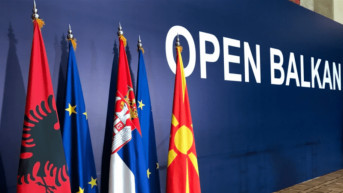
The Protocol on Free Access to the Labor Market, signed by Serbia, Albania, and North Macedonia within the framework of the Open Balkan Initiative, which is expected to come into effect on March 1, brings hope that the problem of labor shortage, affecting the entire region, could be significantly alleviated. Additionally, the perspective of foreign investors will improve significantly, as the region will be seen as a broader environment where they can find a workforce for their investments.
Bojan Stanic from the Serbian Chamber of Commerce says that it cannot be expected that the Protocol on Free Access to the Labor Market will fully solve the problem of labor shortage. Still, he adds that Serbia has a certain advantage because it has a larger market and greater economic potential, thereby providing a greater chance of employment.
"However, the fact is that the capacity of the Western Balkans in general, and especially these three states within the Initiative, is not so significant that it could meet all the needs that Serbia has. Also, what is very important is to consider the sustainability of these economies within the Initiative. Here, Serbia has a certain advantage because it has a larger market, greater economic potential, and a better chance of employment," Stanic emphasizes for Kosovo Online.
He assesses that the way foreign investors perceive the situation is crucial. Currently, they see Serbia as a market of 6-7 million inhabitants, but with the new protocol, it will become a market of 11-12 million.
"When we talk about the pronounced demographic problem, it is most pronounced in these border areas, for example, in southern Serbia. And when you see the possibility not only to find workers in southern Serbia but also, for example, those who would come from the northern part of North Macedonia, then you certainly have a greater choice of workers and the opportunity to start production in those parts characterized by a pronounced demographic crisis," Stanic explains.
The benefits each country will have depend on whether they are observed in absolute or relative terms, Stanic adds, emphasizing that Serbia is a leader in terms of its capacity within the Open Balkan Initiative, so it could have the most benefits in that absolute sense.
"If we take CEFTA, for example, which encompasses the entire Western Balkans, Serbia has the largest inflows from intra-regional trade, meaning trade that occurs within the region. However, over time, as the agreement is applied - it has been in effect since 2006 - Serbia's export coverage to the region relatively decreases, meaning that they still, in relative terms, increase their income derived from trade with Serbia, or the value of exports to Serbia," our interlocutor says.
He also warns that a potential crisis in one country in the region, because it is becoming increasingly integrated, would later affect the situation in a country not directly affected by the crisis. It all depends on whether the Protocol will start to be implemented from March 1, Stanic emphasizes, recalling previous negative experiences of agreements being made but not later implemented.
"So, certain political constraints that exist can certainly limit the functioning of that agreement. When we recall that the Open Balkan Initiative started under the name 'Little Schengen' in 2019 - almost five years have passed, and there are not many tangible results, which businessmen feel. Then the authority of the Initiative itself is lost. There have been certain facilitations when it comes to the transport of goods; people can travel with ID cards across the region. But the fact is that businessmen still do not see those benefits that were announced, considering that there is indeed a pronounced political interference in these economic matters and putting the whole story on the back burner for the benefit of some daily politics," our interlocutor points out.
He also recalls the statements by certain officials who said that the Open Balkan Initiative "has fulfilled its mission".
"Well, how can it fulfill its mission if it has not achieved even a tenth of what was planned, especially when we talk about trade, services, and movement of capital? We believe that precisely this political aspect can limit the functioning of this agreement, but we have firm announcements from Skopje, where representatives of Serbia, Albania, and North Macedonia were present, saying that the implementation of such a protocol, which means a unified labor market, is underway," Stanic recalls.
The Protocol on Free Access to the Labor Market is a kind of preparation for accession to the European Union, or to the European market where competitiveness will be even more pronounced, Kiril Minoski, former Finance Minister of Macedonia and consultant to the World Bank says, emphasizing that competition is a healthy thing and needs to be adapted to.
"Above all, through the prism of labor mobility, it increases opportunities, considering that now the workforce enters and exits the market with 12 million people, where competitiveness is higher, and opportunities greater. However, on the other hand, there are certain risks for companies in Macedonia considering the level of wages and the fact that compared to the Albanian and Macedonian economies, in the region, we have the Serbian economy which is significantly stronger and can provide the highest wages for the workforce and reap the most benefits from this process," our interlocutor points out
According to him, the contract is open to all types of workforce profiles, and labor mobility is determined by supply and demand. He warns that all countries in the region are facing a similar labor shortage because the majority of the population tends to emigrate to EU countries, which provide higher wages and a higher standard of living.
"We have a shortage of highly skilled personnel, such as medical staff, for example, doctors, as well as people from the IT industry. The shortage of electrical and mechanical engineers is increasing, countries in the region feel this shortage, and there are numerous initiatives to encourage both domestic and foreign investments. There is a chronic shortage of labor in the hospitality sector, people from various service sectors (cleaning, maintenance, security), salespersons, electricians, and construction workers. These are segments that all countries in the region that are a part of the Open Balkan agreement are facing," Minoski says, adding that this agreement can stimulate population mobility in border areas.
He believes that the Serbian economy will benefit the most from the common labor market because it is the most competitive.
"However, that does not mean that we as a country will not benefit. It all depends on the ability of our administration to launch various initiatives using the advantages of this twelve-million-strong market, as well as the adaptability of companies," our interlocutor assesses.
Minoski recalls that the majority of the signatory countries of this agreement are obliged to make appropriate changes to their legal regulations that will enable unhindered labor mobility, as well as to provide adequate IT infrastructure that will ensure electronic application and electronic issuance of permits, which will be necessary for the freedom of movement of labor in the region.
Analyst Flogert Muca recalls for Kosovo Online that the Open Balkan Initiative emerged when the Berlin Process stalled and that the Open Balkan is based on EU principles of the free movement of people, goods, services, and capital.
"I don't think there's anything controversial in this signed agreement on free movement of workers in our three countries. This serves our countries, but especially our citizens. For example, Albania faces a labor shortage in tourism. We had a tourist boom last year when Albania welcomed 10 million foreign visitors, and a small number of employees is a big concern for our country, especially during the tourist peak season, from June to September. In my opinion, this agreement will be a very good opportunity for all young men and women, cooks, waiters, or other professions, who want to work and can come from Serbia, from Macedonia, to work in the south, in the north of Albania, anywhere in our country," our interlocutor believes.
He assesses that the agreement is positive because it provides employment opportunities and adds that criticisms that arise are politically based and "insignificant compared to the welfare of citizens".
"In this agreement, nothing differs from today's model in Europe. As long as we in the Balkans see our future in Europe, we have no reason to fear when implementing European principles in our countries. Economic development alone will help us move towards Europe. If we do not cooperate politically, the losers will be the citizens, and the winner will be only propaganda that leads us nowhere," Muca concludes.


comments