
Continuation of the dialogue in Brussels in the shadow of new tensions in Kosovo; what are the chances for progress?
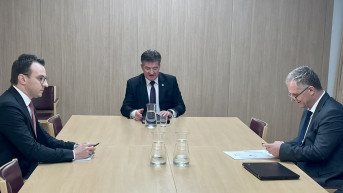
The chief negotiators of Belgrade and Pristina, Petar Petkovic, and Besnik Bislimi, will meet today in Brussels, for the first time since the Annex to the agreement on the path to the normalization of relations between Kosovo and Serbia was agreed upon at the highest level in Ohrid on March 18. Between these two rounds of dialogue, the Kosovo authorities arrested two Serbs, Prime Minister Albin Kurti said that Serbian President, Aleksandar Vucic, would not get permission if he asked to come to Kosovo and that the Community of Serb-majority Municipalities existed only at the level of political debates.
In the shadow of new tensions in Kosovo, the main negotiators are expected to discuss the next steps in the implementation of the Agreement on the path to normalization of relations.
The interlocutors of Kosovo Online do not expect that today's meeting in Brussels will bring progress if Pristina remains entrenched in its position regarding the CSM, and at the same time they assess that creating a bad atmosphere ahead of these talks is helping Kurti.
Srdjan Graovac from the Center for Social Stability does not expect anything special from today's meeting. Incidents, arrests of the Serbs, as well as Albin Kurti's statements in the previous period, as he says for Kosovo Online, will certainly spoil the atmosphere of the talks in Brussels, but, he adds, that is also Kurti's plan to some extent.
He assesses that Kurti is aware that holding talks with Belgrade harms him, that he would prefer those talks to fail, and that he has no responsibility for that.
"Among other things, all those arrests that he carries out, all those statements that are extreme and aimed above all at Serbia and the Serbs, where he continues to talk about genocide, all of this is aimed at provoking the Serbian side to abandon the negotiations and make them difficult to go to negotiations. Because if you arrest the Serbs, it is clear that you want to provoke the Serbian side into saying, “We will not participate in dialogue while these things are happening",” Graovac said.
As he points out, Kurti is deliberately creating such an atmosphere before the negotiations that, on the one hand, it would make it difficult for the Serbian side to come to the negotiations, and on the other hand, in this way, he is trying to strengthen his position within the nationalist Albanian electorate in Kosovo, while sending the message "to stand firm on Albanian national grounds".
"He is now under attack primarily from the opposition, which rightly says that he is someone who betrayed his promises, that he lied to the public when he said that not only he would not talk with Belgrade, but also that he would not form the CSM, and as we can see now, he agreed to it also. With that, he loses the nationalist electorate which is his support, and he has to somehow try to strengthen his position among the extremists with these statements and pressure on the Serbs; to show that he is defending Albanian national interests, and not that he is a traitor, as the opposition talks about him," Graovac says.
The talks, our interlocutor points out, are entering the phase of the struggle over the formation of the Community of Serb-majority Municipalities.
"It does not seem easy and realistic to implement. In those circumstances, it is unlikely that anything significant can happen. Kurti is someone who essentially does not want to form the CSM, and the least he can do is obstruct that process, and if he is obstructing that process, he is also obstructing all further talks. I expect obstruction from Kurti again in the desire to postpone the formation of the Community of Serb-majority Municipalities and the previously undertaken obligations," Graovac says.
Let us remind you that on March 28, the Kosovo police arrested a Serb Miljan Jovanovic from Leposavic, a former member of the Kosovo police, in front of his children and wife. After spending the night in detention, he was released in the morning, with the explanation that it was a mistake. Four days later, last Saturday, Milovan Bozovic from Zubin Potok was arrested. In the period between the two rounds of dialogue, the president of the Provisional Authority of the Municipality of Zvecan, Ivan Todosijevic, received an invitation to report to prison on April 3 for his statement about Racak, without having previously been served with a verdict.
Commenting on the incidents that are happening in Kosovo ahead of the new talks in Brussels, retired diplomat, Zoran Milivojevic, says that everything that is happening is the continuation of the policy of the Pristina authorities and that there is no change in that policy. He does not expect that any progress will be achieved today if Pristina remains entrenched in a position where it can only discuss mutual recognition and if there is no progress when it comes to the formation of the CSM and the previously assumed obligations. He believes that there will be no change if Washington and Brussels tolerate such an attitude of Pristina in any way.
"There can be talks about the missing persons, which was accepted in Ohrid, but that can hardly mean an essential dialogue, and dialogue in the direction of seeking a political solution, compromise, and serious normalization. Tomorrow's meeting will be a continuation of the policy of the Pristina side, which also denies the Brussels Agreement, but also the desire to discuss the search for a political compromise," Milivojevic says.
As for the Serbian side, he assesses that it is in the same position, that is, it will remain consistent in demanding the fulfillment of the Brussels agreements and the formation of the Community of Serb-majority Municipalities as previously undertaken obligations. Only on that basis, he adds, can we talk about normalization afterward.
"The Serbian side remains constructive, and in that sense, what was agreed in Ohrid, which is that they will discuss the question of the missing, the need for political dialogue in the direction of normalization, is not in dispute for the Serbian side. However, everything that has been happening in recent days shows that the Pristina side has no intention of taking a constructive approach. It is obvious that Kurti and the politics he leads have difficulties both internally and externally," he said.
Speaking about Kurti's difficulties on the foreign front, Milivojevic says that both Washington and Brussels insist on the formation of the CSM and previously undertaken obligations, which is a problem for Kurti because his policy is based on the denial of previously assumed obligations, that is, on the refusal to form the CSM. And when it comes to the internal scene, as Milivojevic says, Kurti is confronted with his politics because of the pressures he has from the outside.
"He is trying to create tensions by causing crises, by putting pressure on the Serbs, by the incidents, and on that basis to overcome the pressures he has on the domestic scene and to blackmail the partners who support him. A lot depends on how Washington and Brussels will behave, we will see. Tomorrow, we will enter into a continuity of meetings without an essential dialogue, primarily due to obstructions from the Pristina side. The essential issue remains the CSM, and without that, there is no essential dialogue on normalization," Milivojevic emphasizes.
By the way, the spokesperson of the European Union, Peter Stano, said yesterday that the EU expected both sides to contribute, create and maintain an atmosphere of normalization and reconciliation and the rapid implementation of the commitments undertaken, at the end of February in Brussels, and then in Ohrid.
"The parties themselves undertook to refrain from any actions that would have the opposite effect," Stano said.



0 comments