
Sandic: Efforts to abolish the Specialist Chambers could hinder Kosovo's membership in the CoE
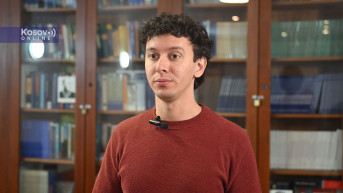
Goran Sandic, a researcher at the Faculty of Political Science in Belgrade, says he sees no way for the Kosovo Specialist Chambers to be abolished simply as a result of Kosovo joining the Council of Europe. In his assessment, efforts to abolish the Chambers and reduce their jurisdiction could only hinder Kosovo's potential membership in the Council of Europe and its accession to the European Convention on Human Rights.
“Joining the Council of Europe would not in itself lead to the abolition of the Specialist Chambers, nor would the European Court of Human Rights have the mandate to order such a measure. Reducing the Chambers' jurisdiction or potentially abolishing them before Kosovo becomes a member of the Council of Europe would only create an obstacle to Kosovo's progress on that path,” Sandic told Kosovo Online.
Formally and legally, he added, the Specialist Chambers are part of Kosovo's judicial system. They adjudicate cases under Kosovo law and incorporate human rights standards guaranteed by the European Convention on Human Rights.
If Kosovo were to become a member of the Council of Europe, what it would gain in the context of verdicts handed down by the Special Court in The Hague, Sandic explained, is the possibility for convicted individuals to appeal to the European Court of Human Rights after the appeals court upholds or modifies their verdict, provided the verdict remains a conviction.
“However, it seems to me that this is still a distant possibility, hypothetically speaking, since the Specialist Chambers themselves already apply the human rights standards guaranteed by the European Convention on Human Rights. This Convention has been applied in Kosovo as part of UNMIK's regulatory framework, and it is also applied informally as part of the efforts by the authorities in Pristina to present themselves as a state that respects these values and is eligible to become a member of the Council of Europe,” our interlocutor said.
If Kosovo were to become a member of the Council of Europe, meaning that both Serbia and Kosovo would belong to the organization, Sandic said that, in theory, Serbia could issue a declaration in advance stating that it does not recognize Kosovo, making its position clear to everyone.
“However, international law scholars and authors say that such declarations are unnecessary, since becoming a member of an international organization does not simultaneously mean recognizing statehood. In other words, membership does not in itself constitute recognition of statehood,” he said.
According to him, another step Serbia could take would be to issue a declaration excluding relations between Serbia and Kosovo from the scope of the European Convention on Human Rights.
“In that regard, Serbia would consider that there is no bilateral relationship between itself and Kosovo, while recognizing its relations with all other members of the Council of Europe. Kosovo, in turn, would have relations with all other Council of Europe members that had not issued such declarations. Nevertheless, if Kosovo were to bring an interstate case against Serbia before the European Court of Human Rights, it would be debatable whether the Court would accept such a declaration excluding bilateral relations, or whether it would consider itself to lack jurisdiction under Article 33 of the European Convention to hear the dispute, given that the matter concerns the protection of human rights,” Sandic said.
In his view, the most radical option would be for Serbia to withdraw from the Council of Europe. This would be neither beneficial for Serbian citizens nor for Serbia itself, whose stated goal is EU membership, while the EU expects Serbia to be a member of the Council of Europe as well.
Sandic said there was a certain, even populist, narrative claiming that joining the Council of Europe would allow Kosovo to sue Serbia for genocide, war crimes and similar offenses.
Proceedings before the European Court of Human Rights can be brought against any state that violates the European Convention, he pointed out, but the Convention does not address genocide or war crimes. Rather, it primarily concerns civil and political rights, including the right to life, the prohibition of torture, freedom of assembly and association, and the right to a fair trial.
“Even if Kosovo were to become a member of the Council of Europe and accede to the European Convention on Human Rights, it could not bring a case against Serbia over anything that happened before Serbia ratified the Convention, which it did in 2004. Most of the events referred to by Kosovo's politicians took place well before 2004,” Sandic pointed out.



0 comments