
The Council of Europe as the conscience of the continent, will the PACE deputies justify it in the vote on Kosovo?
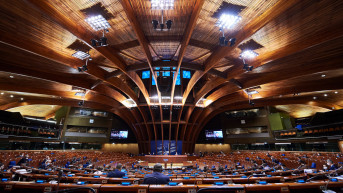
Two years after Kosovo submitted its application for membership to the Council of Europe, deputies of the Parliamentary Assembly of the Council of Europe (PACE) will give their verdict tomorrow. They will consider a report by Dora Bakoyannis, the rapporteur for Kosovo in the Council of Europe, which recommends that Kosovo become a new member of this organization, and a positive decision will require a two-thirds majority of the deputies present.
If, as expected, the PACE decision favors Pristina, the final decision in this process will be made by the Committee of Ministers, which includes representatives from all 46 member countries and will convene in May. Currently, this issue is expected to be on the Committee's agenda on May 16th.
This date was mentioned today by the President of Serbia, Aleksandar Vucic, who stated that for Serbia, “the main battle will be on May 16th,” but he also hinted at the possibility of a delay, thanks to French advocacy. The Serbian President also pointed out that a new trick is planned, in which Pristina would submit a draft statute of the Community of Serb Municipalities to the Constitutional Court in Pristina on May 10th for a constitutional review, which could provide "some with enough reason to say that Pristina has started the process around the CSM" and a reason to support Kosovo, "while in reality nothing will have been initiated".
For the quorum for tomorrow's session in Strasbourg, as explained by Dunja Simonovic Bratic, a member of the Serbian delegation in the PACE, one third of the deputies will be sufficient, and only the votes "for" and "against" will be counted among those present in the hall, excluding abstentions. PACE, by the way, has 612 deputies, of which 306 are members, and the other half are their substitutes who do not have voting rights but can participate in debates or be present in party groups.
According to Simonovic Bratic, the argumentation of the Serbian deputies will focus on the fact that allowing Kosovo to become a member of the Council of Europe without fulfilling the most important condition - the formation of the CSM - will leave a great concern that this will not happen.
"Our argumentation is very clear since the Bakoyannis report started by defining three points as prerequisites for Kosovo's membership in the Council of Europe. These are the formation of the Community of Serbian Municipalities, a law on expropriation that will prevent Serbs in Kosovo and Metohija from having their property taken away and their land seized, and the return of land to the Visoki Decani monastery. Over the last few sessions of the Political Committee, in the last year, Bakoyannis has insisted that the return of land to Visoki Decani is a symbolic decision, given that she is a Greek Orthodox, and she considered it to be the crown, while the formation of the CSM and the law on expropriation are most important, so that in the extraordinary Political Committee two weeks ago, only this symbolic request became the carrier of all demands. These two most important were essentially removed from the report, as they say that they should only be implemented once they join the Council of Europe and then a monitoring process will be established," says Simonovic Bratic for Kosovo Online.
She explains that every new member of the Council of Europe is under monitoring, and Serbia, which joined in 2003, is still being monitored, so being under monitoring does not mean that something will necessarily be executed tomorrow.
In the PACE, our interlocutor adds, each country has a number of deputies according to the size of its territory, so the Serbian delegation has seven members and seven substitutes, while, for example, Cyprus and Montenegro each have three deputies.
"In the functioning of PACE, the relationship between party groups is important; there is a large group of Socialists, Democrats and Greens, as well as People's parties, there is a group of Conservatives, then Liberals and Alternatives, and those who have not aligned with any group. Presidents of these political groups sometimes very openly, and sometimes indirectly, suggest how to vote, so regardless of the country of origin, deputies decide depending on which party group they belong to. This is not imperative because everyone comes as a representative of their national parliament, but there is also an approach in terms of ideological affiliations," says Simonovic Bratic.
Examples of how voting in PACE varies are many, and as our interlocutor reminds, at the last Political Committee, Greek deputy Alexis Tsipras was abstinent on the issue of Kosovo's demands, while a Romanian deputy from the Liberals and opposition is a fervent advocate for Kosovo in the Council of Europe. However, she does not expect that tomorrow there will be a large number of deputies who will, as she says, "defect" from the stance that their countries have towards Kosovo.
The Kosovo delegation, which has observer status in PACE, will have the right to speak in Strasbourg, believes the Serbian deputy.
"They have had the right to speak whenever Kosovo was the topic. Sometimes they were allowed to speak even a minute longer than planned," says Simonovic Bratic.
Retired diplomat Milovan Bozinovic notes that members of national delegations in PACE are not obliged to vote unanimously and that essentially in the Council of Europe voting is done according to the individual conscience of the delegates.
"The Council of Europe was founded immediately after World War II with the idea to also be the conscience of Europe, to be a body of high moral authority that monitors whether countries adhere to the highest democratic standards. It is assumed that everyone assesses things according to their own view and has the right to say how they see a situation. In that sense, members of the delegations are not obliged to vote unanimously. Essentially in the Council of Europe, voting is done according to the individual conscience of the delegates," says Bozinovic for Kosovo Online.
He adds that there will definitely be cases where someone within a delegation expresses a different opinion or someone abstains.
"Estimates, however, show that this will not significantly undermine the expectedly poor result for us, and we need to prepare for such an outcome and for all that will politically follow," says Bozinovic.
Regarding the upcoming discussion in Strasbourg, journalist and diplomat Dragan Bisenic pointed out that European countries, after a long abstention, decided on a "risky experiment of admitting Kosovo to the Council of Europe," and the risk, he notes, is twofold.
"First, Kosovo is not a state organization to be admitted to the Council of Europe and secondly, in this case, the unwritten rule that new members are admitted by the consensus of all other members will be broken," states Bisenic in an authored article for our portal.
He believes that what is being prepared after Kosovo's membership in the Council of Europe could have greater significance.
"This status and 'cohabitation' of Serbia and 'Kosovo' in the Council of Europe should serve as a model for how Serbia and Kosovo can be represented in the international community, even in the UN, and that, you see, it does no harm to their mutual relations. Perhaps there will follow ceremonial and public recognitions. But, that will be just one side of ambivalence. On the other side, there are numerous lawsuits at the European Court of Human Rights against Serbia and Serbian citizens, and then the already announced lawsuit for the payment of war damages, and after that for war crimes and genocide. Along with this is connected a resolution in the General Assembly of the UN about genocide. On the third side, there are consequences stemming from the fact that Greece is directly involved in this sad and disappointing episode. This opinion, we realize, is not the end in the Greek stance on this issue. After this, Greek recognition of Kosovo can be expected, as this is another message conveyed by the Dora Bakoyannis report," evaluates Bisenic.

0 comments