
Crisis in the North: What after Kurti's latest rejection of Escobar and Lajcak's demands?

The two-hour meeting that Albin Kurti held last night with the US and EU emissaries Gabriel Escobar and Miroslav Lajcak ended without concrete results, the Kosovo Prime Minister still does not change his "hard" approach to the crisis he caused in the north in Serb-majority municipalities, and now the fast and specific reaction of international mediators is expected in order to prevent further escalation of the situation, according to Kosovo Online's interlocutors.
Last night in Pristina, the American-European duo asked Kurti for an urgent de-escalation on the ground, the holding of new local elections in the north as soon as possible, and a return to dialogue and the normalization process. In Belgrade today, Escobar and Lajcak continue their mission to find a solution to the very tense situation in the north of Kosovo.
After the violent actions and raids of Kosovo Special Forces in municipal buildings in Zvecan, Zubin Potok, and Leposavic, and the imposition of power by illegitimate Albanian mayors, elected with a turnout of only about three percent, which the Serbs boycotted, according to analysts' assessments, it is evident that the Western allies of Kosovo are losing patience, and if Kurti continues to refuse "cooperation", the only logical move is to move from verbal warnings to concrete sanctions.
There is talk of a possible suspension of the decision to cancel visas for Kosovo, the blocking of aid from European funds, but also the halting of all processes of possible membership in international organizations, above all in the Council of Europe.
Among the political measures is the international isolation of the current representatives of the Kosovo authorities, who will be denied visits and meetings with officials of the US and other Western countries, and Kurti's position as Prime Minister is also questionable.
Former ambassador Milovan Bozinovic tells Kosovo Online that there are many "sticks" that the EU and the US can pull.

"The European Union and the US are fed up with this conflict that has been going on for too long, the episode with the elections in the north is a warning and very unpleasant for all of them, it showed that this dispute can escalate into a serious conflict and they want it to end. This is not the first time that they are trying to put an end to the Kosovo issue. After the agreement from Brussels and especially from Ohrid, many things should have been clearer, but now things are getting complicated and the West is asking why this is so," Bozinovic states.
He points out that neither Pristina nor Belgrade can start with maximalist expectations in this dispute, but that the Kosovo authorities led by Kurti are doing exactly that. He believes that the warnings of the US and the EU are of serious consequences if the situation in the north is not de-escalated and that it is dangerous if they are ignored by both Albanians and Serbs.
"Overall, the West's reactions to the latest events are primarily a warning to Kurti. A clear position was expressed that the West would not allow him as a political eccentric and nationalist to embark on some absurd and dangerous actions, such as the attempt to impose mayors for which everyone knows to have no legitimacy," Bozinovic says.
He adds that the West can politically and economically "punish" the Kosovo government and individual Pristina officials.
"There are many ways for the West to sanction a 'state' that is a creation of that same West. The first is the suspension of the decision to cancel visas, which is a capital issue for Kosovo Albanians. Then, the cancellation of financial aid, the withdrawal of support for Kosovo's membership in international organizations." Bozinovic points out.
On the other hand, he continues, Belgrade is in a somewhat more favorable position in this situation and is not the focus of criticism from the international community.
"Of course, the West also has 'sticks' for Belgrade, primarily economic ones, such as, for example, stopping foreign investments. But Serbia is not the one causing the problems, all the provocations came from the Pristina side," the former ambassador says.
According to Igor Novakovic, director of research from the ISAC fund, the first consequences for Pristina, but also for Belgrade, if it were to ignore the demands of the international community to calm the crisis in the north of Kosovo, would be the negotiation process with the EU.
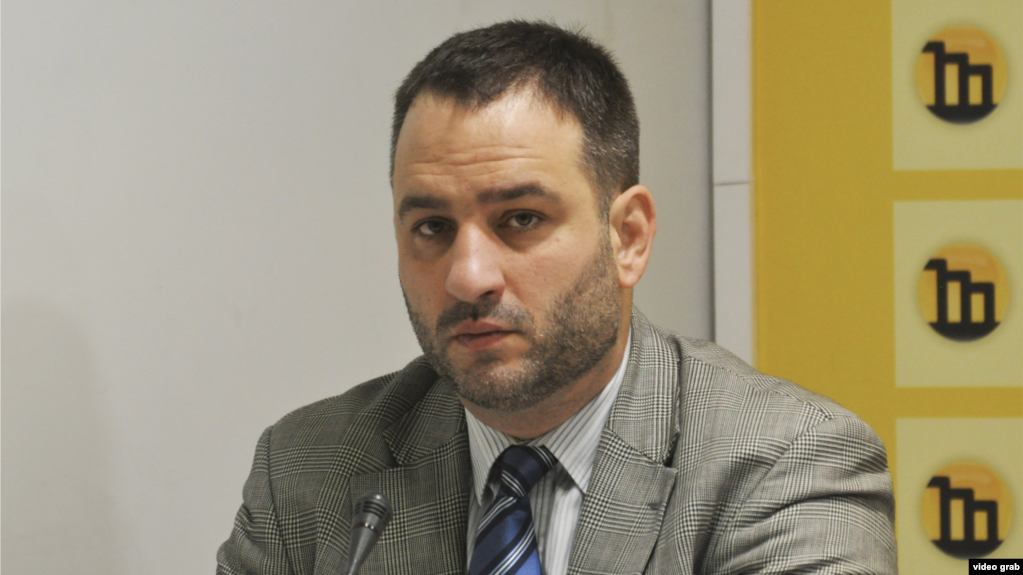
"By accepting the agreement from Brussels in February and Ohrid in March, it was defined that the normalization process was also part of the negotiations with the European Union, Belgrade, and Pristina. So the consequences would be related to the negotiation process and for some elements related to it that Serbia has signed the Stabilization and Association Agreement and has the status of a candidate for EU membership, a preferential trade regime with the countries of the Union, a visa-free regime," Novakovic says for Kosovo Online.
He raises the question of what the reaction of the international community will be if the situation does escalate, and Belgrade is not responsible for it.
"For now, the messages are mostly directed towards Pristina, not towards Belgrade. Kosovo could be suspended from the decision to abolish visas, which is crucial. Another thing is the issue of Kosovo's integration into international organizations, the issue of joining the Council of Europe. It is a long process, but these two things, which Belgrade saw as a reward for Kosovo, even though the Community of Serb-majority Municipalities was not implemented, could be withdrawn," he says.
He adds that both Brussels and Washington have a wide variety of mechanisms for sanctioning Pristina, but the question is whether they will use them.
"We have heard from Escobar and Blinken, Hovenier, and Borrell that serious consequences are threatening if the situation does not de-escalate, we have not heard such vocabulary and such warnings addressed to Pristina so far. This is indeed an indication that a certain line has been crossed by Pristina. Apart from certain rhetorical elements in which Prime Minister Kurti talks about the necessary relations between the US and Kosovo, basically, we don't see anything really moving on the ground," Novakovic says.
The director of the EPIK Institute from Pristina, Demush Shasha, has already indicated that due to the situation in the north, Kosovo's path to the EU will be difficult.
"From July 1, we will see that Kosovo's right to participate in EU programs will be suspended; we will see at the meeting of the Stabilization and Association Council of Kosovo that the SAA will be temporarily suspended, as well as the application for membership in the Council of Europe and the EU. We will see an escalation of steps, where in the end the most radical will remain," Shasha said.


0 comments